Summary:
You’ve been pricing pools for weeks now, and the quotes are all over the map. One builder says $45,000, another says $85,000, and you’re not even sure what’s included in either number. Here’s what nobody’s telling you: the “pool price” is just the starting point. Between permits, electrical work, fencing, and Nassau County’s specific requirements, your actual investment looks very different than that initial quote. This guide walks you through real 2026 costs for Nassau County—base installation, hidden expenses, ongoing ownership costs, and financing options—so you can budget accurately and avoid the surprises that derail projects halfway through.
Inground Pool Cost Breakdown for Nassau County
The average inground pool installation in Nassau County runs between $44,500 and $87,500 in 2026, but that range doesn’t tell the whole story. Your final number depends on pool type, size, site conditions, and features—and Nassau County brings specific challenges that push costs higher than national averages.
Rocky soil conditions across much of Nassau County increase excavation complexity. High water tables on the South Shore require additional drainage work. And local permit requirements add layers of cost that builders in other regions don’t face. When you’re comparing quotes, you need to know what’s actually included and what’ll show up as a change order three weeks into the project.
What Drives In Ground Pool Cost in Nassau County
Size matters, but it’s not the only factor. A standard 12-by-24-foot pool costs between $65 and $130 per square foot to install in Nassau County. Go bigger, and you’re not just paying for more pool—you’re paying for more excavation, more materials, more water, more chemicals, and more energy to run the system.
But here’s where Nassau County gets expensive: your yard conditions. If you’re dealing with rocky soil, excavation costs jump. Need to work around mature trees? That’s specialized equipment and extra labor. Limited access to your backyard? Equipment has to be smaller, which means more time on the job.
Then there’s the code requirements. Nassau County requires 4-foot minimum fencing with self-closing, self-latching gates. That’s $4,000 to $12,000 depending on materials and your property layout. You’ll need pool alarms, proper lighting, and specific setbacks from property lines. Electrical work to run your pump and heater adds another $4,000 to $8,000, depending on distance from your main panel.
Permits run about $300 for plan review, but the real cost is in the time. Nassau County’s building department has specific requirements, and if your plans don’t meet code, you’re back to square one. Working with a builder who knows Nassau County’s process saves weeks of delays and potential violations that cost thousands to remedy later.
Your choices add up fast. Want a heater? Add $4,000 to $8,000. Saltwater system? Another $1,500 to $2,500. Custom lighting? $1,000 to $5,000. A simple rectangular pool with basic equipment stays on the lower end. Custom shapes, integrated spas, waterfalls, and premium finishes push you toward the higher end—and sometimes well beyond it.
Comparing Pool Types: Gunite vs Fiberglass vs Vinyl Liner
The material you choose determines both your upfront cost and what you’ll spend over the next 10 to 20 years. Each type has a different price point, maintenance requirement, and lifespan—and the cheapest option upfront isn’t always the smartest investment long-term.
Vinyl liner pools cost $25,000 to $65,000 installed in Nassau County. They’re the most budget-friendly option if you’re watching your initial investment. The liner itself is smooth and comfortable, and you have flexibility in shape and size. But here’s the catch: that liner needs replacement every 7 to 10 years at $3,000 to $7,500 each time. Over 20 years, you’re looking at $8,000 to $16,000 in liner replacements on top of your initial cost. The liner can also puncture from sharp objects, pet claws, or even aggressive pool toys. And if you want a saltwater system, you need polymer walls—metal panels corrode.
Fiberglass pools run $60,000 to $120,000 in Nassau County. The upfront cost is steeper, but the gel coat surface is non-porous, which means less algae growth and fewer chemicals. You’ll filter the water once a day instead of multiple times, cutting your electricity costs. Fiberglass pools are delivered as a single shell, so installation is faster—often 3 to 4 weeks from excavation to swimming. The trade-off? You’re limited to pre-manufactured shapes and sizes. If you want a completely custom design, fiberglass won’t work. But if you can find a shape that fits your yard, the lower maintenance costs and faster installation make fiberglass worth the higher upfront price.
Gunite pools cost $50,000 to $120,000 and up in Nassau County. They offer unlimited design flexibility—any shape, any depth, any feature you can imagine. Want a vanishing edge? Beach entry? Built-in spa? Gunite makes it possible. The concrete structure is incredibly durable and can last decades with proper care. But that care is significant. The porous surface encourages algae growth, so you’ll use more chemicals and run your pump longer. You’ll need acid washing every 3 to 5 years and complete resurfacing every 10 to 15 years at $8,000 to $15,000 per resurface. Installation takes 8 to 12 weeks, sometimes longer if weather delays the concrete curing process.
When you’re looking at total 10-year ownership costs, the picture changes. A vinyl pool that costs $40,000 upfront might cost $48,000 to $56,000 total after two liner replacements. A fiberglass pool at $80,000 might stay around $85,000 total. A gunite pool at $70,000 could reach $86,000 to $100,000 after resurfacing and higher chemical costs. The right choice depends on your budget, how long you plan to stay in the home, and whether you value design flexibility or low maintenance more.
Hidden Costs That Catch Nassau County Homeowners Off-Guard
The pool price is just the beginning. The costs that surprise homeowners most are the ones that hit after installation—ongoing expenses that add $3,000 to $5,000 per year to your budget. If you’re not planning for these upfront, your dream pool becomes a financial strain fast.
Let’s start with insurance. Your homeowners policy will increase the moment you install a pool. Liability coverage needs to jump from $100,000 to at least $300,000, and many insurance professionals recommend $500,000 minimum. That’s an extra $25 to $50 per month, or $300 to $600 per year. Some carriers require specific safety features—fencing, alarms, covers—before they’ll extend coverage. And your property taxes? Expect them to increase by up to 10 percent because a pool adds value to your home.
Annual Operating and Maintenance Expenses
Your pool pump is the biggest electricity draw. Expect $800 to $1,200 per year in additional electricity costs, though variable-speed pumps can cut that by 60 percent. Add another $240 to $360 per year in chemicals—chlorine, pH balancers, shock treatments, algaecides. If you’re in a warmer climate or use the pool heavily, chemical costs climb toward $600 or more.
Water costs are smaller but steady. Pools lose about a quarter inch per day to evaporation, or two inches per week. Topping off your pool adds $20 to $50 per month during swim season, or $240 to $600 per year. And if you heat your pool, add another $500 to $1,000 annually depending on how often you run the heater.
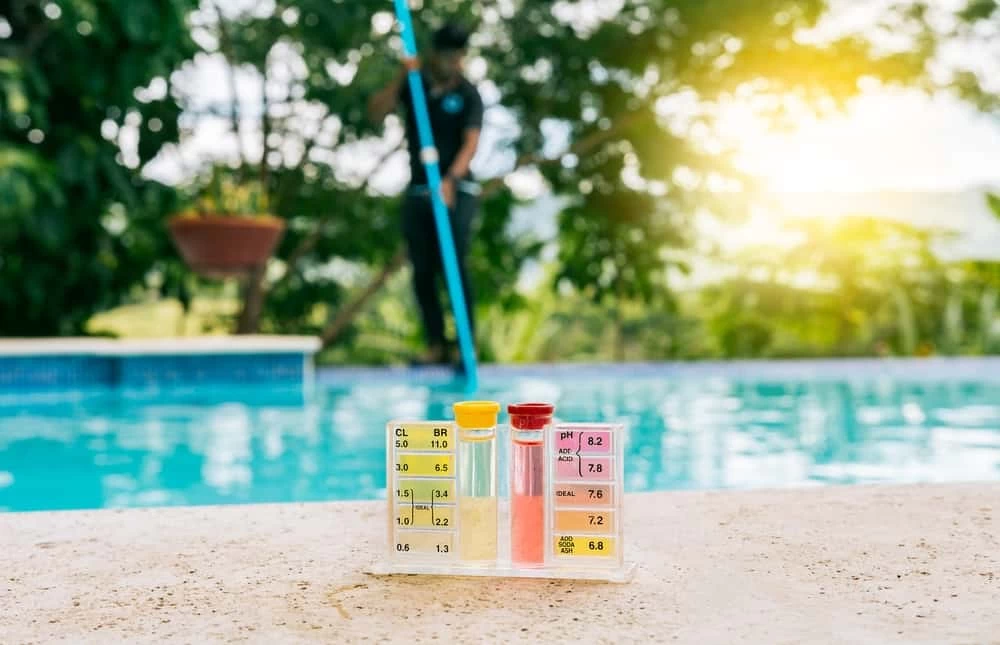
Maintenance is where costs vary most. If you handle it yourself, budget $500 to $1,500 upfront for equipment—vacuum, skimmer, test kits, brushes. If you hire a service, expect $100 to $200 per month, or $1,200 to $2,400 per year. Professional services handle chemical balancing, cleaning, filter maintenance, and equipment checks, which prevent bigger problems down the line.
Then there’s seasonal work. Opening your pool in spring costs $200 to $500. Closing it for winter runs another $200 to $450. Skip these services and you risk equipment damage, algae blooms, or freeze damage that costs thousands to repair. In Nassau County’s climate, winterization isn’t optional.
Equipment replacement is the expense nobody budgets for. Pool pumps burn out. Filters need replacement. Heaters fail. A new pump runs about $800. Sand filters cost $475 to $720 to repair or replace. Diatomaceous earth filters run $700 to $1,020. If your vinyl liner develops a leak, repairs start at $2,500. For gunite pools, even small cracks require draining and refilling the pool, plus repair costs of $75 per linear foot or more for structural issues.
Swimming Pool Financing Options That Actually Work
Most homeowners don’t have $50,000 to $100,000 sitting in savings, and that’s fine. Financing a pool is common, but the loan type you choose affects your total cost significantly. A 2 percent difference in interest rates can mean thousands of dollars over the life of the loan.
Home equity loans are popular for pool projects. You borrow against the equity in your home, typically up to 85 percent of your home’s value minus what you owe on your mortgage. Interest rates in 2026 range from 6.5 to 9 percent, and terms run from 5 to 30 years. The advantage? Lower rates than unsecured loans, and the interest may be tax-deductible if the pool qualifies as a home improvement. The downside? Your home is collateral. If you can’t make payments, you risk foreclosure.
HELOCs—home equity lines of credit—work like a credit card secured by your home. You get a credit line to draw from during a 5- to 10-year draw period, and you only pay interest on what you actually use. This is useful when pool costs vary or you’re completing the project in phases. Interest rates are typically variable, starting around 7 to 10 percent in 2026. After the draw period, you enter a repayment period lasting 10 to 20 years where you can’t borrow more and must repay principal plus interest. The flexibility is valuable, but variable rates mean your payments can fluctuate.
Personal loans don’t require home equity and don’t put your house on the line. Interest rates range from 8 to 20 percent depending on your credit, and terms typically run 2 to 7 years. Loan amounts max out around $50,000 to $100,000 with most lenders. The application process is faster than home equity products, and you’re not risking your home if something goes wrong. But the shorter terms mean higher monthly payments, and the rates are higher than secured loans.
Some pool builders offer manufacturer financing with promotional rates or deferred payments. This can simplify the process—you arrange purchase and financing through the same provider—but the terms aren’t always competitive. Promotional rates often lead to higher interest costs long-term, and you’re limited to the manufacturer’s lending partners, which restricts your ability to shop rates.
The right financing option depends on how much equity you have, your credit score, and how quickly you need the funds. If you have significant equity and want the lowest rate, a home equity loan makes sense. If you’re uncertain about final costs or want flexibility, a HELOC works. If you want speed and don’t want to risk your home, a personal loan is the better choice. Compare total loan cost—not just monthly payment—across at least three lenders before committing.
Making Your Pool Investment Work for Nassau County
A pool is a significant investment, but it doesn’t have to be a financial surprise. When you understand the real costs—base installation, Nassau County-specific requirements, hidden expenses, and ongoing ownership—you can budget accurately and make decisions that fit your goals.
The pool type you choose affects not just your upfront cost but what you’ll spend over 10 to 20 years. Financing options make the project manageable if you compare rates and terms carefully. And working with a builder who knows Nassau County’s permit process, soil conditions, and code requirements saves you time, money, and headaches throughout the project.
If you’re ready to move forward with accurate numbers and transparent guidance, we’ve been designing and installing custom inground pools across Nassau County since 2009. We handle gunite, fiberglass, and vinyl liner pools, plus all the outdoor living elements that make your backyard work as a complete space—not just a pool dropped in the middle of your yard.