




If your pool sits in the backyard of a two- or three-family home off Jamaica Avenue or Fulton Street in Cypress Hills, you already know what a Brooklyn winter can do to anything left unprepared. Cypress Hills sits on elevated ridge terrain windier than the East New York lowlands below it and that wind chill hits exposed above-ground equipment harder than most homeowners expect.
The pump, the filter, the plumbing connections none of it has the ground insulation that inground pools benefit from. One hard freeze in late October and you’re looking at cracked fittings and a busted pump before you even realized the season was over.
When your pool is properly closed before that first freeze, you open it in spring to clean water, working equipment, and none of the repair drama. No green mess. No emergency calls to figure out what cracked over winter. No waiting weeks for parts or service while the weather warms up and the pool sits unusable. That’s the actual outcome a spring opening that takes hours, not weeks.
Cypress Hills homeowners who have invested in a pool often on a modest lot, often as the centerpiece of the family’s summer can’t afford a $5,000 repair bill from a closing that didn’t happen or happened wrong. A professional closing costs a fraction of what freeze damage costs to fix, and insurance typically won’t cover damage that results from improper winterization.
We’ve been operating since 2009 over 15 years serving pools across Queens, Brooklyn, Nassau, and Suffolk. We’re not a seasonal crew that shows up in October and disappears. We design, build, maintain, open, and close pools year-round, which means we’ll answer the phone in April when you’re ready to open, not just when you need something from us in the fall.
We operate from 39-01 Utopia Pkwy in Queens and have existing service history in Cypress Hills specifically including pool installations on the kind of compact, fence-bordered lots that are typical in this neighborhood. We know what NYC Department of Buildings requires here, what fits on a Cypress Hills property, and what holds up through a New York winter on a ridge-top Brooklyn lot.
Fully licensed and insured technicians handle every closing. Named people, not an anonymous crew. That matters when you’re letting someone into your backyard to work on equipment you’re trusting to survive five months of cold.
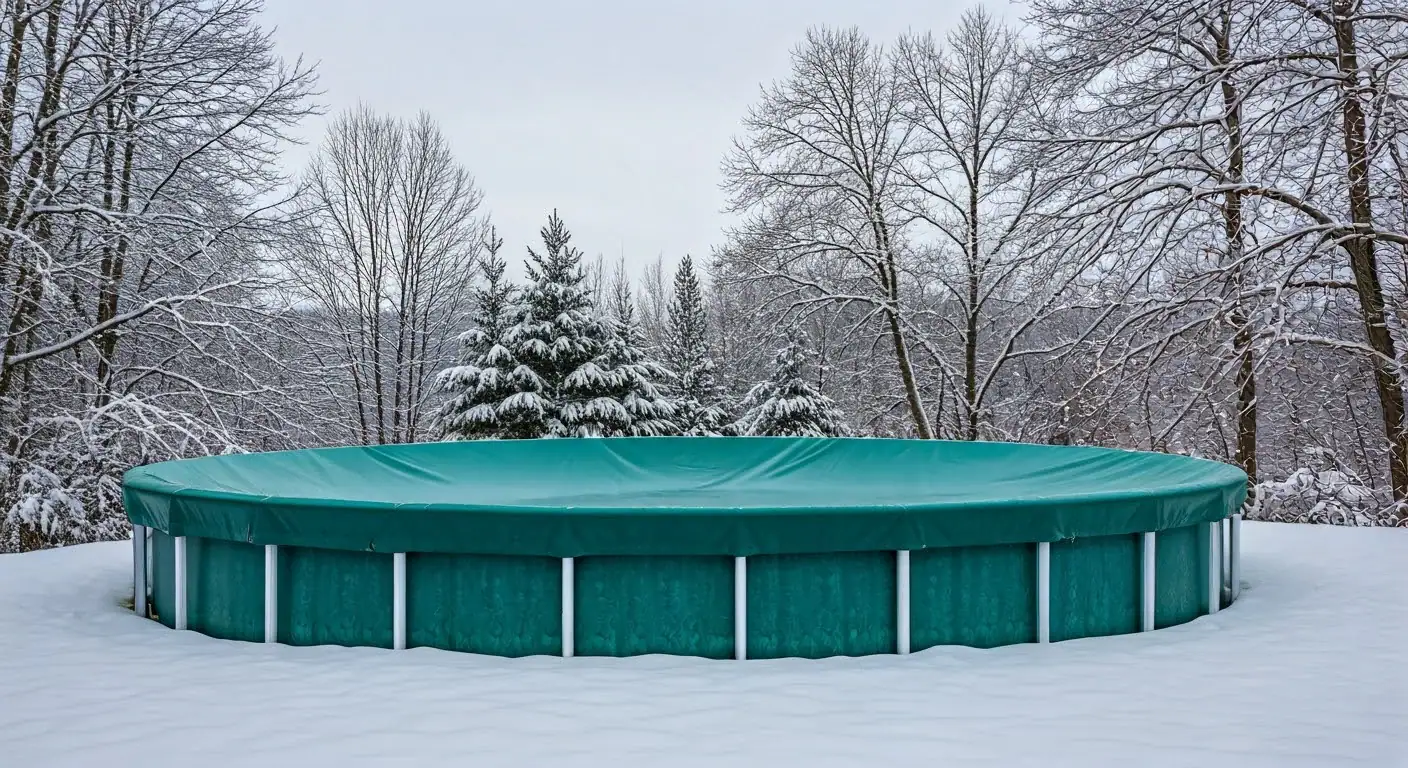
The visit starts with a full assessment of your pool and equipment not a quick glance, but an actual inspection. For above-ground pools in Cypress Hills, that means checking the pump, filter, skimmer, and all plumbing connections before anything else happens. Older equipment is common in this neighborhood given the age of the housing stock, and catching a failing seal or a loose connection in October beats discovering it in April.
From there, the water chemistry gets balanced pH, alkalinity, shock, algaecide, and stain prevention chemicals all go in at the right levels to keep the water stable under the cover all winter. Then the lines get blown out using commercial-grade air compressors. This is the step that matters most and the one that home equipment simply can’t replicate.
A shop compressor doesn’t generate enough pressure to fully clear every pocket of water from the plumbing. Any water left in those lines freezes, expands, and cracks. Professional equipment removes it completely.
After the lines are clear, we disconnect the pump and filter and store them, winterize the skimmer, install an air pillow under the cover to manage ice expansion, and fasten the cover securely which on a Cypress Hills lot often means working around fencing, structures, or tight yard dimensions. The whole visit typically takes under two hours. When it’s done, you get a written summary of exactly what was completed. No guessing in spring about what was or wasn’t done.
Ready to get started?
We handle both above-ground and inground pool closings, but in Cypress Hills, above-ground pools are the clear majority and that’s where our process is most directly relevant. Above-ground pools on Brooklyn lots have their entire plumbing and equipment setup exposed to ambient air temperature. There’s no ground insulation. When nighttime temps drop below freezing on the ridge above East New York, that equipment is fully exposed to whatever the air brings.
The closing covers everything: water chemistry balancing, commercial line blow-out, skimmer winterization, equipment disconnection and storage, air pillow installation, and cover fastening. Every step follows our documented 12-step winterization process, and every homeowner gets a written summary after the visit. That documentation isn’t just a nice touch it’s a record of the equipment’s condition at closing, which matters if anything comes up when you open in spring.
Pool closing in New York City doesn’t require a permit it’s a service, not a construction activity so there’s no NYC DOB paperwork involved and no delays on that front. What does matter is timing. The closing window in the Brooklyn-Queens area runs from mid-September through late October. Closings are booked through October, and slots fill as the season moves. If you’re searching now, that’s the right instinct. Book before the first hard freeze decides the schedule for you.
Yes and this is worth being direct about, because a lot of pool companies draw their service boundary at the Queens line and leave Cypress Hills in a gap. We operate from a Queens address at 39-01 Utopia Pkwy and have an existing service presence in Cypress Hills specifically. We’ve worked on properties in this neighborhood, we know the typical lot conditions here, and we’re familiar with what NYC DOB requires on a Brooklyn property. You won’t call and get told your address is outside the service area.
Cypress Hills sits right on the Brooklyn-Queens border, and we operate on both sides of that line. If you’re on a street off Jamaica Avenue, near Highland Park, or anywhere in the 11207 or 11208 zip codes, you’re in our service area. Call the Queens number directly and we can confirm availability and get you on the schedule.
The target window for pool closing in the Brooklyn-Queens area is mid-to-late October, when nighttime temperatures consistently drop below 50°F. Closing too early say, late August or early September risks algae growth under the cover while the water is still warm. Closing too late risks a hard freeze arriving before the pool is protected.
Cypress Hills sits on elevated terrain above the East New York lowlands, which means it gets more wind exposure than the surrounding area. Wind chill accelerates how quickly exposed above-ground equipment reaches freezing temperatures. The all-time record low for this area is -14°F, and while that’s an extreme, hard freezes in October and November are not unusual. Don’t wait until you feel the first cold snap to book by that point, schedules are often full and the freeze may already be closer than it looks.
They’re the same thing. “Pool closing” and “pool winterization” are used interchangeably in the industry and by homeowners. Some people search for one term and aren’t sure if it covers what the other describes it does. Whether you call it closing, winterizing, or end-of-season service, the process is the same: balance the water chemistry, blow out the plumbing lines, disconnect and store the equipment, and secure the cover.
The confusion sometimes comes from companies that offer “partial” closings covering the pool but skipping the line blow-out, for example. That’s not a complete winterization, and it leaves the plumbing vulnerable to freeze damage even if the pool looks covered and ready. When you book with us, the closing follows a full 12-step process. Nothing gets skipped to save time.
You can attempt it, but the most critical step blowing out the plumbing lines requires commercial-grade air compressor equipment that most homeowners don’t own. A standard shop compressor doesn’t generate enough pressure to fully clear every pocket of water from the lines. Any water left behind freezes, expands by roughly 9 to 10 percent, and can crack plumbing fittings or split connections. That repair, if it happens, costs significantly more than a professional closing would have.
For above-ground pools in Cypress Hills specifically, the risk is higher than in suburban settings because the equipment is fully exposed to air temperature no ground insulation, no buffer. On a windy ridge-top lot, the effective temperature drop on exposed plumbing can be faster than the thermometer suggests. The chemical balancing also matters: improperly balanced water sitting under a cover all winter can stain the liner, promote algae, or corrode equipment. A professional closing addresses all of it in one visit and leaves you with documentation of what was done.
A typical above-ground pool closing with us takes under two hours from start to finish. Our technicians handle everything you don’t need to pre-drain the pool, pre-treat the water, or do any prep work beyond making sure the backyard is accessible. On a Cypress Hills lot, that usually just means clearing a path to the pool and making sure the gate or side yard access is unlocked.
Before the visit, it’s worth knowing the approximate age of your pump and filter if you can. We perform an equipment assessment as part of the closing process, and if there’s an aging component that’s at risk of failing over winter, it’s better to know in October than in April. Given that much of the housing stock in Cypress Hills dates back decades, older pool equipment isn’t unusual here and a closing inspection is a good opportunity to get eyes on anything that’s been running for several seasons.
If the pool isn’t closed before the first hard freeze, the water sitting in your above-ground pool’s plumbing lines and equipment freezes and expands. That expansion cracks fittings, splits plumbing connections, and can destroy a pump housing in a single overnight event. By the time you discover it in spring, the damage is done and the repair bill is waiting. Freeze damage repairs can run anywhere from several hundred dollars for a single component to thousands for a full plumbing and equipment replacement and standard homeowner’s insurance typically does not cover freeze damage that results from failure to properly winterize.
Waiting too long to book creates a second problem: availability. Pool closing schedules in the Queens and Brooklyn market fill up as October moves along. We take on as many jobs as we can handle in a narrow window, and late callers often find limited slots or get squeezed into rushed visits. If you’re reading this in September or early October, you’re in the right window. Closings are booked through October the sooner you get on the schedule, the more flexibility you have on timing.
Other Services we provide in Cypress Hills