



The whole point of closing your pool properly is what doesn’t happen no cracked fittings in March, no green water you have to fight through before your kids can swim, no repair crew telling you it’ll be three weeks before they can get the parts. That’s what a professional pool closing actually buys you: a spring opening that goes the way it’s supposed to.
For Springfield Gardens homeowners specifically, the geography matters. Your neighborhood is bordered to the south by Rockaway Boulevard, and on the other side of that road is JFK International Airport thousands of acres of flat, open, bay-adjacent terrain with nothing between it and your backyard. Cold air moving off Jamaica Bay crosses that open ground and arrives here with no hills, no tree lines, and no buffer. The freeze risk in this part of Queens is real, and it arrives earlier than most people plan for.
Above-ground pools are also more exposed than inground pools by design. Their plumbing and equipment sit above the ground line, which means they’re taking the full force of ambient air temperature the moment it drops. The skimmer is especially vulnerable. A pool that looks fine going into October can have cracked fittings by November if the lines weren’t properly cleared. Getting ahead of that before the window closes is the entire job.
We’ve been closing pools in Queens and Long Island since 2009. That’s fifteen-plus fall seasons of watching what happens when a pool is closed right and what happens when it isn’t. We design and build custom pools, which means the technicians who close your pool understand pool systems from the ground up. This isn’t a seasonal crew that picks up pool work in September. It’s a full-service operation that runs year-round.
Springfield Gardens is explicitly on our service list not lumped into a vague “and surrounding areas” clause, but named. Our Queens office at 39-01 Utopia Pkwy puts us close enough to reach southeast Queens efficiently, including the Brookville and Laurelton sections near the Nassau County line. Fully licensed and insured technicians handle every closing, and every job comes with a written summary of what was done so you have a record if anything comes up in spring.

Every closing we perform follows the same documented 12-step winterization process and that consistency matters, because the steps that get skipped in a rushed job are usually the ones that cause problems four months later.
We start with a full assessment of your pool and equipment before anything else is touched. From there, we clear debris, balance your water chemistry pH, alkalinity, shock, algaecide, stain prevention and then blow out the plumbing lines using professional-grade air compressors. This is the step that separates a real closing from a rushed one. Home compressors don’t generate enough sustained pressure to fully clear every line. Water left sitting in a fitting or return line is water that expands when it freezes, and that expansion is what cracks the pipe. We use commercial equipment specifically because the physics don’t care about shortcuts.
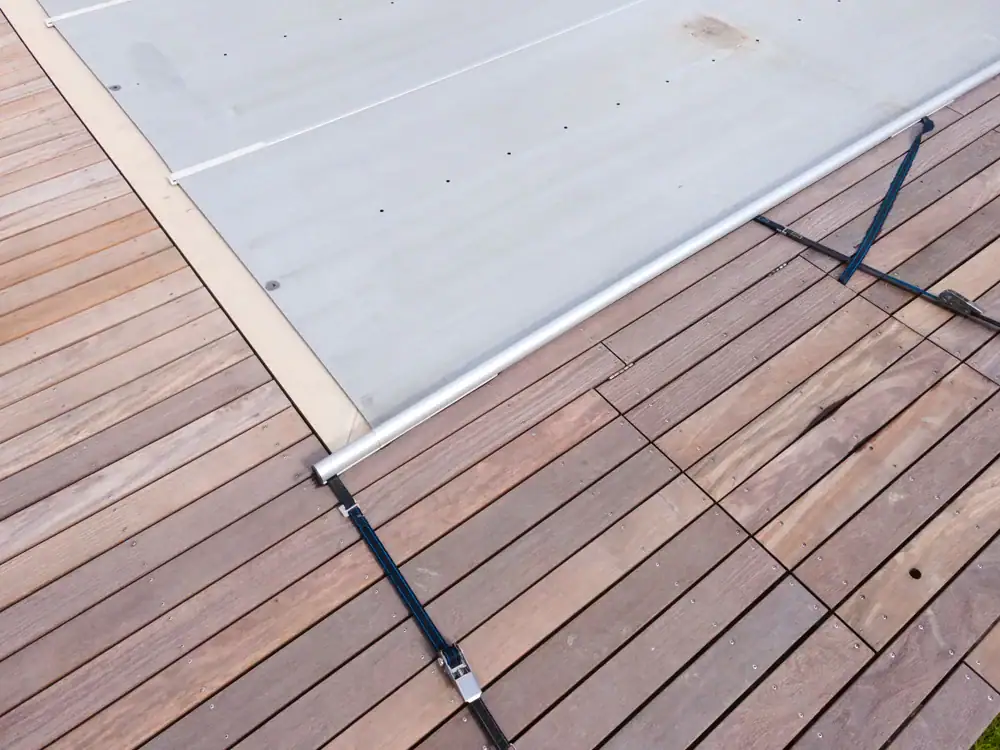
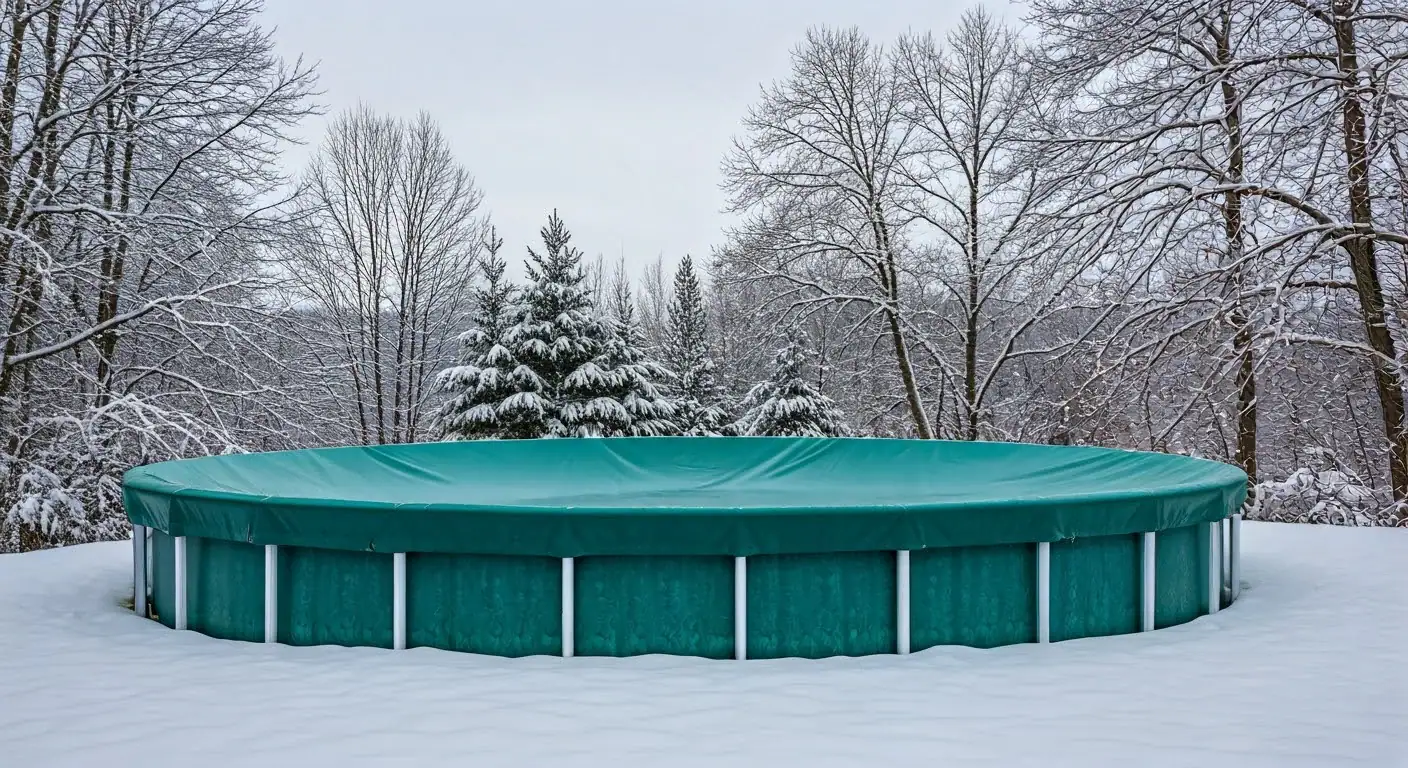
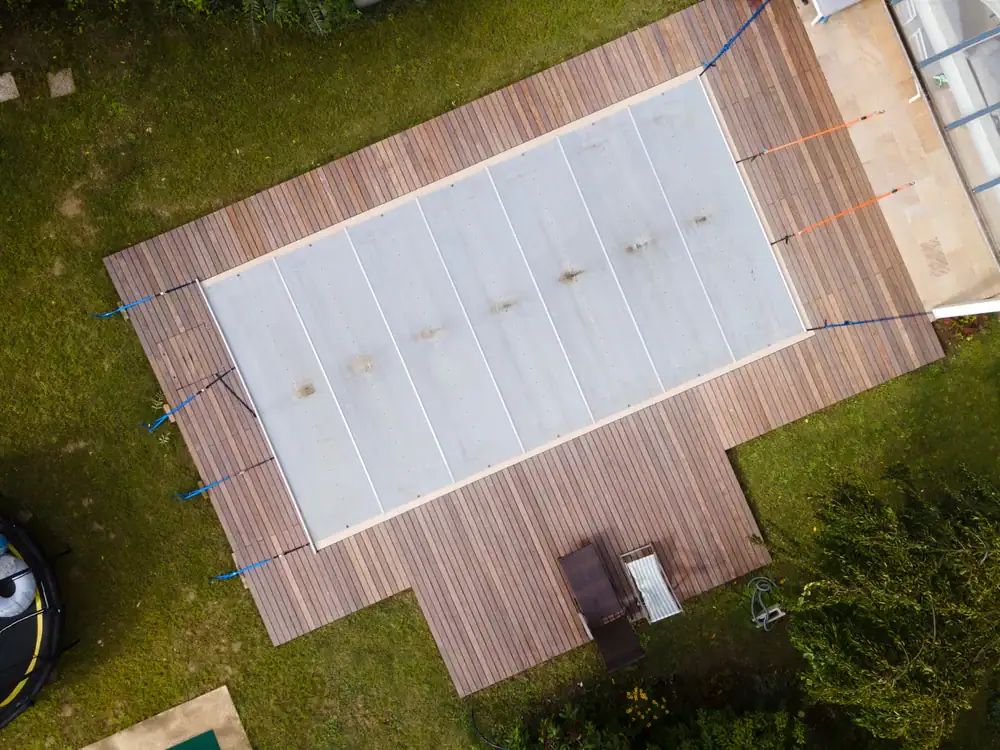
After the lines are cleared, we disconnect and properly store the pump, filter, and heater. Skimmers and returns are plugged. Accessories like ladders are removed. The cover goes on tensioned correctly for above-ground pools, with an air pillow installed underneath and the cover fastened against wind. For Springfield Gardens homeowners, where winds off Jamaica Bay can pick up along the Belt Parkway corridor, a properly secured cover is not optional. When the job is done, you get a written summary of everything that was completed. That documentation is yours to keep.
Ready to get started?
We close both above-ground and inground pools in Springfield Gardens, and the process is thorough for both. Given that the detached single-family homes throughout this neighborhood the capes, colonials, and two-family houses that define the Springfield Gardens housing stock are the natural home of above-ground pools, that’s where most of our work happens here. And above-ground pools get the full treatment, not a simplified version.
For above-ground pools, the closing includes: water chemistry balancing, complete plumbing line blow-out with commercial equipment, skimmer winterization, air pillow installation, cover placement and fastening, and full equipment disconnection and storage. The skimmer is a point of failure that gets missed in DIY closings more often than anything else it’s a direct path for freeze damage if it isn’t properly handled.
For inground pools, the process adds underground line blow-out, return and skimmer plug installation, and equipment drainage specific to the system. We build custom inground pools Gunite, fiberglass, and vinyl liner so when we close one, we understand the plumbing layout and equipment specs, not just the general process.
One thing worth knowing: standard homeowner’s insurance typically does not cover freeze damage that results from improper winterization. It’s the kind of detail that matters when you’re deciding whether to book a professional or try to handle it yourself. We book closings through October. October fills fast.
The general recommendation for Queens pools is late September to mid-October, and Springfield Gardens is on the earlier end of that window not the later end. Here’s why: your neighborhood sits directly north of JFK International Airport, which means the southern boundary of Springfield Gardens is open, flat, bay-adjacent terrain with no natural windbreak between Jamaica Bay and your backyard. Cold air moving off the bay crosses that open airport ground and reaches Springfield Gardens faster and with less friction than it reaches more inland Queens neighborhoods. The first hard freeze of the season at JFK Airport which is literally across Rockaway Boulevard is the relevant weather event for your pool, not a reading from a station further inland.
Closing too early creates its own problem: algae can bloom under a cover when water temperatures are still warm. But waiting past mid-October in Springfield Gardens is a gamble. The safer play is to book your closing for early to mid-October and not push it toward Halloween. We recommend that most Queens pools be closed before the freeze window arrives and in this neighborhood, that window is shorter than most people expect.
A proper above-ground pool closing covers more than most homeowners realize until they’ve seen it done correctly. The process includes water chemistry balancing adjusting pH, alkalinity, adding shock, algaecide, and stain prevention chemicals before anything else is touched. Then the plumbing lines are blown out using commercial-grade air compressors, which is the step that matters most. Home compressors don’t generate enough sustained pressure to fully clear every line and fitting. Water left in the system is water that can freeze, expand, and crack.
After the lines are cleared, the skimmer gets winterized this is a common DIY failure point because it’s easy to overlook and easy to damage. An air pillow goes under the cover to manage ice expansion pressure. The cover is then placed and properly fastened, which in a neighborhood like Springfield Gardens where winds off Jamaica Bay can move along the Belt Parkway means it needs to be secured, not just laid on top. Equipment is disconnected and stored. At the end, you receive a written summary of everything that was completed. We document every closing so you have a record going into spring.
You can attempt it, but the most common DIY failure is one you won’t discover until spring: incomplete line blow-out. The plumbing lines in an above-ground pool need to be fully cleared of water before the freeze season arrives. A shop compressor from a hardware store typically doesn’t generate enough sustained pressure to do that completely. Water left in a fitting, return line, or skimmer connection expands when it freezes water expands roughly 9 to 10 percent when it turns to ice and that expansion is what cracks the pipe or fitting. You won’t know it happened until you open the pool in May.
The professional closing cost is a fraction of what a single repair call costs. Freeze damage repair on an above-ground pool system can run into the thousands, depending on what cracked and where. Beyond the equipment, there’s also the chemistry balance and cover installation to get right. A cover that isn’t properly secured on an above-ground pool in an exposed backyard particularly in Springfield Gardens, where winds off the bay can be significant can shift, fill with water, and create its own set of problems. The professional process exists because the margin for error is real.
Springfield Gardens is explicitly named on our Queens service area page not implied, not covered under a vague “surrounding areas” clause. We operate a Queens location at 39-01 Utopia Pkwy, which puts us well within reach of southeast Queens, including Springfield Gardens, the Brookville section near the Nassau County line, and the Laurelton and Rosedale adjacent areas to the east.
This matters because a lot of Long Island pool companies will list Queens as a service area but treat it as secondary the jobs that get squeezed in when the schedule allows. We have a physical Queens presence and actively close pools throughout the borough each fall. If you’re in Springfield Gardens, you’re not on the edge of our coverage map. You’re in it. The Queens phone number is the right number to call, and the team that shows up knows the area.
The damage usually starts in the plumbing, not the pool basin. Most homeowners picture the pool itself freezing, but the real problem is water sitting in the lines, pump housing, filter, and heater. When that water freezes, it expands and the fittings, pipes, and equipment housings around it don’t have room to expand with it. The result is cracked pipes, split fittings, and damaged equipment that you won’t find until you try to open the pool in spring.
Repair costs for a single freeze event range from a few thousand dollars on the low end to significantly more depending on what failed and how far underground the damage runs. Beyond the repair bill, there’s the timeline: getting a pool repair crew scheduled in April or May when everyone else is opening their pools is not fast. You could be looking at weeks of delay before the pool is usable. Standard homeowner’s insurance typically does not cover freeze damage from improper winterization. Skipping the closing to save a few hundred dollars is the trade that rarely works out.
Earlier than most people think. The fall closing window in Queens runs from late September through mid-October, and that’s the same window every pool owner in the area is trying to get scheduled. The Long Island and Queens pool service market has a documented labor shortage in the fall companies book up weeks ahead of their typical schedule, and the homeowners who wait until the last week of October are the ones who end up with rushed jobs or no availability at all.
For Springfield Gardens specifically, the geography adds urgency. You’re in one of the most JFK-adjacent residential neighborhoods in Queens, which means your freeze exposure is real and the buffer between “it’s getting cold” and “it’s already frozen” is shorter than it is for homeowners further inland. Booking in September for an early-to-mid October closing gives you the best slot, the most unhurried service, and the peace of mind that the job gets done before conditions force your hand. We book pool closings through October but the earlier you get on the schedule, the better your options.
Other Services we provide in Springfield Gardens