


Long Island City winters are not gentle. January average lows here sit around 15°F well below the point where water in an unprotected plumbing line expands, cracks the pipe, and turns a simple spring opening into a repair job that costs thousands.
Getting a professional closing done before that window closes is the one thing that keeps that from happening. For Long Island City homeowners, especially those in the rowhouse blocks of Hunters Point and Dutch Kills, the stakes are real.
Above-ground pools in compact urban yards are more exposed than their inground counterparts the plumbing and equipment sit in open air, not insulated by ground. Add the wind coming off the East River and an early October cold snap, and an above-ground pool that wasn’t properly closed is genuinely at risk.
What you get on the other side of a proper closing is straightforward: no cracked pipes, no damaged pump housing, no green water waiting for you in May. Just a pool that opens clean, on schedule, and without a repair bill attached.
We’ve been operating since 2009 that’s 15+ years of Queens and Long Island pools closed, opened, and maintained through every kind of Northeast winter this region produces. We’re based in Huntington Station and maintain a Queens location at 39-01 Utopia Pkwy, which means when you call about a closing in Long Island City, you’re calling a company with a physical presence in Queens, not a Long Island outfit that occasionally crosses the borough line.
The technicians who come to your home are fully licensed and insured, and this is not a seasonal crew that appears in October and disappears in November. We design and build custom inground pools across Queens and Long Island, which means the people closing your pool understand pool systems at a level that a service-only company simply doesn’t. We know the plumbing. We know the equipment. We know what gets missed.
For Long Island City homeowners many of whom are closing a pool for the first time after buying a rowhouse in Hunters Point that depth of knowledge matters more than a low quote from someone you can’t verify.
The process starts before anyone touches your pool. We assess the current condition of the water and equipment checking for anything that needs to be addressed before the closing begins.
From there, we clean the pool, remove debris, and balance the water chemistry. That means pH, alkalinity, shock treatment, algaecide, and stain prevention chemicals are all handled in the right sequence, not skipped to save time.
The part that matters most for protecting your plumbing is the line blow-out. We use commercial-grade air compressors not the kind you’d find in a hardware store to fully clear water from every section of the plumbing system. In a Long Island City rowhouse yard where above-ground plumbing is exposed to ambient air and East River wind, this step is not optional. One pocket of water left in a line is all it takes to cause freeze damage.
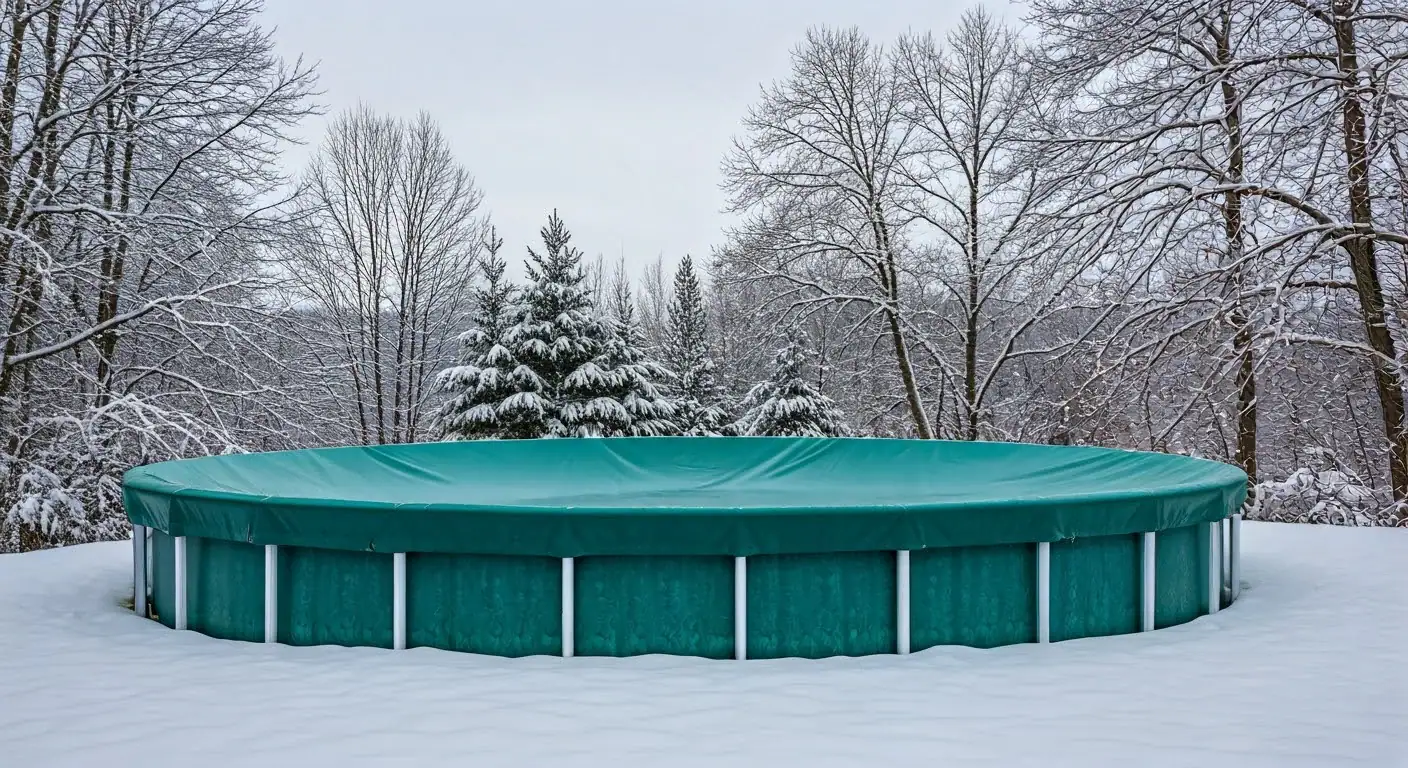
After the lines are cleared, we disconnect and store equipment, plug skimmers and returns, and install the cover with proper tension. The whole visit typically takes under two hours, and when we leave, you receive a written summary of everything that was done. That documentation is yours to keep and it’s your confirmation that nothing was skipped.

Ready to get started?
We close both above-ground and inground pools in Long Island City, and both get the same 12-step winterization process. There are no shortcuts taken on above-ground pools because they’re considered simpler if anything, they need more attention because their equipment is fully exposed to the elements. The skimmer winterization alone is a step that gets missed more often than most homeowners realize, and it’s one of the most common sources of freeze damage.
For Long Island City residents, pool closing service does not require a New York City DOB permit winterization is a maintenance activity, not a construction alteration. What it does require is a licensed and insured technician who knows what they’re doing, because standard homeowner’s insurance typically does not cover freeze damage that results from improper winterization.
Closings are booked through October. Long Island City’s professional homeowner demographic tends to be time-constrained, and October slots fill faster than most people expect. If you’re reading this in late September or early October, the window is open but it won’t stay that way. A booking form is on this page. You don’t need to call around and wait for a callback.

Yes and it’s worth being direct about this because it’s the first thing most Long Island City homeowners want to know. A lot of pool service companies list Queens as their service area but mean Nassau County with occasional detours. We have a physical Queens location at 39-01 Utopia Pkwy and have been serving Queens homeowners for over 15 years. Long Island City is part of that service area, not an exception to it.
If you’re in Hunters Point, Dutch Kills, or anywhere else within Long Island City, you can book a closing and expect a technician to show up not a callback telling you we don’t cover your area. The Queens phone number is the right number to call, and the booking form on this page goes directly to the team that schedules Long Island City closings.
The target window for pool closing in Long Island City is mid-to-late October. That’s when nighttime temperatures in Queens consistently drop below 50°F, which is the threshold where algae growth under a cover slows down and the freeze risk starts to become real. Long Island City’s January average lows sit around 15°F, and hard freeze events can arrive in October or early November without much warning.
The practical answer is: don’t wait until you feel the cold. By the time temperatures are dropping into the 30s at night, pool service schedules are already packed. If you close too early say, late August or early September you risk algae bloom under the cover before the water gets cold enough to suppress it. The sweet spot is October, and the earlier in October you book, the more flexibility you have on scheduling.
Nothing they’re the same service. Pool closing and pool winterization are used interchangeably in the industry, and if you’ve been searching for both terms trying to figure out which one you need, the answer is either one. What you’re looking for is a professional service that balances your water chemistry, blows out the plumbing lines with commercial equipment, disconnects and stores your pump and filter, plugs the skimmers and returns, and installs the cover correctly.
The reason it matters what’s included not just what it’s called is that not every company does all of those steps. Some skip the chemical balancing. Some use underpowered compressors that don’t fully clear the lines. If a company’s description of their winterization service is vague, that’s worth asking about before you book. We follow a 12-step process and provide a written summary after every closing so you know exactly what was done.
You can, but the most common failure point in DIY pool closings is the plumbing line blow-out and it’s the step that causes the most damage when it goes wrong. Home-grade air compressors don’t generate enough sustained pressure to fully clear water from every section of pool plumbing. You might clear most of it, but one pocket of water left in a line is enough to crack a pipe when temperatures drop to 15°F, which is where Long Island City winters actually go.
The cost of a professional closing is a fraction of what a single freeze-damage repair runs. Cracked underground plumbing, a split pump housing, a damaged filter these repairs add up fast, and standard homeowner’s insurance typically won’t cover damage from improper winterization. For an above-ground pool in a Hunters Point rowhouse yard where the equipment is fully exposed to wind and cold air, the margin for error on a DIY closing is smaller than most people realize.
A typical pool closing with us takes under two hours from start to finish. We handle the full process water chemistry, line blow-out, equipment disconnection, cover installation and leave you with a written summary of everything completed. You don’t need to manage the process or be involved step by step.
Whether you need to be home depends on access to your pool. For above-ground pools in Long Island City rowhouse yards, we’ll need access to the backyard and to an electrical outlet if equipment needs to be disconnected. If your yard is accessible through a gate or side passage, many homeowners arrange access without being present. It’s worth confirming the logistics when you book the team scheduling your closing can walk you through what’s needed for your specific setup.
If a hard freeze hits before your pool is properly closed, the damage can happen overnight. Water expands roughly 9 to 10 percent when it freezes enough to crack PVC plumbing lines, split pump housings, and damage filtration equipment. Above-ground pools are particularly vulnerable because none of that equipment has the insulation of being underground. In Long Island City, where October cold snaps and early November freezes are a real part of the calendar, this isn’t a theoretical risk.
The repair costs from a single freeze event typically run into the thousands, and the damage often isn’t discovered until spring when you go to open the pool. At that point, you’re looking at repair timelines, parts availability, and weeks of your swimming season gone before the pool is even usable. If you’re reading this and haven’t booked yet, the window is still open but October fills up. The booking form on this page is the fastest way to get on the schedule before it closes.
Other Services we provide in Long Island City