
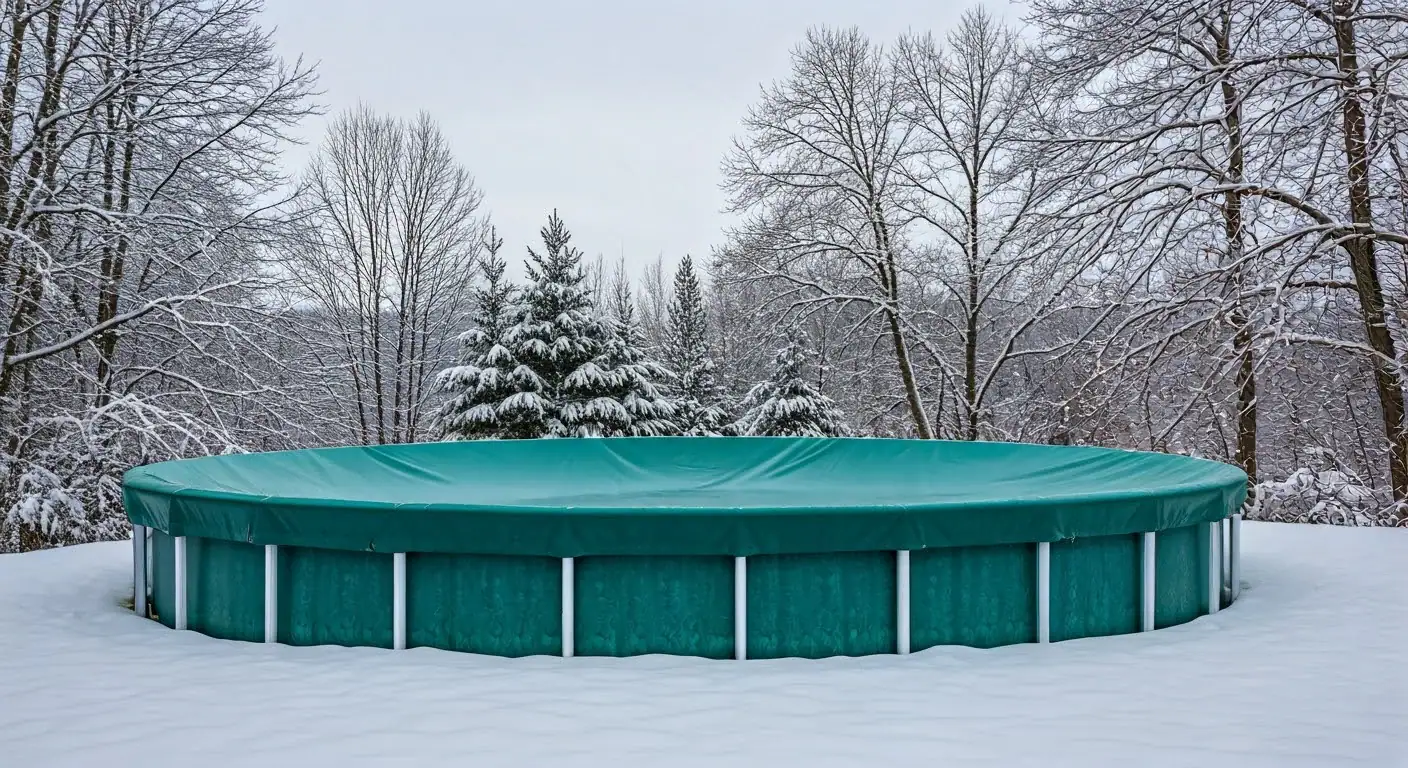

When we close a pool correctly in Woodside, you’re not just putting a cover on and hoping for the best. You’re protecting a system that sits fully exposed to Queens winter air no ground insulation, no thermal buffer, just your skimmer housing and return lines sitting out there when January drops into the teens.
That’s the reality for most above-ground pools in Woodside. The neighborhood’s attached row houses and two-family homes don’t have the yard space for inground installations the typical backyard here runs 15 to 30 feet deep, which means above-ground is what makes sense. And above-ground pools are actually more vulnerable to freeze damage than inground pools, because every component is exposed to ambient air temperature. One hard freeze hitting a skimmer that still has water in it can crack the housing overnight.
A professionally winterized pool means you open it in May without discovering split fittings, cracked skimmer parts, or a filter that needs replacing before you can swim. It means the water chemistry was balanced before the cover went on, so you’re not fighting a green swamp in spring. It means someone with commercial-grade equipment actually cleared the lines not a home compressor that leaves water pockets behind. That’s the difference between a pool that’s ready in May and a repair bill that delays your whole summer.
We’ve been closing pools across Queens and Long Island since 2009. That’s 15-plus years of Queens winters the freeze events, the thaw cycles, the early October cold snaps that catch homeowners off guard. We know what those winters do to above-ground pool equipment in Woodside and the surrounding neighborhoods, because we’ve seen the aftermath when a closing was rushed or skipped.
Our Queens base at 39-01 Utopia Pkwy in Flushing puts us a short drive from Woodside the same 7-train corridor that connects the two neighborhoods. This isn’t a Long Island operation that occasionally crosses the borough line. We’re a company with real Queens accountability: a physical address, licensed and insured technicians, and an owner directly involved in how the work gets done.
We’re also a full-service pool company year-round design, construction, opening, maintenance, and closing. That matters because we’ll be reachable in spring when you open, not unreachable like a seasonal crew that shows up in October and disappears until the following fall.
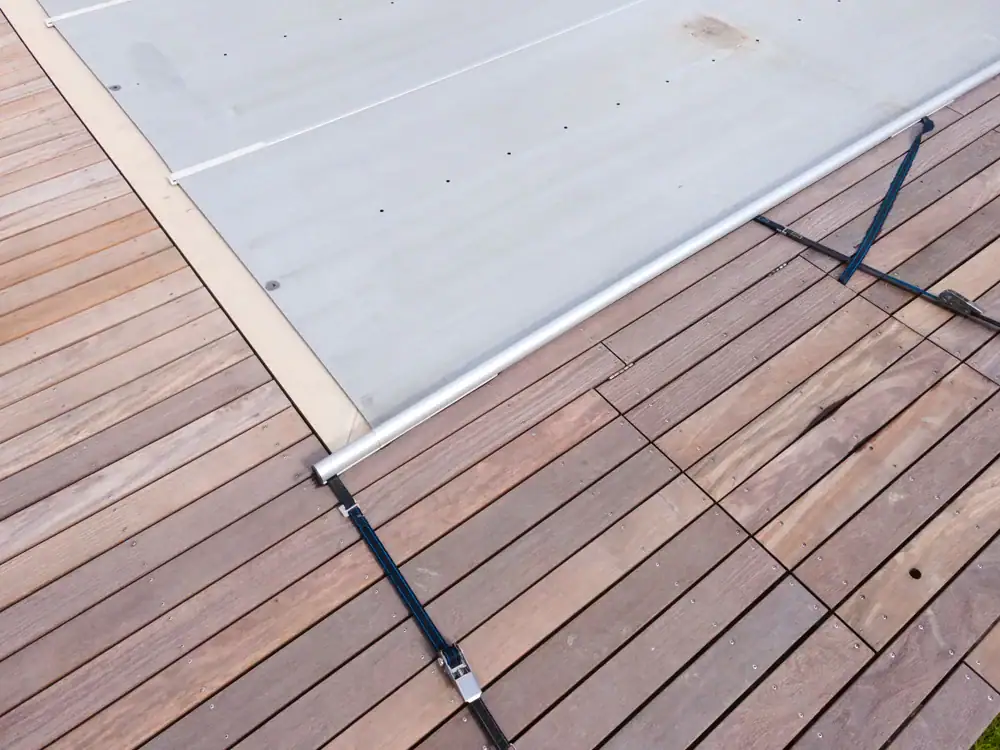
The process starts before we touch your pool. We test and balance water chemistry pH, alkalinity, shock, algaecide, and stain prevention treatment all go in at the right levels. Skipping this step is one of the most common reasons homeowners open a pool in May to find it’s turned into a green mess over winter. We get it done first, every time.
From there, the focus shifts to the plumbing. This is where professional closing separates itself from a DIY attempt. We use commercial-grade air compressors to blow out every line return lines, skimmer lines, any plumbing that holds water. A home compressor doesn’t generate enough pressure to fully clear the system. Water left in a line expands when it freezes, and in Woodside’s narrow backyards where above-ground equipment is fully exposed to winter air, that means cracked fittings and split connections by February.
Once the lines are clear, we disconnect and store equipment pump, filter, heater if applicable. We plug skimmer and return fittings. The cover goes on properly tensioned and secured. For above-ground pools, that includes the air pillow under the cover and fastening against wind, which matters in Queens where open-sky exposure between buildings creates real wind chill. When we leave, you get a written summary of everything we completed so if a question comes up in spring, you have documentation, not just a memory of someone showing up.

Ready to get started?
Every closing we perform follows the same 12-step winterization process not a shortened version for above-ground pools, not a quick visit with a cover. The full protocol applies regardless of pool type, because above-ground pools in Woodside’s compact, exposed backyards don’t get a pass on thoroughness just because they’re smaller.
That process covers water chemistry balancing, shock and algaecide treatment, commercial line blow-out, equipment disconnection and storage, skimmer and return line plugging, cover installation, air pillow placement, and a written documentation summary handed to you before we leave. The inspection piece matters especially for older pools and a lot of the above-ground pools in Woodside’s prewar row house backyards have been in place for years. If a fitting is showing wear or a housing has early cracking, you’ll know about it before winter, not when you try to open in May.
We serve Woodside as part of our active Queens coverage not as an occasional stop. We’re fully licensed and insured, which matters when you’re letting someone work on your property and equipment. Closings are booked through October, and that window fills faster than most homeowners expect. If you’re reading this in September or early October, now is the time to get on the schedule.
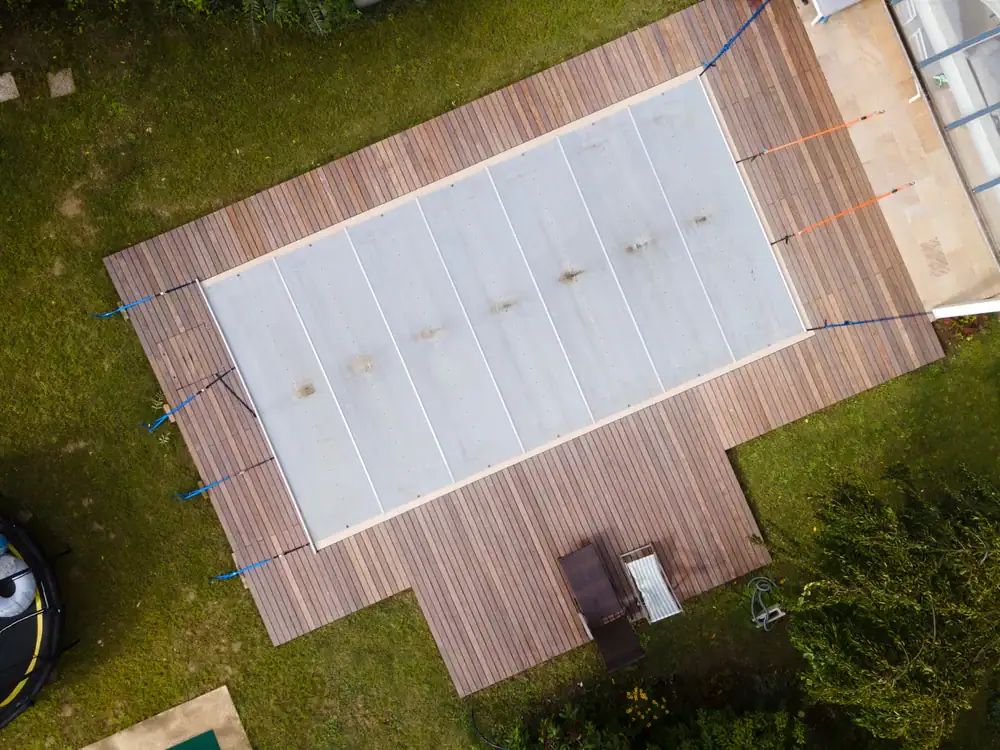
Yes and above-ground pools are actually the main thing we handle throughout Woodside and western Queens. The neighborhood’s housing stock, mostly attached and semi-detached row houses with backyards that typically run 15 to 30 feet deep, means inground pools are rarely an option. Above-ground pools are what makes sense in these yards, and we take the closing process just as seriously as any inground job.
Above-ground pools are more vulnerable to freeze damage than inground pools because their plumbing and equipment are fully exposed to air temperature there’s no ground insulation working in their favor. The skimmer, filter housing, and return line connections are all sitting out in the open when Queens temperatures drop into the teens in January and February. Our 12-step closing process addresses every one of those exposure points, and the written documentation afterward means you have a clear record of what was done.
The short answer is mid-to-late October at the latest. The optimal window for closing a pool in Queens is when nighttime temperatures are consistently dropping below 50°F which in Woodside typically happens in mid-October. Closing too early risks algae growth under the cover before the water gets cold enough to slow it down. Closing too late risks a freeze event hitting before the pool is protected.
One thing worth knowing: Woodside’s urban density and the heat retained by surrounding buildings can make the neighborhood feel slightly warmer at street level than the surrounding region. That can create a false sense of security about how much time you have. Above-ground pool equipment doesn’t benefit from that urban warmth the same way it’s exposed to open air and wind chill, especially in backyards flanked by buildings on multiple sides. The 2025–2026 forecast for the 11377 ZIP code shows September and October temperatures running below normal, which means the closing window may arrive a little earlier than usual this year. Getting on the schedule in September gives you the most flexibility.
The biggest risk with a DIY closing is the line blow-out. Clearing water from your pool’s plumbing requires enough air pressure to push every pocket of water out of every line and a standard home compressor typically can’t generate that. What gets left behind is water sitting in the return lines, skimmer connections, or filter housing. Water expands by around 9 to 10 percent when it freezes. In a line that’s full or even partially full, that expansion has nowhere to go except through the fitting or housing wall.
For above-ground pools in Woodside, this is a real problem because the plumbing is exposed. There’s no ground depth to slow the freeze. A single hard freeze and Queens winters regularly bring temperatures well below freezing in January and February can crack a skimmer housing, split a return line fitting, or damage the filter in one night. Repair costs for a single freeze event typically run anywhere from $1,000 to several thousand dollars depending on what breaks. Standard homeowner’s insurance generally does not cover freeze damage from improper winterization. Our professional closing cost is a fraction of that, and it comes with documentation of what was done.
This is one of the most reasonable questions a homeowner can ask, and it’s one that most pool service companies don’t answer well. The honest answer is: you need documentation. If a technician closes your pool and leaves without giving you any written record of what was done, you have no way to verify the work and no recourse if something goes wrong over winter and questions come up in spring.
Every closing we perform comes with a written summary of the steps completed. That includes confirmation that the lines were blown out, that water chemistry was balanced before closing, that equipment was disconnected and stored properly, and that the cover was installed correctly. It’s not a marketing gesture it’s a practical record that protects you. If you open your pool in May and something looks wrong, you have a baseline to work from. You know what was done, when it was done, and by whom. That’s what accountability looks like in a service where you can’t watch the work happen inside the pipes.
This comes up regularly with Woodside jobs, and it’s a fair concern. Most of the homes in this neighborhood are attached or semi-detached row houses, and backyard access typically means a side gate passage that isn’t built for wide equipment or large crews. We work throughout Queens with portable commercial compressor equipment sized for exactly these kinds of urban backyard conditions. We don’t show up expecting a suburban driveway and an open yard.
If your access is particularly tight or there’s something specific about your property layout a locked gate, a narrow alley, stairs down to the yard just mention it when you book. We plan around it. This is routine for western Queens properties, and it’s one of the reasons local Queens experience matters. A company that primarily works Long Island suburban yards and occasionally crosses the borough line may not be set up for the access conditions that are standard in Woodside. Our Flushing base means we work Queens neighborhoods regularly, not occasionally.
October is genuinely a tight window in the Queens pool service market. Companies that cover this area fill their closing schedules weeks ahead of time, and by mid-to-late October the available slots are often gone or squeezed into rushed back-to-back bookings. If you call in the last week of October hoping for a same-week appointment, there’s a real chance you’ll be turned away or put on a waitlist that runs past the safe closing deadline.
The practical risk is straightforward: if your pool isn’t properly closed before the first hard freeze, you’re exposed to the damage described above cracked fittings, split lines, broken skimmer housings with no insurance coverage and a repair timeline that may push your spring opening back by weeks. For Woodside homeowners who rely on that pool through June, July, and August, losing the first few weeks of the season to repairs is a real cost. Booking in September or early October eliminates that risk entirely. We take closings through October, and the schedule fills in order of when people book so earlier is straightforwardly better.
Other Services we provide in Woodside