
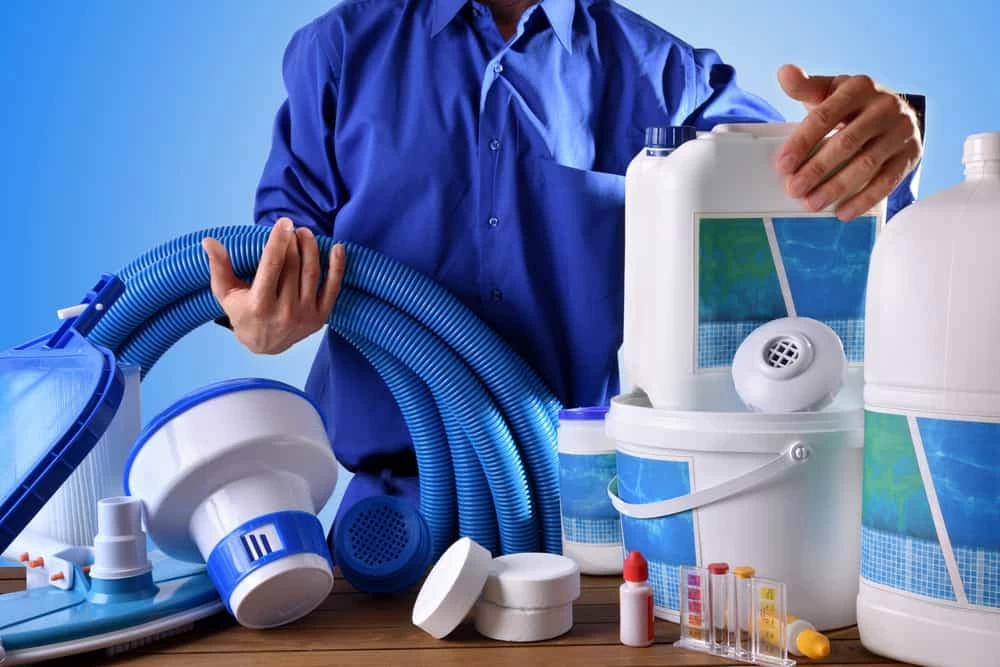

Living near LaGuardia means your pool deals with something most homeowners in quieter neighborhoods don’t — a constant layer of airborne debris settling into the water. Jet exhaust particulate, dust from airport operations, and general atmospheric activity from one of the nation’s busiest runways don’t just make your pool look dirty. They throw off your water chemistry faster than normal, which means a pool that isn’t serviced consistently can turn green within a matter of days during a Queens summer heat wave.
When pool maintenance in East Elmhurst, NY is handled properly and on schedule, that stops being your problem. Your water stays clear and balanced, your equipment runs the way it’s supposed to, and your pool is actually usable when you want it — not when you finally get around to fixing it.
East Elmhurst also has a housing stock built largely in the 1940s and 1950s. A lot of the pools here are connected to older plumbing and equipment that needs experienced eyes, not a technician running through a checklist. Consistent, professional maintenance catches small issues before they become expensive ones — and in a neighborhood where the median home is worth close to $850,000, protecting that investment matters.
We’ve been serving the New York metro area since 2009 — through every season, every type of pool, and every kind of equipment issue that comes with operating in this market. We’re based in Huntington Station and hold active home improvement contractor licenses in both Nassau and Suffolk Counties, with a Queens service area that we take seriously.
East Elmhurst is a neighborhood with deep roots. One census tract here has the oldest median resident move-in year of any in New York City — people don’t leave, and they don’t settle for service that doesn’t show up. That’s the kind of community we want to work in, and the kind of standard we hold ourselves to.
We’re not a franchise. There’s no rotating cast of technicians who don’t know your pool. JAS Aquatics is owner-operated, which means accountability runs all the way to the top — and you’ll notice the difference.

Pool openings in East Elmhurst, NY follow a specific window that matters more than most homeowners realize. Queens winters are cold enough to cause real damage — cracked plumbing lines, failed pumps, equipment that didn’t survive the freeze-thaw cycle — and the opening process is where you find out what the winter did. We start by removing and storing your cover, then inspect the entire system: plumbing lines, pump, filter, heater, and all fittings. If something didn’t make it through the winter, you’ll know immediately — not three weeks into the season.
From there, we get the water circulating, run a full chemical analysis, and balance everything from scratch. Pools that have been sitting since October need more than a dose of chlorine — pH, alkalinity, calcium hardness, and stabilizer all need to be dialed in before the water is safe and clear. We document every reading and every adjustment, so you know exactly where your pool stands from day one.
Timing matters here. April slots fill fast in Queens, and homeowners who wait until May often find themselves weeks behind. If you want your pool ready for the first real warm weekend — not scrambling to catch up in June — booking your spring opening early is the move. We recommend scheduling by mid-March for the East Elmhurst area.
Ready to get started?
Pool cleaning in East Elmhurst, NY isn’t a one-size-fits-all job, and we don’t treat it that way. Every weekly visit includes skimming, vacuuming, brushing, basket emptying, and a full chemical test and adjustment. In a neighborhood like East Elmhurst — where airborne debris from LaGuardia Airport operations settles into open pools year-round — consistent weekly cleaning isn’t optional if you want water that’s actually clear and safe.
Beyond the weekly work, we handle the full seasonal picture: spring openings, fall closings, and everything in between. Pool winterization in this area is non-negotiable. The freeze-thaw cycle that hits Queens every winter can crack plumbing, damage equipment, and cost you far more in spring repairs than a proper professional closing ever would. We blow out the lines, treat the water, shut down the equipment correctly, and cover the pool — every step, every time.
We also handle equipment repairs, pump and filter service, heater diagnostics, and chemical supply through our retail store in Huntington Station. If something breaks mid-season, you’re not tracking down a separate repair company. It’s one call, one team, and one company that already knows your pool. For East Elmhurst homeowners managing older pools on mid-century properties, that kind of continuity is worth a lot.

If you live in East Elmhurst, your pool is dealing with something pools in quieter neighborhoods aren’t — constant airborne debris from LaGuardia Airport operations. Jet exhaust particulate, dust from ground activity, and the atmospheric conditions generated by one of the nation’s busiest airports settle into open water consistently. It’s not your imagination, and it’s not a maintenance failure on your part.
The practical effect is that your water chemistry gets disrupted more frequently, and debris accumulates faster than it would in a neighborhood without that kind of overhead activity. That’s exactly why weekly professional pool cleaning in East Elmhurst, NY matters more here than in most areas. A service schedule built around your pool’s actual environment — not a generic one — keeps the water clear and the chemistry stable without you having to chase it every weekend.
For most homeowners in the Queens area, full-service annual pool maintenance runs somewhere between $3,000 and $6,000 depending on pool size, condition, and what’s included in the service plan. That range covers weekly cleaning visits, chemical balancing, and seasonal services like spring openings and fall closings. Equipment repairs, if needed, are typically quoted separately.
The number that matters more than the annual cost is what neglect costs. A pool that goes without consistent maintenance through a Queens summer can develop an algae bloom within 48 to 72 hours of a chemical imbalance. Remediation for a green pool runs significantly more than a season of regular service. And improper winterization — a cracked plumbing line, a pump that didn’t survive the freeze — can easily run into the thousands in spring repairs. Consistent professional service is the less expensive option when you account for what goes wrong without it.
The right window for pool openings in East Elmhurst is mid-March through early May, once nighttime temperatures are consistently staying above freezing. Opening too early — before the freeze risk is genuinely past — can damage equipment you just got running. Waiting too long means you’re behind everyone else, and April books up fast across the entire metro area.
For East Elmhurst specifically, we recommend reaching out by mid-March to lock in your opening date. Homeowners who wait until late April often find themselves on a waitlist and scrambling to get ready before Memorial Day weekend. The earlier you schedule, the more flexibility you have — and the more time there is to address any winter damage before the season is fully underway. A pool that sat under a cover since October needs a proper inspection before it’s swim-ready, and that takes time to do correctly.
For installation, yes — the NYC Department of Buildings requires a work permit for most inground pool installations, and plans typically need to be filed by a licensed professional engineer or registered architect. If you own a one- or two-family home in East Elmhurst, which describes the majority of the residential properties here, that permit requirement applies to you. New York State Building Code also requires that any pool with a water depth of 24 inches or more be enclosed by a 48-inch fence with self-closing gates.
For routine maintenance — weekly cleaning, chemical balancing, filter service, pump maintenance — permits are generally not required under NYC Administrative Code exemptions for ordinary repairs and minor plumbing work. That said, working with a licensed and insured company matters in New York City regardless. Unlicensed contractors can expose homeowners to code violations and liability that far outweigh any short-term savings. We hold active home improvement contractor licenses in Nassau County and Suffolk County and operate fully insured throughout our Queens service territory.
A proper pool closing involves a specific sequence of steps that most homeowners underestimate until something goes wrong. It starts with a final chemical treatment to balance and protect the water through the winter, followed by blowing out all the plumbing lines to remove standing water that would otherwise freeze and crack the pipes. Equipment — pump, filter, heater — gets properly shut down and protected. Then the pool is covered in a way that keeps debris out and holds through wind and weather.
In East Elmhurst, where winter temperatures regularly drop well below freezing and the freeze-thaw cycle can be aggressive through February and into March, skipping any one of those steps has real consequences. A plumbing line that wasn’t fully blown out can crack during a hard freeze. A pump left with water in it can be destroyed by January. For East Elmhurst homeowners with older pools connected to mid-century plumbing, the stakes are even higher — aging infrastructure has less margin for error. A professional closing done right is the single best way to avoid a major repair bill when you open in the spring.
The honest answer is that most homeowners can’t tell from the outside — and that’s not a knock on anyone. Pool pumps, filters, and heaters often show early warning signs that only show up during a proper inspection: unusual sounds, pressure readings that are off, flow rates that don’t match what the equipment should be producing. By the time something stops working entirely, the damage has usually been building for a while.
For East Elmhurst homeowners with pools built on mid-century properties, this is especially relevant. Equipment installed in the 1980s or 1990s is reaching the end of its functional lifespan, and the question is usually whether to repair or replace — a decision that depends on the specific component, how much life is realistically left in it, and what replacement parts cost versus a new unit. We assess equipment as part of every service visit and give you a straight answer on what it needs. If it can be repaired cost-effectively, we’ll tell you that. If replacement makes more sense, we’ll tell you that too — along with what it costs, before any work begins.
Other Services we provide in East Elmhurst