


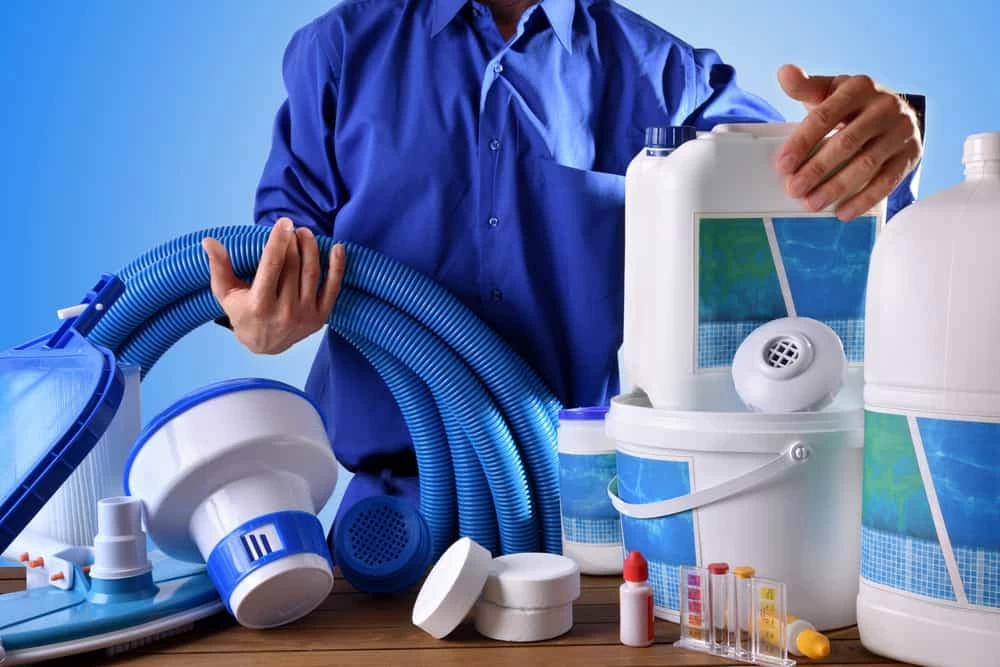

Queens Village is one of the most homeowner-dense neighborhoods in all of New York City. The colonials and Tudors lining the streets of Bellaire and central Queens Village weren’t built for renters — they were built for people who invest in their property. If you have a pool in that backyard, you already know the work it takes to keep it looking the way it should.
The tree canopy throughout Queens Village is beautiful. It’s also relentless. Leaves, pollen, seeds, and organic debris make their way into your pool constantly — and when that organic matter breaks down in warm water, it accelerates algae growth and clogs filters faster than most homeowners expect. During July and August, when temperatures climb into the 90s and your pool is in heavy use, chemistry can fall out of balance within 48 hours if it’s not being managed properly.
What changes when you have a professional handling it is simple: you stop reacting and start enjoying. You’re not spending Saturday morning troubleshooting green water or trying to figure out why your filter pressure is off. The pool is ready when you are, the water is balanced, and someone who actually knows what they’re looking at has already flagged anything that needs attention before it becomes a repair bill.
We’ve been in business since 2009, serving pool owners across Long Island and into eastern Queens. Queens Village sits directly on the Nassau County line — which means when you hire us, you’re not pulling in a company from across the borough. You’re working with a Long Island-based pool specialist that has spent 16 years maintaining pools in the same climate zone, through the same winters, and on the same pool types you’re dealing with right now.
Our company is owner-involved — Jesse is personally named in customer reviews and personally reachable when something comes up. That kind of accountability is rare in a market where a lot of pool service companies are hard to get on the phone, let alone in your backyard on schedule. We also hold active contractor licenses in both Nassau and Suffolk County, carry full insurance, and operate a retail store in Huntington Station where you can walk in, get your water tested, and pick up supplies. That’s a real business — not a van and a phone number.

Pool service in Queens Village follows a clear seasonal rhythm, and understanding it helps you stay ahead instead of scrambling to catch up.
Spring openings typically run from mid-March through early May. The goal is to hit that window after consistent overnight temperatures stay above freezing — open too early and you’re fighting late cold snaps, open too late and algae gets a head start. Queens Village’s tree-lined streets mean cover removal requires extra attention; there’s usually a significant debris load that’s built up over winter and needs to be cleared before the pool is properly started up. We handle the full opening process — cover removal, equipment startup, initial chemical balance, and a full system inspection so you know exactly what condition everything is in going into the season.
Through the summer, weekly pool maintenance visits cover water testing and chemical adjustment, skimming, vacuuming, brushing, and filter checks. If something looks off — a pump running differently, a fitting showing wear — it gets flagged before it becomes a problem. Fall closings follow the same thorough approach: plumbing blowout, chemical winterization treatment, equipment shutdown, water level management, and cover installation. Queens Village winters are real. Freeze-thaw cycles between December and February are genuinely damaging to pool plumbing that wasn’t properly closed, and a thorough winterization is the most cost-effective thing you can do to protect your equipment.
Ready to get started?
Pool service in Queens Village isn’t one-size-fits-all. The mix of inground and above-ground pools across the neighborhood’s detached single-family homes — from the larger lots in Hollis Hills and Bellaire down through the southern end of 11429 — means service needs vary by property. We work on both inground and above-ground pools, including Gunite, fiberglass, and steel vinyl liner inground pools, so whatever you have in your backyard is covered.
Weekly pool maintenance visits include water testing, chemical balancing across all key parameters — pH, chlorine, alkalinity, calcium hardness, and stabilizer — along with skimming, vacuuming, brushing, and filter maintenance. Pool openings include full equipment startup, initial water balancing, and a system inspection. Pool closings include complete winterization — plumbing blowout, chemical treatment, and cover installation — designed to protect your pool through the freeze-thaw cycles that Queens Village experiences every winter. Repairs, equipment checks, and supply needs are all handled through the same team, so you’re not coordinating between multiple vendors when something comes up.
Because Queens Village falls under New York City jurisdiction, new pool construction requires NYC Department of Buildings permits and compliance with NYC Building Code. We’re fully licensed and experienced navigating the regulatory side of pool work — the kind of credentialing that matters when you’re protecting a home worth $700,000 or more.

Full-season pool maintenance in Queens Village typically runs between $3,000 and $6,000 per year, depending on your pool size, type, and the level of service you need. That range covers weekly visits through the swim season, chemical balancing, cleaning, and routine equipment checks. Pool openings and closings are usually priced separately from the weekly maintenance package.
For Queens Village homeowners, that annual investment needs to be weighed against what deferred maintenance actually costs. A green pool remediation, a cracked pipe from improper winterization, or a failed pump from a chemical imbalance can each run well into the hundreds or thousands of dollars. Consistent professional maintenance is what keeps those costs from showing up. We publish our pricing ranges openly — if you want a specific number for your pool, a quick conversation gets you there without the runaround.
The right window for pool openings in Queens Village is generally mid-March through early May, with most homeowners targeting April when overnight temperatures consistently stay above freezing. The key is not waiting too long — once water temperatures climb and sunlight increases, algae can establish itself quickly in a pool that’s sitting closed with stagnant water. Getting ahead of that window means your opening is cleaner, your startup chemistry is easier to balance, and you’re ready to swim when the first warm weekends hit.
One thing that’s specific to Queens Village is the tree canopy. The neighborhood’s residential streets have dense, mature tree cover, which means winter covers tend to collect a significant amount of debris — leaves, seeds, and organic matter — that needs to be cleared carefully before the pool is opened. That debris load affects how long the opening process takes and what the initial water chemistry looks like. Scheduling early also matters because spring booking windows fill quickly — April slots go fast in this market.
A proper pool closing in Queens Village covers several critical steps: lowering the water level, blowing out the plumbing lines to remove water that would otherwise freeze and crack pipes, adding winterization chemicals to prevent algae and scale buildup over the off-season, shutting down and protecting equipment, and installing the winter cover. Every one of those steps matters — skipping or rushing any of them is how you end up with a damaged filter, a cracked return line, or a pool full of algae in April.
Queens Village winters are genuinely cold. Unlike some of the more densely urban parts of Queens where the urban heat island effect offers a bit of temperature buffer, Queens Village’s suburban character means freeze-thaw cycles between December and February are a real threat to pool plumbing. A pool that wasn’t properly winterized can sustain thousands of dollars in damage before spring even arrives. A thorough professional closing is the most straightforward way to protect that investment — and it’s far less expensive than the repairs that follow a bad one.
Weekly pool cleaning is the standard for active pools during the Queens Village swim season, which typically runs from Memorial Day through Labor Day. In this climate — hot, humid summers with temperatures regularly hitting the 90s in July and August — chlorine demand increases significantly when the pool is being used frequently. Without consistent cleaning and chemical management, algae can take hold within a couple of days, especially in pools that get a lot of direct sun exposure or are surrounded by trees that drop organic debris into the water.
Bi-weekly cleaning can work for pools that are used less frequently or that have strong circulation systems, but for most Queens Village pools in active use, weekly visits are the right call. The debris load from the neighborhood’s mature tree canopy adds to the cleaning demand throughout the season — not just in fall. Regular skimming, vacuuming, brushing, and filter maintenance keep that organic matter from breaking down in the water and throwing off your chemistry between visits.
Yes — and this is actually one of the more important things to understand before you hire any pool service company. A lot of pool service providers in the Queens Village area handle cleaning only. When something breaks or needs repair, you’re on your own to find someone else, coordinate the scheduling, and hope the two vendors communicate. That’s a frustrating situation when you’re already dealing with a pool that’s out of commission.
We handle both ongoing pool maintenance and repairs through the same team. If a technician notices something during a weekly visit — a pump running differently, a fitting showing wear, a filter that needs attention — it gets flagged and addressed before it becomes a larger problem. That continuity matters because the people maintaining your pool are also the people who know its history. They’re not starting from scratch every time something comes up. For Queens Village homeowners who commute to Manhattan and don’t have time to manage multiple vendors, having one point of contact for everything pool-related is a practical advantage.
We hold active contractor licenses in both Nassau County and Suffolk County — the two counties that make up Long Island, directly adjacent to Queens Village’s eastern border. These are trade-specific contractor licenses, not generic business registrations, and they reflect the same licensing standards that apply to home improvement work in the communities immediately surrounding Queens Village.
Queens Village falls under New York City jurisdiction, which means pool construction and certain pool modifications are subject to NYC Department of Buildings permit requirements. We’re experienced navigating the permitting and regulatory side of pool work and carry full liability insurance. For homeowners in Queens Village — where average home values are approaching $775,000 and the stakes of hiring an unlicensed or uninsured contractor are real — verified credentials aren’t a nice-to-have. They’re the baseline. We publish our license numbers openly and are fully insured, so you’re covered from the first visit forward.
Other Services we provide in Queens Village