
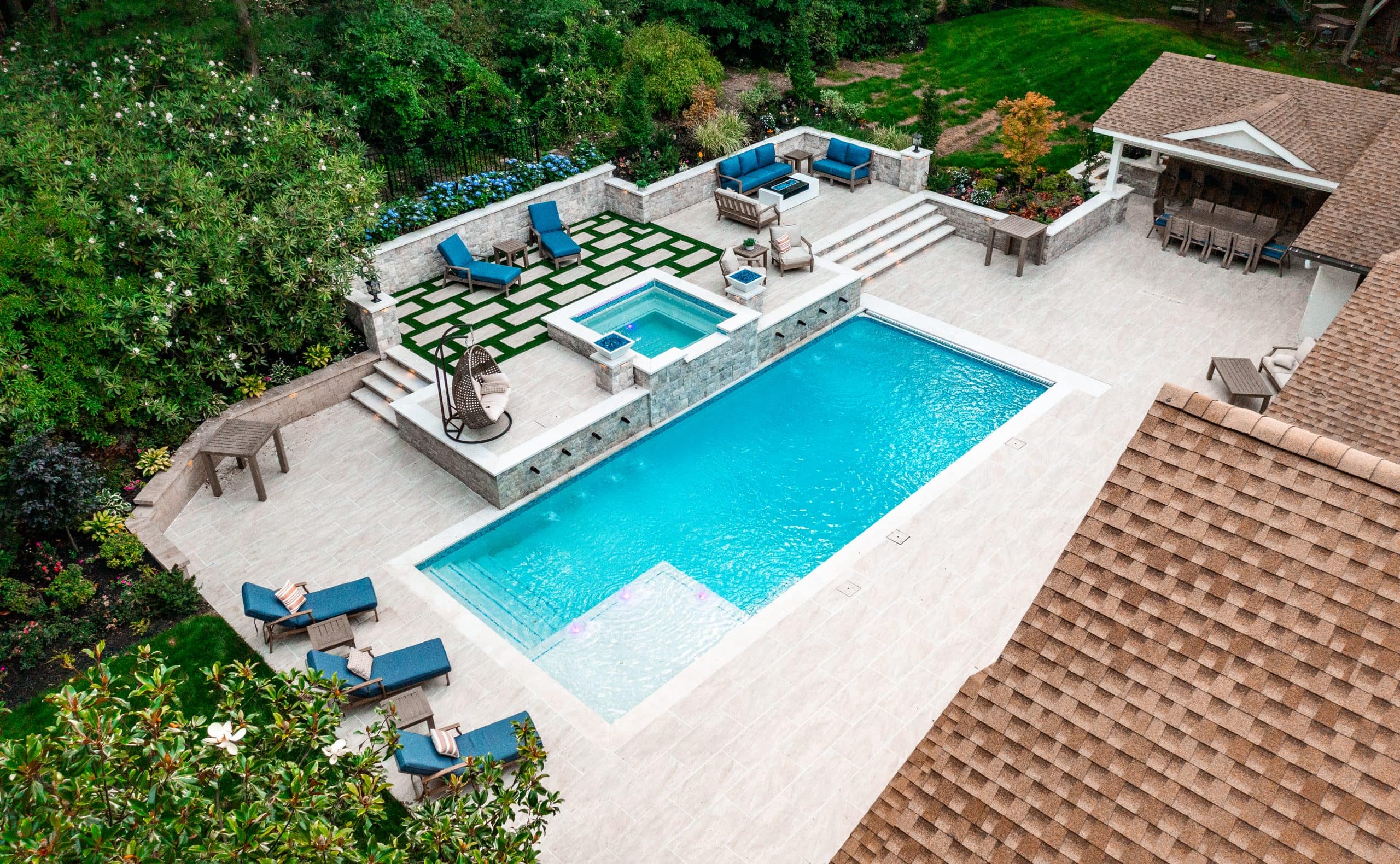

If you own a pool in Woodside South, you already know the summer heat here hits differently. The density of the neighborhood — buildings, pavement, rooftops all packed together along Queens Boulevard and the BQE corridor — traps heat in a way that suburban backyards simply don’t. That means your pool water warms faster, chlorine burns off quicker, and algae doesn’t wait for an invitation. A product that works fine in a shaded suburban yard might leave your pool green by Thursday in Woodside South.
The fix isn’t buying more chemicals — it’s buying the right ones at the right concentration, applied at the right time. That’s exactly what you get when you bring a water sample into JAS Aquatics. We test it on the spot, tell you precisely what’s off, and hand you a specific answer. No upsell. No guesswork. Just what your pool needs.
Most of the pools in this part of Queens are above-ground — and that matters when it comes to chemical compatibility, liner care, and equipment fit. A lot of stores treat above-ground pool owners like an afterthought. Here, you’re not. Whether you’re fighting cloudy water, dealing with a pump that’s losing pressure, or just trying to get through the season without drama, the right supply makes the difference between a pool you enjoy and one you dread.
JAS Aquatics has been operating since 2009 out of Huntington Station, New York — fully licensed, fully insured, and built from the ground up by people who design, construct, and maintain pools for a living. This isn’t a retail store staffed by seasonal employees. The people behind our counter are the same professionals who have installed Gunite, fiberglass, and vinyl liner pools across Long Island and the wider New York metro area, including the Queens communities just over the border from Woodside South.
That field experience changes everything about the advice you receive. When a customer from the 11377 ZIP code comes in with a water chemistry problem or a pump that’s acting up, the conversation sounds a lot more like a consultation than a transaction. We’ve served pool owners from neighborhoods like Woodside, Maspeth, Sunnyside, and Elmhurst — and we understand the specific conditions that come with urban pool ownership in western Queens.
If you’ve ever left a chain store with three products and still had a green pool a week later, you already understand what the difference looks like.
The process starts simply. You bring in a water sample — ideally pulled from elbow depth near the center of your pool, away from return jets — and our team at JAS Aquatics runs a full analysis on the spot. pH, total alkalinity, calcium hardness, free chlorine, stabilizer levels — everything that tells the real story of what’s happening in your water. You don’t need to guess what’s wrong or describe symptoms and hope for the best. The test gives a clear picture, and the recommendation follows directly from that picture.
From there, you leave with exactly what your pool needs — not a cart full of products you might need. If your alkalinity is the root issue driving your pH swings, that’s where the fix starts. If your stabilizer is depleted after a stretch of hot Queens summers and your chlorine is burning off before it can do anything, that’s the conversation you’ll have. We walk you through the why, not just the what, so you can handle it yourself next time with confidence.
For Woodside South pool owners closing up for the season in October, the same process applies to winterization. NYC doesn’t require permits for most above-ground pools under 500 square feet, but proper winterization is still critical — and the right closing chemical kit, combined with a quality winter cover, is what protects your investment through a New York winter. We carry everything you need to open and close your pool right, with the guidance to back it up.
Ready to get started?
The pool supply inventory at JAS Aquatics covers the full range of what a Woodside South pool owner actually needs across an entire season. On the chemical side, we stock liquid pool chlorine, trichlor tablets, calcium hypochlorite shock, non-chlorine shock, algaecide, pH adjusters, alkalinity balancers, cyanuric acid stabilizer, clarifiers, and metal removers. These are professional-grade products — not the diluted versions you find on big-box shelves — and the difference in performance is real, especially during the peak heat weeks when your pool is working hardest.
For equipment, we carry pumps including variable-speed models, sand and cartridge filters, robotic and automatic cleaners, salt chlorine generators, pool heaters, and a full range of replacement parts: O-rings, impellers, baskets, valves, and fittings. Above-ground pool owners in Woodside South will find replacement liners, above-ground compatible covers, and above-ground specific accessories stocked and ready — not treated as a secondary category. If you’re replacing a liner on a standard oval or round above-ground pool in the 11377 area, our team can help you identify the right fit and walk you through the install process.
Pool covers — both winter safety covers and solar covers — are available for both above-ground and inground pools. Seasonal timing matters here: Woodside South pool owners typically open between late April and mid-May and close in late September or October before the first hard freeze. Getting the right cover on at the right time, with the right closing chemicals underneath it, is what separates a clean spring opening from a green mess that takes two weeks to sort out.

For most above-ground pools in Woodside South, no building permit is required. Under NYC Department of Buildings rules, pools accessory to one- or two-family homes that are above grade with a maximum water depth of 48 inches and an area under 500 square feet are exempt from the primary permit requirements — which covers the vast majority of above-ground pools in the residential side streets of the 11377 ZIP code.
That said, barrier requirements still apply regardless of permit status. New York State requires that all pools — permitted or not — meet fencing and access control standards. For above-ground pools, the pool structure itself can often serve as the barrier if it meets the height and access requirements under applicable state standards. If you’re unsure whether your setup qualifies, it’s worth a quick check with NYC’s Department of Buildings or a licensed contractor before you fill it up. We can point you in the right direction.
The short answer: chlorine to sanitize, a pH adjuster to keep your water balanced, and shock on a regular basis to burn off contaminants that accumulate with use. Beyond that, a stabilizer (cyanuric acid) keeps your chlorine from burning off too fast in sunlight — which matters a lot in Woodside South during July and August when the urban heat island effect pushes temperatures several degrees higher than surrounding areas.
Algaecide is worth adding to your weekly routine as a preventive measure, especially in a dense urban environment where airborne particulates, pollen, and environmental debris enter your pool constantly. A clarifier helps when water looks hazy but chemistry is otherwise balanced. The honest truth is that the exact combination depends on your specific water — which is why in-store water testing removes the guesswork entirely. Bring a sample in, and you’ll know exactly what you need and in what order to add it.
Green water almost always comes down to one of three things: your chlorine isn’t strong enough to do the job, your pH is so far off that the chlorine can’t work properly, or your stabilizer is depleted and the chlorine is burning off before it can do anything. In Woodside South’s summer conditions — where pool water heats up fast and chlorine demand spikes — the third scenario is especially common.
Stabilizer (cyanuric acid) acts as a sunscreen for your chlorine. Without it, UV exposure degrades free chlorine rapidly, sometimes within hours on a hot Queens afternoon. The fix isn’t always adding more chlorine — sometimes it’s adjusting pH first so the chlorine you already have can actually function, or adding stabilizer so it lasts long enough to matter. A water test will tell you which issue you’re actually dealing with. Treating the wrong problem is how people end up spending $80 on chemicals and still have a green pool.
The main difference is concentration and freshness. Large chain retailers are often restricted from carrying full-strength pool chemicals — what you’re buying may be diluted compared to what a pool professional would actually use. On top of that, big-box products frequently sit in regional distribution warehouses for extended periods before reaching the shelf, which affects potency.
Professional-grade chemicals from a dedicated pool supply store are more concentrated, which means you use less product to achieve the same result — and they’re stocked by people who rotate inventory with the season in mind. For Woodside South pool owners dealing with accelerated chlorine demand during peak summer heat, that concentration difference isn’t minor. It’s the difference between treating a problem effectively on the first try and spending two weeks chasing results with products that aren’t strong enough to get there.
In Woodside South, most pool owners open between late April and mid-May, once nighttime temperatures are consistently staying above 50°F. Opening too early isn’t a major problem — algae growth is minimal in cold water — but having your chemicals balanced and your equipment running before the first real heat wave in June sets you up for a much smoother season.
Closing typically happens in late September or October, before the first hard freeze. The goal is to get your winterization chemicals in while the water is still warm enough for them to circulate and work effectively — ideally above 65°F. Closing too late, after temperatures have already dropped significantly, reduces the effectiveness of your closing chemical kit. A proper winterization includes shock, algaecide, a winter cover, and antifreeze for your equipment lines if applicable. Done right, your spring opening is a two-hour job instead of a two-week algae recovery project.
Yes — and honestly, it’s the smartest way to shop for pool chemicals. Bring in a water sample collected from elbow depth near the center of your pool, and our team will run a full analysis covering pH, total alkalinity, calcium hardness, free chlorine, and stabilizer levels. The test is done in-store, and the recommendation you receive is based directly on your water’s actual numbers — not a general protocol.
This matters especially for Woodside South pool owners because the conditions here — urban heat, airborne particulates from the surrounding density, and the typical above-ground pool setups common to the neighborhood’s housing stock — create water chemistry patterns that don’t always match generic maintenance schedules. Testing before buying means you spend money on what your pool actually needs, which is almost always less than what you’d grab off a shelf trying to cover your bases. It also means the fix works the first time, which saves you a second trip and a second purchase.
Other Services we provide in Woodside South