Summary:
You opened your pool cover this morning and saw it. That faint green tint you’ve been ignoring just turned into full-blown swamp water. It happens faster than most Long Island homeowners expect, especially with gunite pools that trap algae in their textured surfaces. Routine pool cleaning isn’t just about looks; it’s about protecting your investment, keeping your family safe, and enjoying your inground pool instead of constantly fighting it. Here’s what you need to know about why pools turn green, what cleaning really involves, and when it makes sense to bring in professional help.
What Causes Pools To Turn Green And Cloudy
The green you’re seeing isn’t dirt. It’s algae, and it thrives when conditions are right, which means warm water, sunlight, and unbalanced chemicals. Long Island’s summer heat creates the perfect environment for algae to multiply, sometimes in as little as 24 to 48 hours. Cloudy water usually means your filtration system isn’t keeping up, or your chemical levels are off. When pH levels climb too high, chlorine stops working effectively. When they drop too low, the water becomes corrosive and uncomfortable to swim in. Either way, you’re looking at a pool that’s uninviting and potentially unsafe.
Why Gunite Pools Trap More Algae Than Other Pool Types
Gunite pools are incredibly durable and customizable, which is why so many homeowners in Queens County and across Long Island choose them. But that textured surface that makes them strong also makes them more prone to algae buildup. The porous nature of gunite gives algae tiny crevices to cling to, especially in corners, steps, and around water features.
If you’ve ever noticed that your pool gets a slimy feel on the walls even when the water looks clear, that’s early-stage algae taking hold. It starts small but spreads fast. Once algae establishes itself in those textured surfaces, it becomes much harder to remove without aggressive brushing and chemical treatment.
This is why gunite pools need more frequent brushing than fiberglass or vinyl liner pools. Skipping even one week of brushing during peak season can set you back significantly. The longer algae sits, the deeper it embeds into the surface, and the more work it takes to get your pool back to crystal clear.
Regular vacuuming helps, but it’s not enough on its own. You need to physically brush the walls and floor to disrupt algae before it gets established. Most pool owners don’t realize this until they’re already dealing with a green pool. By then, you’re looking at shock treatments, extra chemicals, and days of work to get things back to normal.
How Chemical Imbalances Lead To Bigger Problems
Water chemistry sounds complicated because it is. You’re balancing pH, alkalinity, chlorine, calcium hardness, and stabilizer levels, all of which affect each other. Get one wrong, and the rest fall out of balance. This is where most DIY pool cleaning falls short.
When your pH is too high, chlorine becomes ineffective. You could be adding chlorine every day and still end up with algae because the pH is blocking it from doing its job. When pH drops too low, the water turns acidic, which can irritate skin, damage pool surfaces, and corrode equipment. Neither situation is fixable with a quick chemical dump.
Alkalinity acts as a buffer for pH, keeping it stable. If your alkalinity is off, your pH will swing wildly no matter what you do. Calcium hardness prevents water from becoming corrosive or scaling your surfaces. Too little calcium, and your water will pull it from your pool’s plaster. Too much, and you’ll see white buildup on tiles and equipment.
Then there’s cyanuric acid, the stabilizer that protects chlorine from being destroyed by sunlight. Long Island pools need it, but too much locks up your chlorine and makes it useless. You end up with high chlorine readings that aren’t sanitizing your water.
Testing strips give you a rough idea, but they’re not precise enough for real problem-solving. A good pool supply store can test your water, but professional pool service includes accurate testing and adjustments based on your specific pool type, size, and usage. That’s the difference between constantly chasing problems and preventing them.
How Often Should You Schedule Pool Cleaning
Most inground pools need cleaning at least once a week during swim season. That includes skimming debris, brushing walls and floors, vacuuming, emptying skimmer baskets, checking water levels, and testing chemicals. Miss a week, and you’ll see the difference. Miss two, and you’re dealing with algae.
Gunite pools often need more frequent attention because of how quickly algae can establish in the textured surface. If your pool gets heavy use, sits in full sun, or is surrounded by trees, weekly service might not be enough. Some pool owners in Long Island schedule bi-weekly cleanings and handle light skimming themselves between visits.
What Professional Pool Cleaning Includes
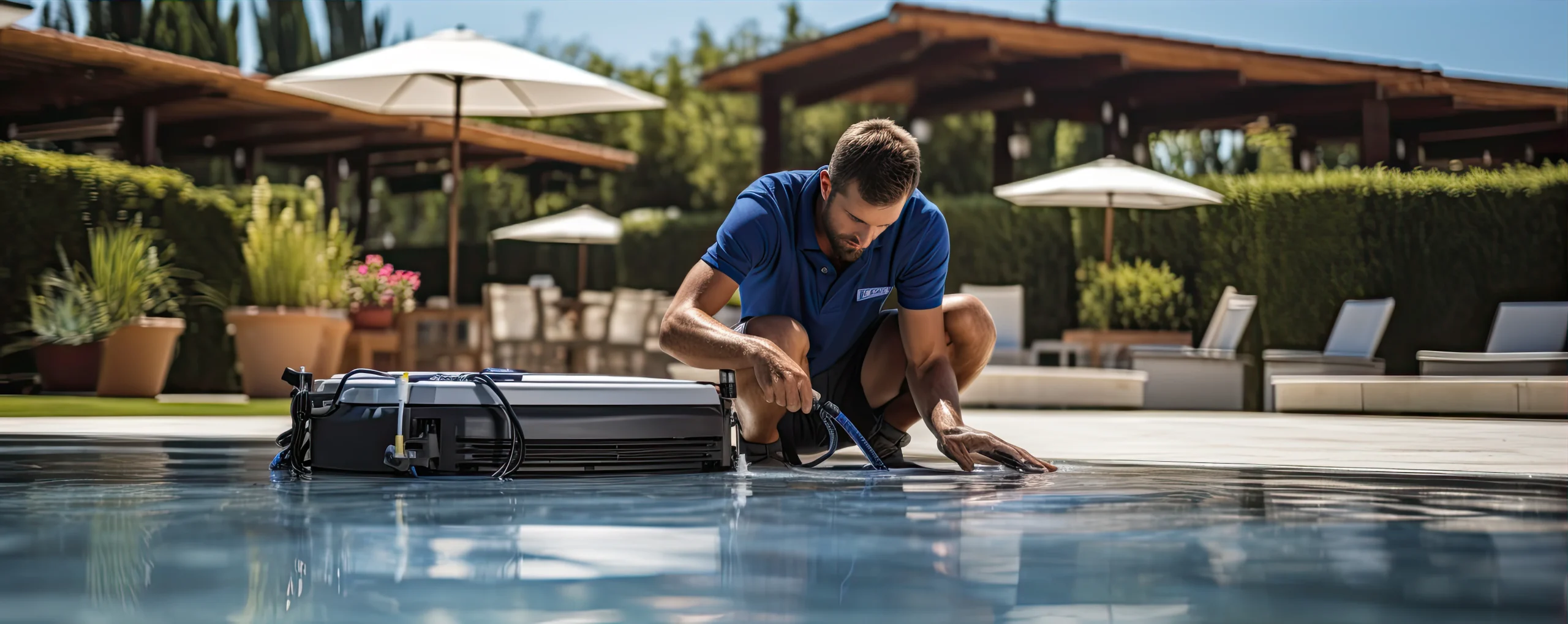
A real pool cleaning service does more than skim leaves. It starts with a full inspection of your water and equipment. We check your pump, filter, skimmer baskets, and any automatic cleaners to make sure everything’s running efficiently. If something’s wearing out or malfunctioning, you want to know before it fails completely.
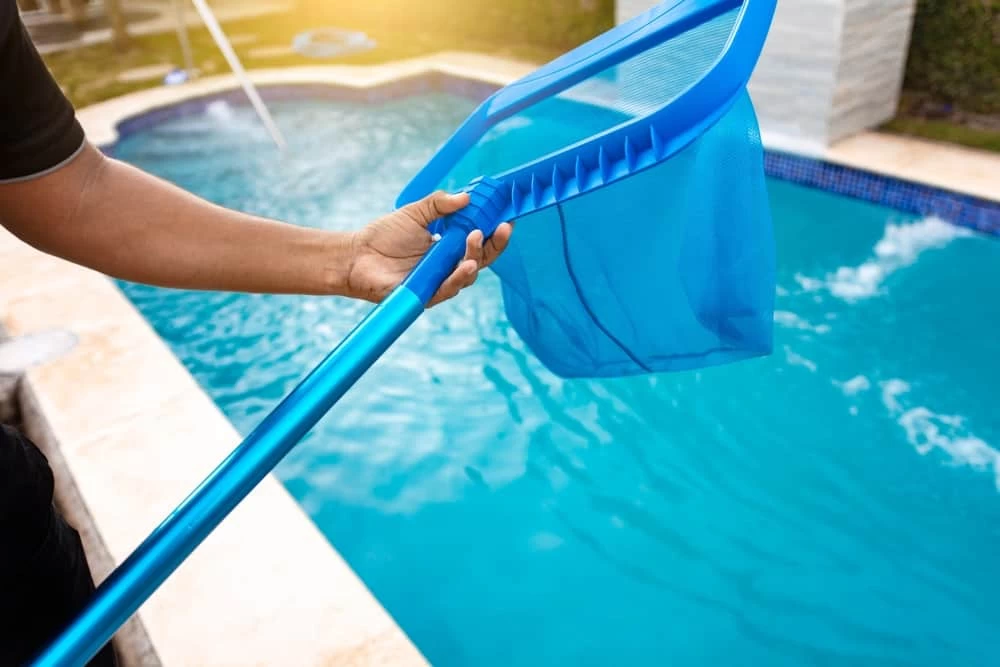
Next comes debris removal, which means skimming the surface and emptying skimmer baskets. Leaves, bugs, pollen, and other organic matter break down in your water and feed algae growth. Getting them out quickly keeps your pool cleaner and reduces the chemical load needed to maintain balance.
Brushing is where most DIY efforts fall short. Professional pool service includes thorough brushing of walls, steps, benches, and the pool floor. This disrupts algae before it takes hold and keeps your surfaces looking clean. For gunite pools, this step is non-negotiable. Vacuuming comes next, removing dirt and debris that’s settled on the bottom. Automatic pool cleaners help, but they don’t replace manual vacuuming for a deep clean. We make sure corners, crevices, and hard-to-reach areas get attention.
Filter maintenance is critical but often overlooked. Depending on your filter type (sand, cartridge, or DE) it needs regular cleaning or backwashing to maintain proper flow and filtration. A clogged filter forces your pump to work harder, increases energy costs, and reduces water quality.
Finally, chemical testing and balancing. This isn’t just dumping chlorine in the water. It’s testing pH, alkalinity, chlorine, calcium hardness, and stabilizer levels, then making precise adjustments based on your pool’s specific needs. Our technicians understand how these chemicals interact and can prevent problems before they start.
Signs Your Pool Needs More Than Routine Cleaning
Sometimes a pool needs more than weekly maintenance. If your water has turned completely green, you’re looking at a shock treatment and possibly draining part of the pool. If you’re constantly adding chemicals but nothing improves, there’s likely an underlying equipment issue or a leak affecting your chemical balance.
Cloudy water that won’t clear up even after chemical adjustments usually points to a filtration problem. Your filter might be clogged, undersized for your pool, or due for replacement. Sand filters need new sand every few years. Cartridge filters need new cartridges. DE filters need fresh DE powder and occasional grid replacement.
Stains on your pool surface (brown, green, black, or purple) indicate metal contamination or organic buildup that regular cleaning won’t fix. These require specialized treatments and sometimes acid washing to remove. Ignoring them leads to permanent staining that can only be fixed with resurfacing.
Rough patches on gunite surfaces mean the plaster is deteriorating. This happens over time, but it accelerates when chemical balance is consistently off or when the pool isn’t properly maintained. Once the plaster starts breaking down, algae has even more places to hide, and your pool becomes harder to keep clean.
Equipment that’s constantly breaking down or running inefficiently costs you money every month. Old pumps, failing heaters, and worn-out chlorinators should be replaced before they fail completely. We spot these issues during routine service and give you time to plan for replacements instead of dealing with emergency repairs.
Leaks are another issue that regular cleaning won’t solve. If you’re adding water more than once a week, or if you notice wet spots around your pool, you likely have a leak. Left unchecked, leaks can cause structural damage, erode surrounding soil, and waste thousands of gallons of water. Professional leak detection finds the problem before it becomes a major repair.
Keep Your Long Island Pool Clean Without The Hassle
Routine pool cleaning protects your investment, prevents expensive repairs, and gives you back the time you’d rather spend enjoying your pool instead of maintaining it. Gunite pools and inground pools need consistent attention, especially during Long Island summers when algae and chemical imbalances happen fast.
No matter if you’re in Queens County or anywhere across Long Island, understanding what proper pool service includes helps you make better decisions about your pool care. Weekly cleaning, proper chemical balance, and regular equipment checks keep your water crystal clear and your pool running efficiently.
If you’re tired of fighting green water and chemical confusion, we offer professional pool cleaning and maintenance services designed for Long Island pool owners. From routine weekly service to equipment repairs and seasonal care, our team handles everything so you can enjoy your backyard oasis.
Questions about your pool?
Tell us what you need and a JAS Aquatics pool pro on Long Island will get back to you. Prefer to talk now? Call 631-239-8031.