



Most Bellerose homeowners don’t think about their pool until the temperature drops and the forecast changes. By then, the best service slots are already gone and a rushed or late closing is exactly how pipes crack overnight. The October window is narrow, and in a neighborhood where most people are spending close to 50 minutes each way commuting, it’s easy for that window to close before you’ve had a chance to act.
What a proper closing actually buys you is a clean, uncomplicated spring. No green water under the cover. No cracked plumbing to diagnose before the kids can swim. No repair timeline eating into June. When the closing is done right lines blown out completely, chemicals balanced, equipment stored correctly you pull that cover off in April and the pool is ready to go.
Bellerose’s inland position means it doesn’t get the same moderating effect from the water that South Shore communities do. Temperatures here drop hard and fast in late October, and above-ground pools which are common on the Queens side of Bellerose are more exposed to that cold air than inground pools insulated by the ground. That makes a thorough, professional closing more important here, not less.
We’ve been closing pools across Nassau County and Queens since 2009. That’s 15-plus years of fall service through every kind of winter the New York metro area has produced. But what makes Bellerose different from most service areas is the border itself and we’ve dealt with it directly. We’ve built pools and provided service for homeowners on both the Queens side and the Nassau village side of Bellerose, and we know that those aren’t the same job.
The Queens side of Bellerose typically means above-ground pools on tighter lots, with exposed plumbing that needs to be handled correctly. The Nassau side often means fully inground construction with its own permit history and equipment configuration. We don’t show up and figure it out on the spot we already know what we’re walking into.
Our team is fully licensed and insured, and every closing comes with written documentation of what was done. You get a summary after every visit not just a handshake and a drive away.
Every closing starts with a full assessment of your pool and equipment before anything gets disconnected. We’re checking the current state of the water, the condition of the plumbing, and the equipment you have because a closing that skips this step misses problems that are going to show up in spring and get blamed on winter damage.
From there, we balance the water chemistry. That means adjusting pH and alkalinity, shocking the water, adding algaecide, and treating for staining. This matters because improperly balanced water doesn’t just sit still under a cover it can stain surfaces, grow algae, and corrode equipment over a long winter. Once the chemistry is right, we blow out the plumbing lines using commercial-grade air compressors. This is the step that most DIY closings get wrong. A home compressor doesn’t generate enough pressure to clear every run of pipe, and one pocket of water left in a line is enough to freeze, expand, and crack it. Water expands roughly nine to ten percent when it freezes enough force to split pipe fittings and pump housings overnight.
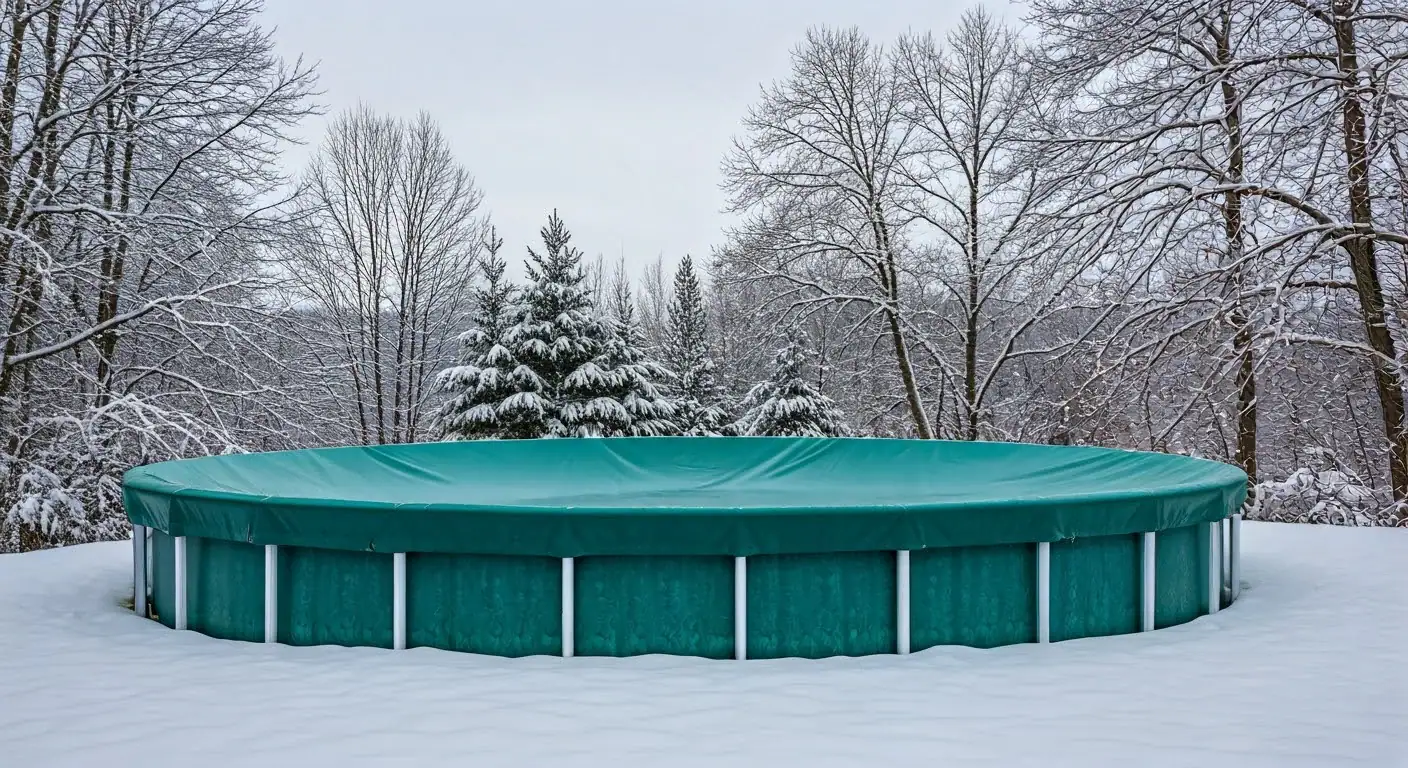
After the lines are cleared, we plug the skimmers and returns, disconnect and store your pump, filter, and heater, remove accessories like ladders, and install the cover with proper tensioning. For above-ground pools which make up a significant portion of what we close on the Queens side of Bellerose that also includes air pillow installation and securing the cover against wind. We finish with a written summary of everything completed, so you have a clear record heading into spring.
Ready to get started?
We close both above-ground and inground pools throughout Bellerose and the process for each is specific to that pool type, not a one-size-fits-all checklist. On the Queens side of Bellerose, above-ground pools are common, and those systems require their own set of steps: skimmer winterization, filter system disconnection, return line plugging, air pillow placement, and cover fastening that accounts for the wind exposure these systems face. Above-ground plumbing and equipment sit in open air, not insulated by the ground, which makes them more vulnerable to freeze damage than most homeowners realize.
On the Nassau village side of Bellerose, where inground construction is the standard, the closing involves underground plumbing blow-out, equipment drainage and storage, and cover installation appropriate for the pool’s size and shape. In both cases, the closing follows our 12-step winterization process and includes written documentation at the end a summary of every step completed, what chemicals were added, and what was inspected. That documentation is yours to keep, and it gives you a clear reference point when you open in spring.
Closings are booked through October. Given how quickly schedules fill across the Queens and Nassau market in fall, earlier is better. If you’re searching in September, you’re in good shape. If it’s mid-October, don’t wait another week.

The general target for Bellerose is September through October, before nighttime temperatures start dropping consistently below 50 degrees Fahrenheit. Bellerose sits inland away from the water so it doesn’t benefit from the temperature buffer that South Shore Nassau communities get. That means fall temperatures in Bellerose drop faster and harder than some homeowners expect, and the first hard frost can arrive in late October without much warning.
For above-ground pools specifically, the timing matters more than it does for inground pools. Your plumbing and equipment are exposed to ambient air temperature, not protected by the ground. A single overnight freeze after an improperly closed above-ground pool can crack the skimmer, split the return lines, or damage the filter housing. Closing in September or early October gives you a real buffer. Waiting until you see frost in the forecast is cutting it close, and by then, service schedules across Bellerose and the surrounding area are typically full.
A proper closing covers a lot more than throwing a cover on and calling it done. It starts with a water chemistry adjustment balancing pH and alkalinity, shocking the pool, adding algaecide, and treating for potential staining over the winter. Skipping this step means you’re trapping unbalanced water under a cover for five or six months, which is how you end up with stained surfaces and green water in spring.
After chemistry, the critical step is blowing out the plumbing lines with a commercial-grade air compressor. This removes water from every run of pipe before it can freeze and expand. The pump, filter, and heater are then disconnected and stored. Skimmer plugs and return plugs go in. Accessories like ladders come out. The cover goes on with proper tensioning for above-ground pools, that includes an air pillow and wind-secure fastening. Every closing finishes with a written summary of what was done, so you have a record when you open in spring.
Yes and this is actually one of the more common questions we get from Bellerose homeowners, because a lot of pool companies service one side of the border or the other, not both. We have worked in Bellerose on both the Queens side (ZIP codes 11426 and 11427) and the Nassau village side (Bellerose Village and Bellerose Terrace, ZIP 11001), and we understand that those aren’t interchangeable.
On the Queens side, above-ground and semi-inground pools are the norm, and the closing process reflects that exposed plumbing, skimmer winterization, and wind-resistant cover installation are all part of what we do. On the Nassau side, fully inground construction is standard, and the closing follows the underground plumbing blow-out process appropriate for that type. If you’re not sure which side of the line you’re on, it doesn’t matter just tell us your address and we’ll know exactly what we’re dealing with before we arrive.
You can, but the most important step blowing out the plumbing lines is where most DIY closings fall short. Home-grade air compressors don’t generate enough pressure to fully clear every run of pipe. That’s just a hardware limitation. Professional pool closing equipment is built specifically to push water out of plumbing lines completely, including the low points and bends where water tends to collect. One pocket of water left in a line will freeze, expand by roughly nine to ten percent, and crack whatever it’s sitting in.
The cost of a professional closing is a fraction of what a single freeze-related repair runs. Replacing cracked underground pipe, a split skimmer, or a damaged pump housing is not a small job. For an above-ground pool on the Queens side of Bellerose where the plumbing is fully exposed to winter air getting the blow-out right is the difference between opening in April with a working pool and spending the first weeks of summer waiting on parts and labor.
If a hard freeze hits before your pool is properly closed, the damage can happen in a single night. Water sitting in your plumbing lines, pump housing, or filter expands as it freezes, and that expansion doesn’t care how old or new your equipment is. Cracked pipes, split fittings, a damaged pump these aren’t gradual problems. They show up all at once when you pull the cover off in spring and try to start the system.
Bellerose isn’t a neighborhood that gets a long, gentle slide into winter. October here can bring overnight temperatures in the upper 30s and low 40s, and the first hard frost typically arrives by late October. Once that happens, if your pool isn’t closed, the damage window is open. Beyond the equipment risk, waiting also means competing with every other homeowner in the area for the same limited service slots. We book closings through October, but those slots fill especially as temperatures start dropping and everyone realizes they need to act at the same time.
For pool closing specifically, no permit is required on either side of the border winterization is a maintenance service, not a construction activity. But the border does matter in a practical sense, because it affects what type of pool you likely have, and that determines exactly how the closing should be done.
On the Queens side of Bellerose, NYC zoning rules and lot sizes have historically made above-ground and semi-inground pools the more common choice. Those pools have exposed plumbing and equipment that need to be handled differently than an inground system. On the Nassau village side, fully inground construction is the standard, with underground plumbing that requires a proper commercial blow-out to protect. A pool company that doesn’t know which side of the line you’re on or doesn’t understand what that means for the closing process may show up with the wrong approach. We have worked on both sides of the Bellerose border and know the difference before we pull into your driveway.
Other Services we provide in Bellerose