




When spring arrives and you pull back that cover, you want to find a clean pool not a cracked pump housing, split plumbing lines, or a filter that spent the winter holding standing water. A proper closing in October means your opening in April is straightforward. No emergency repair calls, no waiting weeks for parts, no watching the season slip by while the damage gets assessed and fixed.
College Point sits on a peninsula with water on three sides the East River to the north, Flushing Bay to the west, Powell’s Cove to the east. That geography isn’t just scenic. It means wind moves across this neighborhood with less obstruction than it would in a sheltered inland area. For above-ground pool owners, that matters significantly.
Your pump housing, filter system, and plumbing lines aren’t insulated by ground they’re fully exposed to ambient air and whatever wind comes off that water. A closing that might be adequate in a protected inland neighborhood isn’t necessarily adequate here. What you get from a properly done closing is simple: equipment that survives the winter intact, water chemistry that doesn’t let algae take hold under the cover, and a written summary of exactly what was done so you’re not guessing in spring.
We’ve been closing pools in Queens and across the New York metro area since 2009. That’s 15-plus fall seasons of understanding exactly how this region’s freeze-thaw cycles behave not a general sense of it, but the specific knowledge that comes from showing up in October and coming back in April to open what we closed.
We operate out of Flushing, just down College Point Boulevard from the neighborhood. That’s not a technicality it means we’re local in a way that Long Island-only companies aren’t. We know College Point’s waterfront exposure, we schedule it regularly, and we don’t treat it like a detour.
Every technician we send is fully licensed and insured for New York City residential work. We’re a full-service company design, build, maintain, open, and close which means we have a reputation that carries through every season. We’ll be back in spring, and we know it.
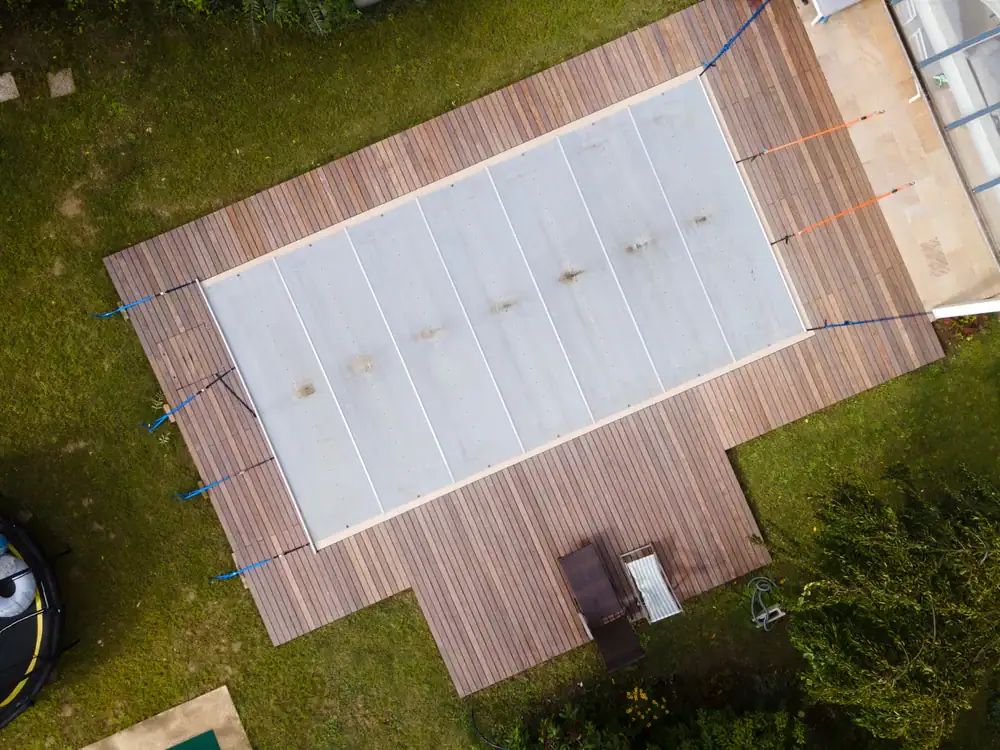
Every closing we perform follows a documented 12-step winterization process. We start with a full assessment of your pool and equipment looking at what you have, what condition it’s in, and what the closing needs to account for.
From there, we clean the pool, remove debris, and balance the water chemistry before anything gets covered or disconnected. That means adjusting pH and alkalinity, adding shock treatment, algaecide, and stain prevention chemicals. Skipping this step is one of the most common reasons pools open green in spring.
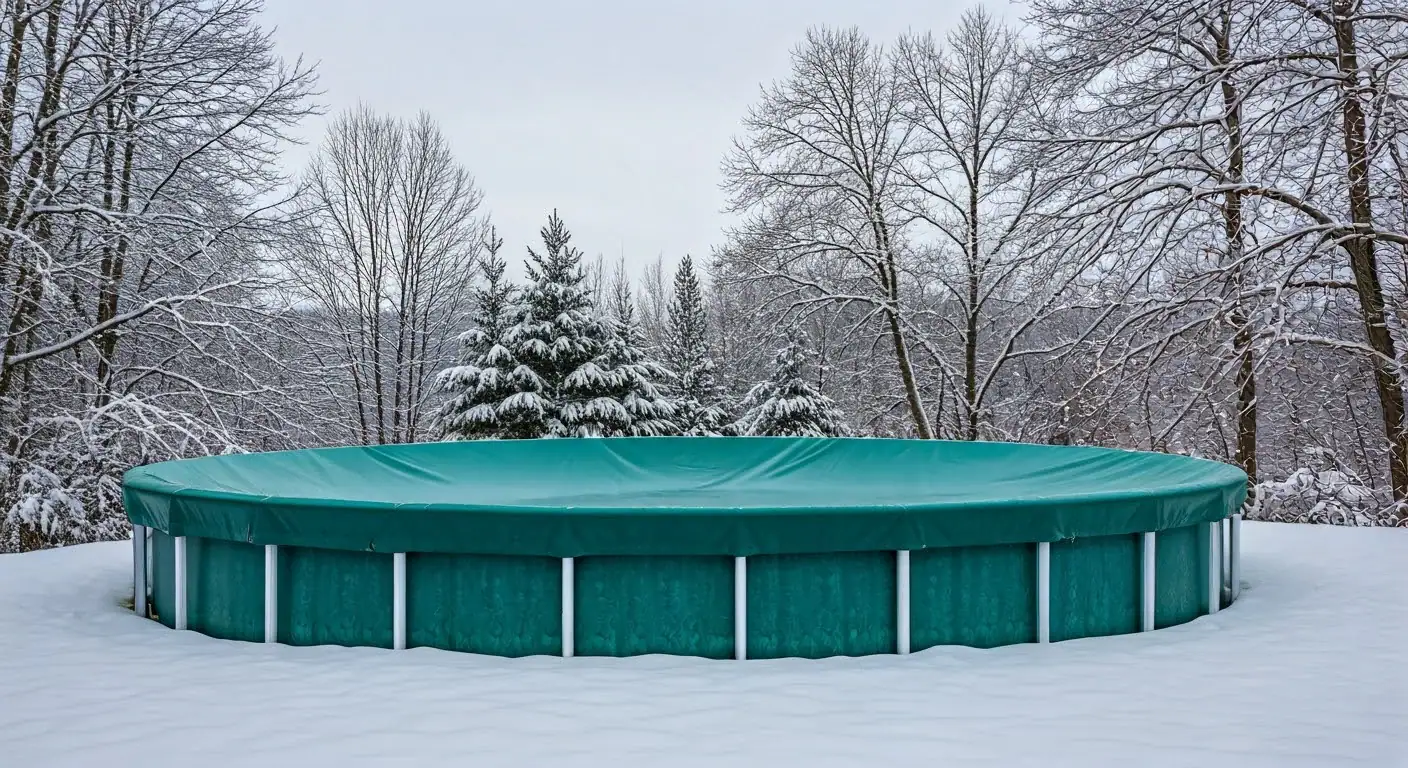
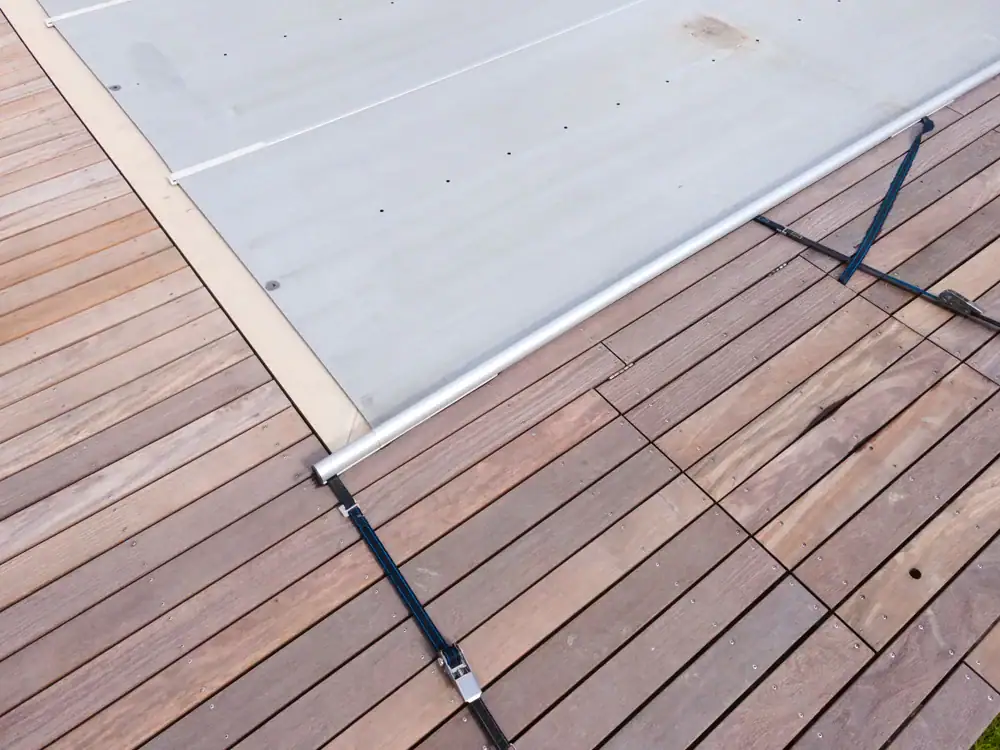
For above-ground pools which are the most common setup in College Point’s residential neighborhoods we disconnect and properly store the filter system, pump, and any other equipment that can’t stay exposed through a Queens winter. We plug return lines and skimmers, install the air pillow under the cover, and fasten the cover securely. Wind off Flushing Bay can put real stress on a cover that wasn’t tensioned properly, so this step gets the attention it deserves.
The plumbing line blow-out is done with commercial-grade air compressors, not shop equipment. That distinction matters home-grade compressors can’t generate enough pressure to fully clear water from the lines. One pocket of water left behind is all it takes to cause freeze damage. When the job is done, you get a written summary of every step completed. You’ll know exactly what was done, not just that someone came and left.
Ready to get started?
We close both above-ground and inground pools throughout College Point and the surrounding areas of northern Queens. Above-ground pools get particular attention in College Point because of the neighborhood’s exposure the plumbing and equipment on an above-ground pool sit in open air, and College Point’s waterfront geography means that air can get cold and windy earlier and harder than residents sometimes expect.
The service covers everything from the initial pool assessment and water chemistry balancing through equipment disconnection, commercial line blow-out, skimmer and return plugging, cover installation, and removal of accessories like ladders. Every closing ends with a written documentation summary a record of what was done, what chemicals were added, and the condition of the equipment at the time of service. That summary is yours to keep, and it’s useful if anything comes up when you open in spring.
Standard homeowner’s insurance typically does not cover freeze damage that results from improper winterization. A professional closing with documented process is the clearest way to demonstrate that the pool was properly maintained. For College Point homeowners who’ve invested significantly in their properties, that documentation has real value.
The general rule for Queens is to close your above-ground pool when nighttime temperatures are consistently dropping below 50 degrees Fahrenheit typically mid-to-late October. Closing too early creates its own problem: warmer water under a cover with reduced circulation is a good environment for algae. But closing too late risks a hard freeze event catching your pool before it’s protected.
College Point’s position on a peninsula, surrounded by open water on three sides, means wind chill can accelerate how quickly exposed above-ground equipment gets cold. You don’t have the benefit of ground insulation that inground pool owners have. A reasonable target is to have your closing scheduled and confirmed by early October so you’re not scrambling if temperatures drop faster than expected. Most years, Halloween is the outer edge of a safe window in this part of Queens but it’s not a guarantee.
A thorough pool closing covers more than just throwing a cover on and walking away. It starts with a full assessment of the pool and equipment, then moves through water chemistry balancing adjusting pH, alkalinity, adding shock, algaecide, and stain prevention chemicals. Getting the chemistry right before closing is what keeps the water from turning into a problem under the cover over winter.
From there, the process includes a commercial-grade plumbing line blow-out to remove all water from the pipes, equipment disconnection and storage, skimmer and return plugging, and cover installation. For above-ground pools specifically, that also means air pillow placement and cover fastening both of which matter more in a wind-exposed neighborhood like College Point than they might in a sheltered backyard elsewhere in Queens. We also provide a written summary after every closing that documents each step completed and the condition of the equipment.
We operate out of Flushing, Queens located at 39-01 Utopia Parkway, which puts us just down College Point Boulevard from the neighborhood. This isn’t a Long Island company that occasionally crosses into Queens. We actively schedule closings in College Point and throughout northern Queens, including Whitestone and the surrounding areas.
College Point’s geography no subway access, the Whitestone Expressway as a hard southern boundary means residents have good reason to be skeptical when a company says it covers Queens but doesn’t know the area well enough to find it. We know where College Point is, we know how to get there, and we schedule it the same way we schedule every other Queens neighborhood we serve.
You can, and some homeowners do. The honest answer is that the outcome depends heavily on the equipment you have available and how thorough you are with each step. The part that most DIY closings get wrong isn’t the cover or the chemicals it’s the plumbing line blow-out. Clearing water from the lines requires enough air pressure to push every pocket of water out completely. Home-grade air compressors typically can’t generate that pressure.
A single pocket of water left in a line can freeze, expand water expands roughly 9 to 10 percent when it freezes and crack the pipe overnight. Freeze damage repairs aren’t cheap. A burst underground pipe can run several thousand dollars to fix, and that’s before you factor in any equipment damage. The cost of a professional closing is a fraction of that. Beyond the equipment issue, a professional closing also comes with a written record of what was done which matters if something comes up in spring and you need to trace back what the pool’s condition was at closing time.
If you opened your pool this past spring and found cracked fittings, a damaged pump housing, split plumbing, or water that looked like it had been sitting in a swamp all winter, those are signs the previous closing wasn’t done thoroughly. The good news is that most of that damage is repairable, and a proper closing this fall prevents the same thing from happening again.
When we close a pool, we start with a full equipment assessment so if there’s existing damage or wear that needs attention before winter, we’ll flag it. You won’t find out in April that something was already broken when we closed it. The written summary we provide after every closing also gives you a baseline record: what the equipment looked like, what chemicals were added, what was disconnected and stored. If anything does come up next spring, you’re not starting from zero trying to figure out what happened.
It does, particularly for above-ground pool owners. College Point is bounded by the East River to the north, Flushing Bay to the west, and Powell’s Cove to the east. Open water on three sides means wind moves across the neighborhood without the natural windbreaks you’d find in an inland Queens neighborhood. For above-ground pools, that’s a real factor the pump housing, filter, and plumbing are fully exposed to ambient air and wind chill, not insulated by the ground the way inground pool equipment is.
What that means practically is that wind-driven cold can stress exposed equipment earlier and more intensely than a homeowner might expect based on the official air temperature. Cover tensioning also matters more here a cover that wasn’t properly fastened against wind stress can fail or shift during a winter storm, leaving the pool exposed. We account for these factors during every closing in College Point, including how the cover is secured and how thoroughly the equipment is disconnected and stored before the cold season sets in.
Other Services we provide in College Point