




When you close your pool the right way before winter sets in, you’re not just covering it up and hoping for the best. You’re protecting the pump, the plumbing lines, the filter everything that makes the pool actually work when you pull the cover off in late May.
For a lot of families in Corona, that above-ground pool is the thing that makes summer worth having. When the heat index on Junction Boulevard pushes 95 degrees and the kids need somewhere to go, that pool is doing real work. It deserves more than a rushed 45-minute job in October from someone who treats above-ground pools like an afterthought.
Here’s the part most Corona homeowners don’t know going in: above-ground pools are actually more vulnerable to freeze damage than inground pools. The plumbing and equipment on an inground pool are insulated by several feet of ground. Your above-ground pool’s pump, filter, and plumbing lines are fully exposed to ambient air temperature. When Queens temperatures drop below freezing and between November and February, they do regularly that exposure is what cracks pipes and destroys equipment. A proper closing eliminates that risk before it becomes a problem you’re dealing with in spring.
We’ve been closing pools across Queens and Long Island since 2009. That’s 15-plus years of freeze-thaw cycles, early October cold snaps, and spring openings where homeowners found out the hard way that last fall’s closing wasn’t done properly. That experience is built into every job we do now.
We have a Queens location at 39-01 Utopia Pkwy in Flushing a few miles from Corona via Northern Boulevard and our Huntington Station base sits right on the Long Island Expressway corridor, which runs directly along Corona’s southern boundary at 108th Street. Getting to you isn’t a special trip. It’s the same route our crews travel regularly.
We’re a fully licensed and insured, full-service pool company. We design and build pools, run maintenance programs, handle openings and closings, and operate a retail store. We’re not a seasonal crew that shows up in October and disappears. We’ll be the same company here in May when you open.
Every closing we perform follows a documented 12-step winterization process. It starts with a full pool assessment we look at the equipment, check the current condition of the water, and note anything that needs attention before we start. From there, we remove debris, balance the water chemistry, and add the appropriate winterizing chemicals: shock, algaecide, and stain prevention treatments that keep the water from turning into a problem while the cover is on.
The most critical step is the plumbing line blow-out. We use commercial-grade air compressors to clear every line of water. This isn’t something a home compressor can do reliably the pressure requirements are specific, and a line that isn’t fully cleared is a line that can crack in a hard freeze. For above-ground pools, which are common throughout Corona’s single-family and two-family homes, we also disconnect and properly store the pump and filter, plug the skimmer and return lines, and install an air pillow under the cover to manage ice expansion through the winter.
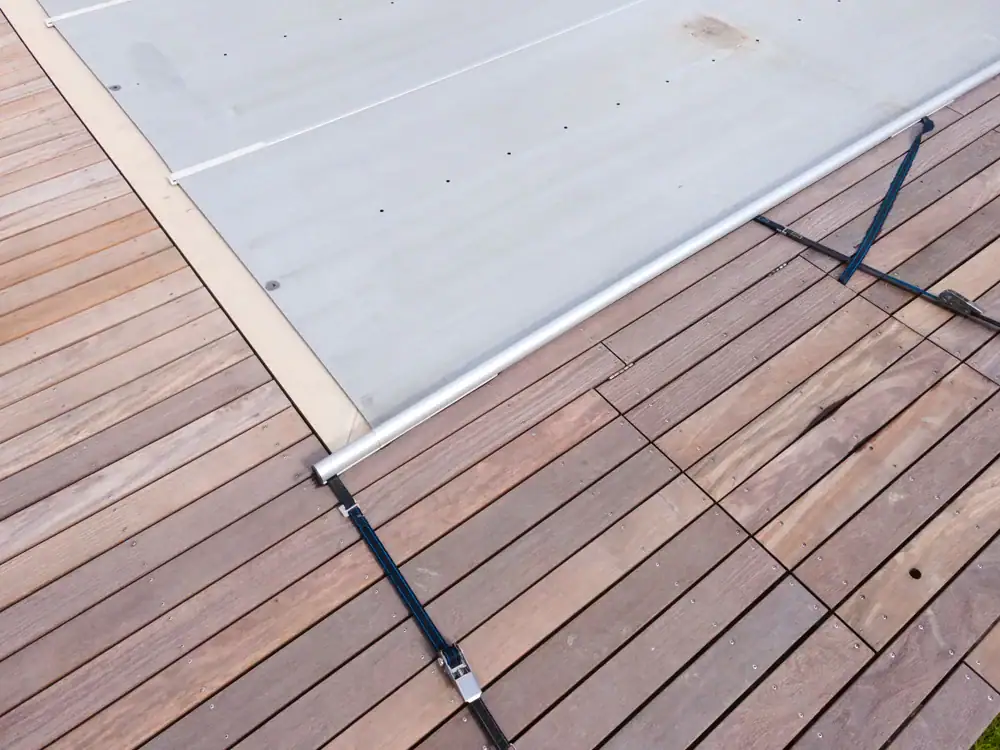
After everything is done, we install the cover tensioned and secured against wind and provide you with a written summary of exactly what was completed. You’ll know what was done, what condition the equipment was in, and what to expect when you open in spring. The whole process typically takes under two hours.
The optimal closing window for Corona and surrounding Queens pools is late September through mid-October. Nighttime temperatures in the 11368 area start dropping below 50°F by mid-October, and Queens can see hard freeze events before Halloween. We’re booking October closings now the schedule fills faster than most homeowners expect.
Ready to get started?
We close both above-ground and inground pools throughout Corona and the surrounding Queens neighborhoods. Given the housing stock in Corona mostly single-family and two-family homes on standard Queens lots above-ground pools are by far the more common setup, and that’s exactly the work we’re built for.
For above-ground pools, the closing includes a full equipment inspection, water chemistry balancing, commercial air compressor blow-out of all plumbing lines, pump and filter disconnection and storage, skimmer winterization, air pillow installation, and cover installation secured against the wind exposure that comes with being close to the LaGuardia Airport corridor to the north. For inground pools, the process covers the same chemistry and blow-out steps, plus heater drainage, return and skimmer plugging, and safety cover tensioning.
One thing worth knowing: standard homeowner’s insurance typically does not cover freeze damage that results from improper winterization. We state this directly because it matters here in Corona. For a working-class household, a $5,000 to $15,000 repair bill from a single freeze event is not an abstract inconvenience it’s a real financial hit. A proper professional closing is the most straightforward way to avoid it. Every closing comes with a written summary of what was done, so you have a record if any questions come up in spring.
The ideal closing window for Corona pools is late September through mid-October. The goal is to close after the summer heat has passed so you’re not trapping warm water under a cover and encouraging algae growth but well before the first hard freeze event, which can arrive in Queens before Halloween in some years.
Nighttime temperatures in the 11368 ZIP code typically drop below 50°F by mid-October, and that’s the threshold where unprotected pool plumbing starts to become a real risk. Above-ground pools are especially time-sensitive because their equipment is fully exposed to ambient air there’s no ground insulation working in your favor. Waiting until late October to book also means competing with every other Corona homeowner who waited, in a market where pool closing schedules fill weeks in advance. Booking in September gives you the best chance of getting a date that works before conditions become urgent.
We actively serve Corona and the surrounding Queens neighborhoods. We have a Queens location at 39-01 Utopia Pkwy in Flushing, which is a few miles from Corona via Northern Boulevard. Our Huntington Station base sits on the Long Island Expressway corridor the same highway that runs along Corona’s southern boundary at 108th Street so the route to Corona is one our crews travel regularly.
This isn’t a Long Island company that added Corona to a service area list. We have a physical Queens address, a Queens phone number, and have been closing pools in Corona and the borough for over 15 years. For a Corona homeowner who has dealt with contractors who claim to cover the area but treat Queens as a low-priority add-on, the local presence is a meaningful difference. You can call the Queens number directly and confirm your date without being routed through a Long Island scheduling queue.
Yes, they refer to the same service. “Pool closing” and “pool winterization” are used interchangeably in the industry and by most homeowners. Some companies use one term, some use the other, and buyers searching for either one are looking for the same thing: a professional service that prepares the pool and its equipment to survive the winter without damage.
The full process includes water chemistry balancing, plumbing line blow-out using commercial-grade air compressors, equipment disconnection and storage, skimmer and return line plugging, and cover installation. For above-ground pools the most common pool type in Corona’s residential neighborhoods it also includes air pillow installation and proper cover fastening. Whether you searched for “pool closing” or “pool winterization,” the service we perform covers all of it, and you receive a written summary of every step completed.
You can attempt it, but the most critical step blowing out the plumbing lines requires commercial-grade air compressor equipment that most homeowners don’t have. Home compressors typically can’t generate enough sustained pressure to fully clear water from every section of the plumbing. A single pocket of water left in a line is enough to crack that line when temperatures drop below freezing, and Queens winters will find it.
Beyond the compressor issue, there’s the chemistry side: water that isn’t properly balanced before closing can stain the pool walls, promote algae growth under the cover, or cause scale buildup on equipment over the winter. Getting it right requires knowing the correct chemical sequence and ratios for your specific pool volume and current water condition. For an above-ground pool in a Corona backyard where the equipment is fully exposed to winter air and wind the margin for error on a DIY closing is smaller than most homeowners realize. The cost of a professional closing is a fraction of one repair call.
If a hard freeze event hits before your pool has been properly closed, the water sitting in the plumbing lines, pump housing, and filter will expand as it freezes. Water expands roughly 9 to 10 percent when it freezes enough to crack PVC plumbing, split pump housings, and damage filtration equipment in a single night. Above-ground pools are at higher risk because none of that equipment has any ground insulation protecting it from the cold.
The repair costs from a single freeze event can run anywhere from several thousand dollars to over ten thousand dollars, depending on what cracked and how much of the plumbing needs to be replaced. Queens can see freeze events in late October earlier than many homeowners expect and the freeze-thaw cycle that runs through February creates repeated stress on any equipment that wasn’t properly prepared. Standard homeowner’s insurance typically doesn’t cover this kind of damage if it results from failure to winterize. Getting the pool closed before that first freeze is the only reliable way to avoid it.
A professional pool closing by JAS Aquatics typically takes under two hours from start to finish. We handle the full 12-step process assessment, chemistry, blow-out, equipment disconnection, cover installation, and documentation without requiring you to manage or oversee each step.
Whether you need to be home depends on access to the backyard and the equipment. If the crew can reach the pool and all components without going through a locked interior space, many Corona homeowners arrange for access and go about their day. Given that Corona is a commuter-oriented neighborhood with three 7 train stations serving residents who are often out early and back late the ability to schedule a closing without blocking off half your day is a real practical advantage. After the job is done, you’ll receive a written summary of everything that was completed, so you have a full record even if you weren’t there to watch. If you have specific questions about your setup or access situation, that’s something you can go over when you call to book.
Other Services we provide in Corona