



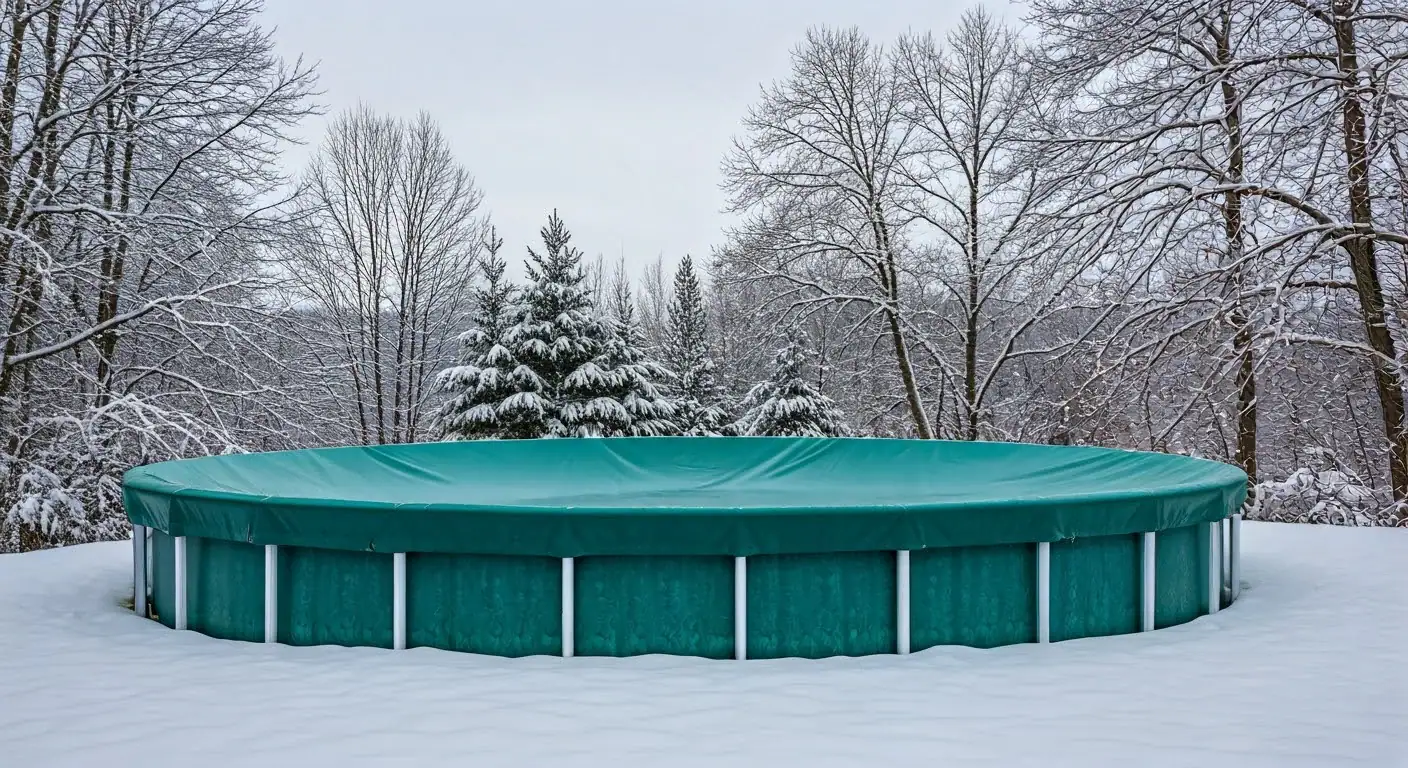
St. Albans is built for homeowners. Detached houses, private driveways, fenced backyards this neighborhood was made for outdoor living, and a lot of those backyards have above-ground pools sitting in them right now. The problem is that above-ground pools are actually more vulnerable to freeze damage than inground pools. The pump, filter, and plumbing are fully exposed to the air not insulated by the ground and when October temperatures swing hard, that equipment takes the hit first.
Southeast Queens sits flat and open, roughly two miles north of JFK Airport, with nothing to buffer the cold air that pushes in off the coast in October. That geography matters. A hard freeze can arrive faster here than homeowners expect, and one unprotected night is genuinely enough to crack a pump housing or burst a plumbing line. Water expands nine to ten percent when it freezes that’s not a small amount of pressure on equipment that wasn’t designed to absorb it.
When your pool is closed properly before that first freeze, you skip the spring surprise entirely. No green water hiding cracked pipes. No three-week repair wait before you can even think about opening. You just open your pool and use it which is the whole point of having one.
We’ve been operating since 2009 over 15 years of closing pools across Nassau County, Suffolk County, and Queens. Our Queens location at 39-01 Utopia Pkwy in Flushing isn’t a marketing line. It’s a real operational base, which means when you book a closing in St. Albans, you’re not waiting on a Long Island crew to make a cross-borough trip.
We serve the neighborhoods directly surrounding St. Albans Hollis Hills, Queens Village, Springfield Gardens, Howard Beach and have been working in this part of Queens since the beginning. That kind of local continuity matters when you’re letting someone work on equipment attached to your home.
We’re also a full-service pool company, not a seasonal closing crew. Our technicians understand pool systems from the inside out because we design and build pools year-round. We’ll be there in May when you open, and we have every reason to do the job right in October.
Every closing we perform follows a 12-step winterization process and at the end of it, you get a written summary of exactly what was done. That documentation isn’t standard in this industry. Most companies leave and you’re left guessing whether everything was handled. With us, you have a record.
The process starts with a full inspection of the pool and equipment checking the condition of everything before anything gets disconnected. From there, we balance your water chemistry: pH, alkalinity, shock treatment, algaecide, and stain prevention chemicals all go in at the right levels. This step matters more than most homeowners realize. Balanced water protects your pool surface and liner through the winter, so you’re not opening to a stained or damaged shell in spring.
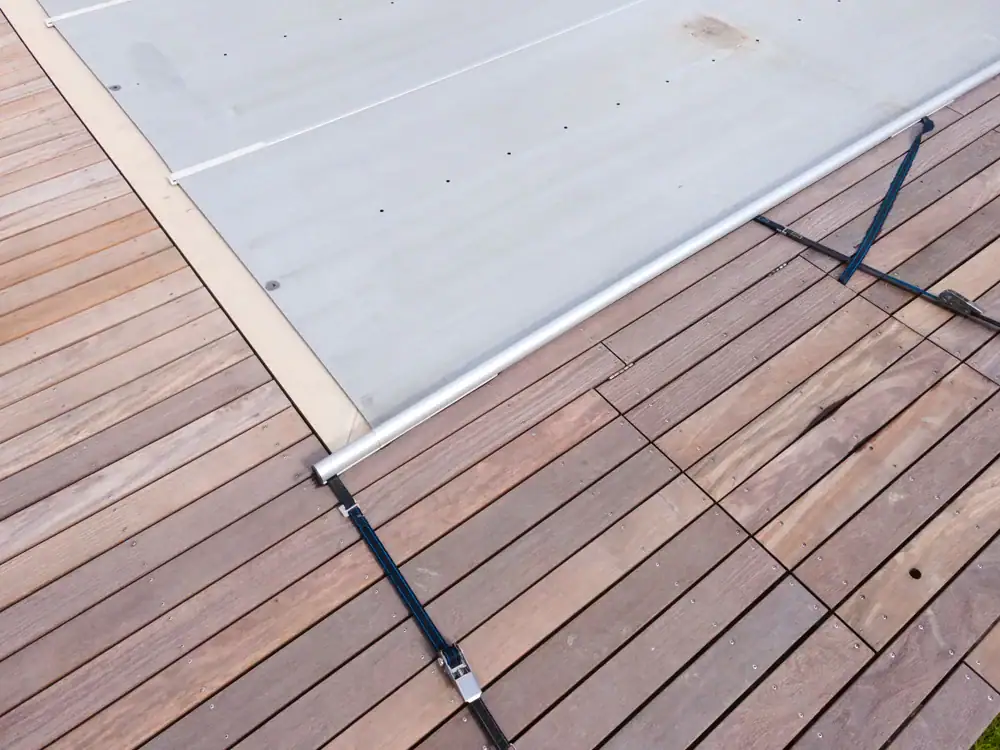
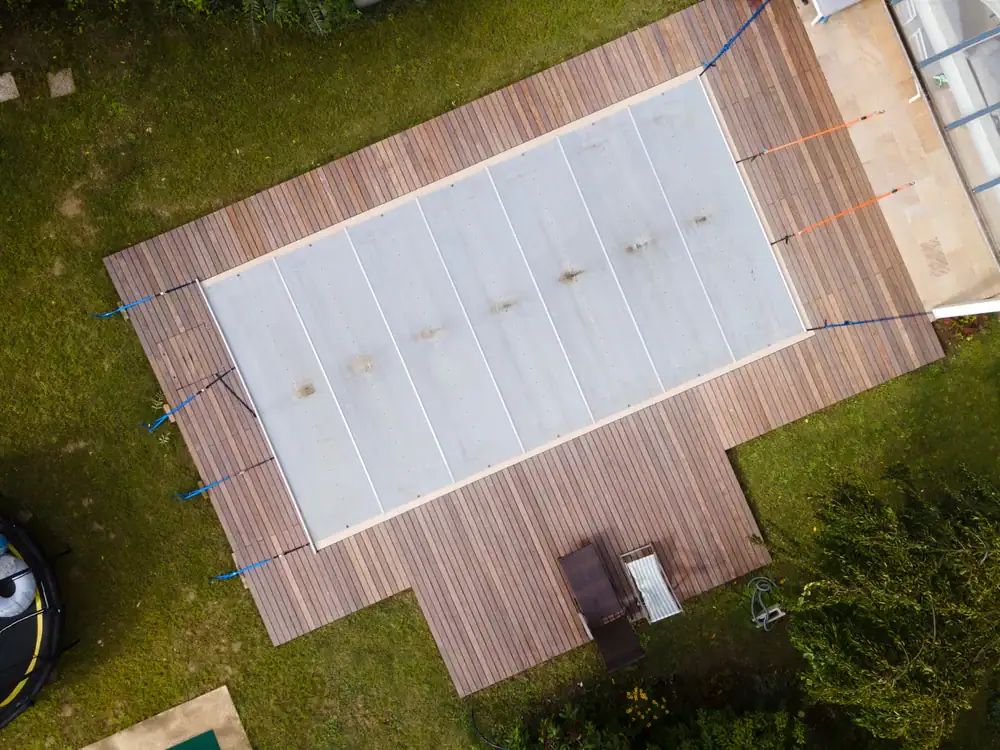
Then comes the part that separates a professional closing from a DIY attempt: the plumbing line blow-out. We use commercial-grade air compressors to clear every line. Home compressors can’t generate enough pressure to do this completely, and any water left behind is water that can freeze and crack. After the lines are clear, the pump, filter, and heater are disconnected and properly stored, skimmers and returns are plugged, accessories like ladders are removed, and the cover goes on correctly tensioned and secured. For above-ground pools in St. Albans backyards, that cover installation includes proper fastening to handle the wind exposure that comes with the open geography of southeast Queens.
Ready to get started?
Most pool closing companies treat above-ground pools as the quick job they squeeze in between inground closings. We don’t operate that way. In a neighborhood like St. Albans where the majority of pools are above-ground, sitting in the backyards of 1920s and 1930s-built single-family homes above-ground closing is the primary service, not an afterthought.
Above-ground pools have specific vulnerabilities that require specific steps. The skimmer is a common failure point that gets overlooked in rushed closings. The filter and pump are exposed to ambient air temperature in a way that inground equipment simply isn’t. The cover needs to be fastened properly to handle wind, because a cover that comes loose in a November storm leaves the pool exposed. Every one of these steps is part of the 12-step process we follow on every job in Queens Community District 12 St. Albans, Hollis, Cambria Heights, Springfield Gardens, and the surrounding area.
We carry full licensing and insurance, which matters here specifically. New York City has its own contractor requirements, and you want a team that meets them. Beyond the legal piece, it matters because standard homeowner’s insurance typically does not cover freeze damage from improper winterization. If the closing is done wrong by someone who isn’t accountable, the repair bill lands on you. Closings are booked through October if you’re reading this in September or early October, now is the time.

The target window for St. Albans is mid-to-late October, and the reasoning is straightforward. You want to close after the water temperature drops consistently below 50°F closing too early while the water is still warm increases the risk of algae growth under the cover. But you also can’t wait too long, because southeast Queens sits in flat, open geography near JFK Airport with real exposure to coastal cold air patterns that can push temperatures below freezing in October faster than homeowners expect.
The practical answer for most St. Albans homeowners is to book your closing in September or early October so you have a confirmed date on the schedule. Long Island and Queens pool service companies fill their October calendars quickly. If you wait until you see frost on the ground, you may be waiting for an available slot while your pool sits unprotected. Book early, close on time, and your equipment is protected before the first hard freeze hits.
A thorough pool closing covers several distinct steps, and knowing what they are helps you evaluate whether a company is doing the job completely. It starts with a water chemistry balance pH, alkalinity, shock treatment, algaecide, and stain prevention chemicals all need to be at the right levels before the pool is covered. Balanced water protects your liner and pool surface through the winter months.
After chemistry, the plumbing lines get blown out using a commercial-grade air compressor. This is the step that matters most for preventing freeze damage. Any water left in the lines can freeze and expand, cracking pipes or fittings. Home compressors don’t generate enough pressure to clear lines completely a professional compressor does. From there, the pump, filter, and heater are disconnected and stored, skimmers and returns are plugged, accessories like ladders and diving boards are removed, and the cover is installed and secured properly. We document every step of this process and provide a written summary to you after every closing so you know exactly what was done and what condition your equipment was in when it was closed.
You can attempt it, but the most critical step blowing out the plumbing lines is where DIY closings most often fall short. The compressors available at hardware stores don’t generate enough sustained pressure to fully clear water from every section of pool plumbing. Even a small pocket of water left in a line or fitting is enough to cause a freeze crack overnight when temperatures drop hard, which they do in southeast Queens, often earlier in the season than homeowners anticipate.
Beyond the compressor issue, there’s the chemical balancing, the proper cover installation for wind exposure, and the correct disconnection and storage of the pump and filter all of which have specific steps that affect whether your equipment survives the winter intact. The cost of a professional closing is a fraction of what a single repair bill runs after a freeze event. Cracked plumbing, a split filter tank, or a damaged pump housing are not cheap fixes, and standard homeowner’s insurance typically doesn’t cover freeze damage from improper winterization. For most St. Albans homeowners, hiring a professional is the straightforward call.
We have a Queens location at 39-01 Utopia Pkwy in Flushing that’s a real operational address, not a service area listed on a website. We’ve been working in Queens neighborhoods since 2009, including Hollis Hills, Queens Village, Springfield Gardens, and Howard Beach, all of which border or surround St. Albans directly. St. Albans is firmly within our service area, and our team is familiar with the neighborhood.
This matters because a lot of pool service companies based on Long Island technically say they serve Queens but treat southeast Queens as a secondary market the far edge of their route that gets squeezed in when it’s convenient. Our Queens presence means St. Albans isn’t an afterthought on the schedule. You can reach our Queens line directly, book a closing, and get a confirmed date without wondering whether a crew will actually make it out to your side of the borough. Our Huntington Station headquarters handles Long Island; our Queens location handles you.
A typical pool closing with us takes under two hours for most residential pools. For an above-ground pool in a standard St. Albans backyard, the timeline is generally on the shorter end of that range, assuming the pool is reasonably clean and accessible. If there’s significant debris in the water or equipment issues that need attention during the inspection, our technicians will note that in the written summary they leave with you.
As for whether you need to be home it’s helpful but not always required. Our team needs access to the pool and equipment, which typically means access through a gate or side yard. If you have a locked gate or specific access instructions, those should be communicated when you book. At the end of the visit, you’ll receive a written summary of everything that was done, so even if you’re not present for the full closing, you have a complete record of the work. That documentation is something we provide on every job it’s not standard practice in this industry, and it’s genuinely useful when you open the pool in spring and want to know what state everything was left in.
The short answer is that you’re gambling on the weather, and southeast Queens in October and November doesn’t always give you warning before the first hard freeze. St. Albans sits in flat, open geography about two miles north of JFK Airport there’s no topographic shelter from cold air masses that push in off the coast. A temperature drop that hits 28°F overnight in late October is enough to freeze water sitting in exposed plumbing lines, and that water expands nine to ten percent when it freezes. That pressure cracks pipes, splits pump housings, and damages filter tanks.
The damage often isn’t visible until spring, which is the other problem. You close the pool late or skip it entirely, the freeze event happens in November, and you don’t find out what broke until you try to open in May. By then you’re looking at repair scheduling, parts availability, and weeks of delay before the pool is usable right at the start of the season you were looking forward to. Freeze damage repairs in a single event can run into thousands of dollars, and standard homeowner’s insurance typically excludes damage caused by improper or missed winterization. Closing on time, done correctly, is how you avoid all of that.
Other Services we provide in St. Albans