Summary:
You’ve been thinking about a pool for months. Maybe years. You know you want one, but every time you start researching, you hit the same wall: gunite, fiberglass, vinyl liner—what’s the actual difference, and which one won’t leave you with regrets three summers from now?
Here’s the thing. The “best” pool type doesn’t exist. What exists is the best pool for your specific situation—your budget, your timeline, how you’ll actually use it, and what Long Island’s climate will do to it over the next 20 years.
This comparison breaks down the three main swimming pool design options without pushing you toward any particular choice. You’ll see real costs, honest maintenance expectations, and what each type actually feels like to own in Nassau County.
Understanding Different Swimming Pool Design Options
Three main pool types dominate the residential market: gunite (also called concrete or shotcrete), fiberglass, and vinyl liner. Each one gets built differently, costs differently, and requires different levels of attention once it’s in the ground.
Gunite pools are built on-site. Crews excavate your yard, install a steel framework, then spray concrete onto that framework. After the concrete cures, they apply a finish—usually plaster, pebble, or tile. This process gives you complete control over shape, size, and depth.
Fiberglass pools arrive as pre-manufactured shells. The pool gets built in a factory, transported to your property on a truck, then set into an excavated hole. Your customization happens through choosing from existing molds and adding features around the pool rather than changing the shell itself.
Vinyl liner pools use a steel, aluminum, or polymer frame installed in the excavation. A custom vinyl liner gets stretched over this frame to create the pool’s interior surface. You can customize the shape within the limits of the frame system, and you’ll replace that liner every 7-10 years.
Gunite Pool Design: Complete Customization
Gunite gives you a blank canvas. Want a guitar-shaped pool? A beach entry that slopes gradually into deep water? An integrated spa with a spillover waterfall? Gunite makes it possible.
This flexibility matters most when your yard presents challenges. Sloped properties, tight spaces, or specific architectural visions often require custom solutions that pre-manufactured pools can’t deliver. Gunite adapts to your property instead of forcing your property to adapt to a predetermined shape.
The construction process takes time. After excavation, crews build the steel framework, spray the gunite, let it cure for weeks, then apply the interior finish. Weather delays, permit issues, or scheduling conflicts can extend this timeline. Most gunite projects in Nassau County take 3-6 months from start to finish.
Cost runs higher than other options, typically starting around $65,000 and climbing based on size, features, and finishes. Pebble finishes cost more than basic plaster. Tile costs more than pebble. Complex shapes require more labor than simple rectangles. Every customization adds to both the timeline and the budget.
Maintenance demands attention. The porous surface of gunite provides places for algae to anchor, which means more frequent brushing and higher chemical usage compared to smoother surfaces. You’ll need to resurface every 10-15 years, which runs around $10,000 depending on the finish you choose and current labor rates.
Long Island’s freeze-thaw cycles can create issues with gunite pools. The rigid structure doesn’t flex with ground movement, which can lead to cracks over time if the pool wasn’t built properly or if your soil shifts. Proper construction and drainage systems minimize this risk, but it’s something to consider.
The payoff? A pool that looks exactly how you want it to look and functions exactly how you need it to function. For homeowners who know they want something specific and have the budget to make it happen, gunite delivers results that other pool types can’t match.
Fiberglass Pool Design: Speed and Simplicity
Fiberglass pools get manufactured in controlled factory conditions, then delivered to your property as complete shells. This process eliminates most of the on-site construction time that makes other pool types take months.
Installation happens fast. After excavation, crews set the shell in place, connect plumbing and electrical systems, backfill around the pool, and you’re swimming. Many homeowners go from excavation to first swim in 2-3 weeks. This speed matters if you’re trying to have the pool ready for summer or if you just don’t want your backyard torn up for months.
The smooth gel coat surface resists algae growth better than porous gunite. This means less brushing, fewer chemicals, and lower maintenance costs over time. The non-porous surface also feels smooth underfoot—no rough plaster to scrape your feet or snag swimsuits.
Long Island’s climate treats fiberglass well. The flexible shell expands and contracts with temperature changes instead of cracking like rigid concrete can. This flexibility helps the pool handle freeze-thaw cycles without developing structural issues. The gel coat also resists damage from salt systems, which many Nassau County homeowners prefer over traditional chlorine.
Customization works differently with fiberglass. You choose from existing mold designs rather than creating a custom shape. Manufacturers offer dozens of shapes and sizes, including options with built-in tanning ledges, bench seating, and entry steps. But if you want something truly unique, fiberglass won’t deliver it.
Size limitations exist because the shell has to fit on a truck and navigate to your backyard. Most fiberglass pools max out around 16 feet wide and 40 feet long. This works fine for most residential applications, but larger pools or unusual shapes require different materials.
Cost typically starts around $55,000 for a complete installation. While this sits close to gunite’s starting price, the long-term costs tell a different story. No resurfacing every decade. Lower chemical costs. Less time spent on maintenance. These savings add up over the years you’ll own the pool.
The gel coat should last 20+ years without major work. Some manufacturers claim 50-year lifespans. Reality sits somewhere in between depending on how well you maintain the pool and what your water chemistry does to the surface over time. Even with eventual touch-ups, the maintenance burden stays lower than gunite throughout the pool’s life.
Fiberglass vs Concrete Pool: The Real Differences
The fiberglass vs concrete pool debate dominates most homeowner research. Both types create permanent, quality pools. The differences show up in how they’re built, how they perform over time, and what they cost you beyond the initial installation.
Installation time creates the most obvious difference. Concrete pools require months of on-site construction—excavation, framework, gunite application, curing time, finish work. Fiberglass pools arrive pre-built and get installed in weeks. This matters more than you might think when you’re watching your backyard sit as a construction zone through the entire summer season.
Surface texture affects daily use. Concrete feels rough, especially with basic plaster finishes. Fiberglass feels smooth. This difference impacts comfort, cleaning ease, and how much algae can grab hold of the surface. Rougher surfaces require more brushing and higher chemical levels to stay clean.
Long-term costs diverge significantly. Concrete needs resurfacing every 10-15 years at $6,500-$10,000+ per job. Fiberglass typically doesn’t need resurfacing for decades. Concrete uses more chemicals due to its porous surface. Fiberglass cuts chemical costs by roughly 30%. These differences compound over 20-30 years of ownership.
Vinyl Liner Pool Design: Budget-Friendly Option
Vinyl liner pools offer the most affordable entry into pool ownership. The combination of a structural frame and replaceable liner creates a pool that costs less upfront than gunite or fiberglass while still providing years of enjoyment.
The installation process sits between gunite’s lengthy timeline and fiberglass’s quick setup. Crews excavate, install the frame structure, plumb and wire the systems, then stretch the custom vinyl liner over the frame. Most installations complete in 4-6 weeks, giving you a middle-ground option for timing.
Customization flexibility exceeds fiberglass but doesn’t match gunite’s complete freedom. The frame system allows for various shapes and sizes, including custom designs that fit your specific space. You can’t create every shape possible with gunite, but you’re not limited to predetermined molds like fiberglass.
The liner itself creates both advantages and maintenance requirements. The smooth vinyl surface feels comfortable and resists algae like fiberglass does. But liners wear out. You’ll replace yours every 7-10 years at a cost of $4,000-$6,000 depending on pool size and liner quality. This replacement cost needs to factor into your long-term budget.
Sharp objects and pet claws can puncture vinyl liners. While patches work for small tears, significant damage might require full liner replacement before the expected lifespan. This vulnerability doesn’t make vinyl a poor choice, but it does require awareness about how you’ll use the pool.
Cost typically starts around $35,000-$50,000 for a complete installation. This lower entry price makes pool ownership accessible to homeowners who can’t stretch to gunite or fiberglass budgets. But remember to account for liner replacements every decade when calculating total ownership costs.
Long Island’s climate treats vinyl liners reasonably well, though winter preparation matters. Proper winterization protects the liner from ice damage and UV exposure. Many Nassau County pool owners use professional services to handle closing and opening each season, ensuring the liner stays protected during harsh winter months.
Pool Design Ideas for Nassau County Homes
Nassau County properties present specific considerations that should influence your swimming pool design choices. The region’s soil conditions, climate patterns, and property layouts create opportunities and challenges that don’t exist everywhere.
Sandy soil dominates much of Nassau County. This actually helps with excavation costs compared to areas with rocky or clay-heavy soil. The drainage characteristics of sandy soil work well for pool installations, though proper engineering ensures the pool structure stays stable over time.
Freeze-thaw cycles happen every winter on Long Island. Your pool needs to handle this reality without developing cracks or structural issues. Fiberglass’s flexibility gives it an advantage here, while gunite requires proper construction techniques and adequate drainage systems to prevent damage from ground movement.
Property setback requirements vary by municipality across Nassau County. Your pool needs to sit a specific distance from property lines, septic systems, and other structures. These requirements can limit where you place the pool and might influence which shape works best for your available space.
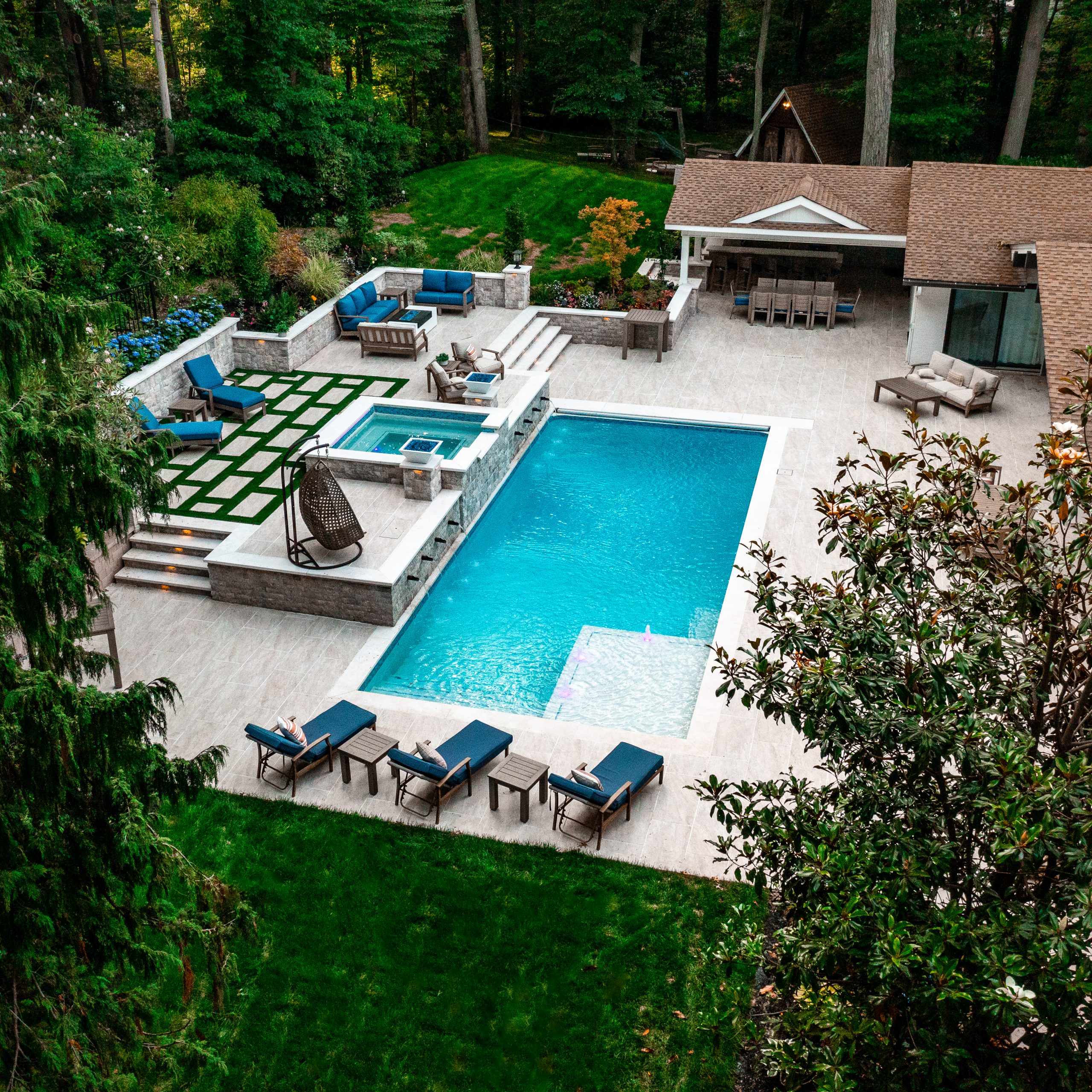
Outdoor living integration has become standard in Nassau County pool projects. Most homeowners don’t just want a pool—they want a complete outdoor space with patios, outdoor kitchens, fire features, and landscaping that creates a cohesive environment. Planning these elements together from the start produces better results than adding them piecemeal over years.
Water features add visual interest and sound to your pool area. Waterfalls, bubblers, and deck jets create movement and ambiance. These features work with any pool type, though the installation approach differs. Gunite pools can integrate water features directly into the structure, while fiberglass and vinyl pools typically add them as separate elements.
Tanning ledges have become one of the most requested features in new pool designs. These shallow shelves provide space for lounge chairs, play areas for young children, and spots to cool off without fully swimming. Many fiberglass models include built-in tanning ledges, while gunite and vinyl pools can add them during construction.
Lighting transforms your pool area from daytime-only to evening entertainment space. LED systems use minimal energy while creating dramatic effects. Underwater lights, landscape lighting, and path lighting work together to make the space functional and attractive after sunset.
Heating extends your swimming season significantly. Nassau County’s climate gives you comfortable pool weather from late May through September without heating. Add a heater and you might swim from April through October. Solar heating works well in Long Island’s sunny climate and costs almost nothing to operate after installation. Heat pumps cost more to run but work efficiently in moderate temperatures.
Choosing the Right Swimming Pool Design
No single pool type wins for everyone. Gunite delivers unlimited customization at a higher cost and longer timeline. Fiberglass provides quick installation and low maintenance with predetermined shapes. Vinyl liner offers affordable entry with periodic replacement costs.
Your decision should weigh your budget, timeline, maintenance tolerance, and how you’ll actually use the pool. A family that swims daily might prioritize low-maintenance fiberglass. A homeowner with a challenging property might need gunite’s adaptability. Someone on a tighter budget might find vinyl liner provides the best value.
Nassau County’s climate and soil conditions favor pools built to handle freeze-thaw cycles and sandy soil characteristics. Working with local pool builders who understand these regional factors helps ensure your pool performs well for decades.
When you’re ready to move forward with your pool project, we can walk you through the options that make sense for your specific property and goals. We offer all three pool types, which means our recommendation comes from what works best for you rather than what we happen to sell.
Questions about your pool?
Tell us what you need and a JAS Aquatics pool pro on Long Island will get back to you. Prefer to talk now? Call 631-239-8031.