Summary:
Father’s Day lands in mid-June. On Long Island and throughout Queens County, that’s right in the thick of pool season — the water’s warm, the backyard is finally getting used, and the last thing anyone wants is to spend the weekend doing maintenance instead of enjoying it. But that’s exactly what happens for a lot of pool-owning dads. The skimmer needs emptying. The chemicals are off. The filter’s been running a little loud. Before you know it, Sunday afternoon is gone. These five tips are designed to change that — and a few of them are easier to act on than you’d think.
Why Pool Cleaning Takes So Much Time — And How to Cut It Down
Most pool owners don’t realize how much time they’re actually spending on maintenance until they add it up. Testing water, brushing walls, vacuuming the floor, cleaning out baskets, checking equipment — done properly, that’s two to four hours a week during peak season. Over a full Long Island summer, that’s close to 40 to 80 hours. That’s not a chore. That’s a part-time job.
The good news is that most of that time can be recovered with a few smarter habits and the right equipment. The tips below aren’t about cutting corners — they’re about working with your pool instead of constantly reacting to it.
How to Keep Your Pool Clean Between Professional Visits
The biggest time drain for most pool owners isn’t any single task — it’s the constant catch-up. You skip a week, the algae starts creeping in, and suddenly you’re spending three hours on what should have been a 30-minute job. Consistency is the real time-saver here.
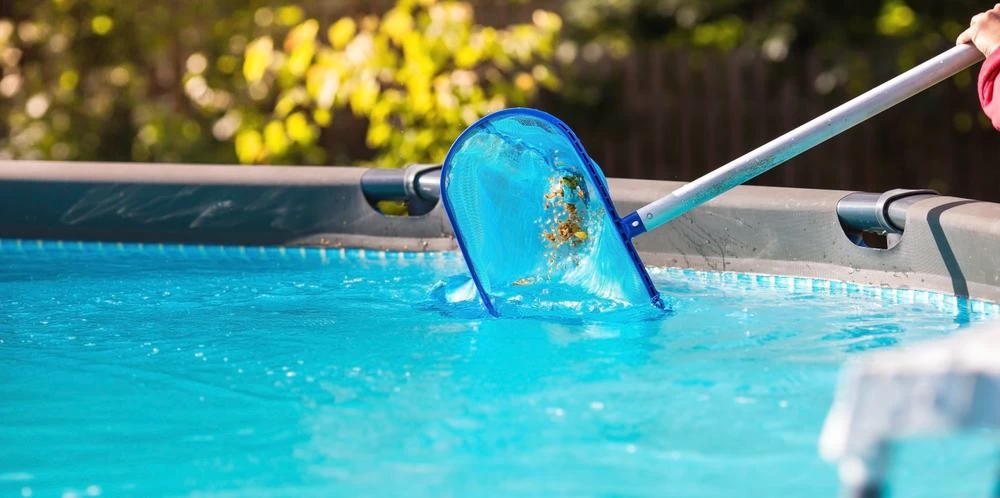
Start with your skimmer baskets. Emptying them two or three times a week takes five minutes and prevents debris from breaking down in the water, which throws off your chemistry and forces your filter to work harder. It sounds minor, but it’s one of the highest-leverage habits a pool owner can build.
Brushing the walls, steps, and corners of your pool at least twice a week is the other one most people skip. Algae doesn’t start in the middle of the water — it starts on surfaces, in corners, behind ladders. A quick brush-down breaks it up before it takes hold. For inground pools across Long Island and Queens County, especially gunite and vinyl liner pools, this is particularly important after a summer storm blows debris and organic material into the water.
Speaking of storms — Long Island gets them. A single nor’easter remnant can drop enough leaves, pollen, and debris into your pool to set your chemistry back by days. If you know a storm is coming, running your pump longer before and after helps flush the system. And if you can get a cover on before the storm hits, even better.
The last piece of the between-visit routine is your pump run time. Most pools on Long Island need the pump running eight to twelve hours a day during summer. If yours is an older single-speed model, that’s also costing you significantly more than it needs to — which brings us to the next tip.
Does Upgrading to a Variable-Speed Pump Actually Save Time and Money?
Yes — and the difference is bigger than most people expect. A variable-speed pump runs at lower speeds for longer periods, which actually filters your water more effectively than a single-speed pump blasting at full power for a few hours. Better filtration means fewer chemical imbalances, less algae, and less manual intervention.
The energy savings are real too. Variable-speed pumps can reduce pool operating costs by up to 75% compared to older single-speed models. For a pool running all summer in Nassau or Suffolk County, that’s a meaningful number on your electric bill — and one of the reasons we recommend this upgrade to almost every homeowner we work with.
The time savings come from the fact that a well-filtered pool stays cleaner longer. When your water is consistently circulating and filtered, you’re not fighting algae blooms, cloudy water, or chemistry swings nearly as often. You spend less time reacting and more time swimming.
If your pump is more than seven or eight years old, it’s worth having it looked at. Equipment that’s running inefficiently doesn’t just cost more to operate — it puts more strain on your filter and heater, and it tends to fail at the worst possible moment (usually the Friday before a backyard party). Catching that early is the kind of thing a professional pool service visit handles routinely, which is why regular equipment checks matter as much as the cleaning itself.
For Long Island homeowners who want to take this step, we carry and install variable-speed pumps through our Huntington Station location and can assess whether your current setup is working as hard as it should be.
Water Chemistry: The Part of Pool Cleaning Most Dads Get Wrong
Here’s the honest truth about pool chemistry: it’s not hard to learn, but it’s easy to get wrong, and when you do, the consequences are time-consuming and expensive. pH, chlorine, alkalinity, calcium hardness, and stabilizer levels all need to be in balance — simultaneously. When one drifts, it pulls the others with it.
Most DIY pool owners test one or two parameters and assume the rest are fine. That’s usually where the trouble starts. Water can look crystal clear and still be chemically off in ways that irritate swimmers, corrode equipment, or quietly damage your pool’s surface over time.
How Often Should You Test Pool Water in a Long Island Summer?
During peak season, you should be testing your water at least two to three times per week — more often after heavy rain, a big pool party, or a stretch of unusually hot weather. Long Island summers are humid and hot, and that combination accelerates chemical consumption faster than most homeowners account for. Your chlorine can drop significantly in 24 to 48 hours under the right conditions.
The most common mistake we see is testing on a fixed schedule regardless of what’s happening. If 20 people used the pool over the weekend and then it rained on Monday, testing on Wednesday the way you normally would is already too late. The algae doesn’t wait for your schedule.
A good liquid test kit or a reliable digital tester is worth the investment over test strips, which can give inconsistent readings, especially in direct sunlight. If you’re stopping by our pool supply store in Huntington Station, we can help you find the right testing setup for your pool size and usage level.
The other thing worth knowing is that shocking your pool — adding a concentrated dose of chlorine to burn off contaminants — should happen at least once a week during heavy use periods, and always after a storm or a large gathering. A lot of pool owners shock reactively, only when the water looks off. Doing it proactively is one of the most effective ways to stay ahead of problems and cut down on the time you spend correcting them.
For homeowners in Queens neighborhoods like Bayside, Little Neck, and Howard Beach where pools tend to see heavy summer use, consistent chemistry testing is especially important. Smaller backyards often mean smaller pools with less water volume, which means chemical swings happen faster and hit harder.
Is It Worth Hiring a Professional Pool Service on Long Island?
For most pool owners, yes — and the math is clearer than people expect. Professional weekly pool service on Long Island typically runs well below what homeowners spend on trial-and-error chemical purchases, misdiagnosed equipment problems, and the occasional algae treatment that could have been avoided entirely. More importantly, it gives you back 40 to 80 hours of your summer.
That’s the part that doesn’t show up on a price comparison. The cost of professional pool service is easy to see. The cost of spending every other Saturday morning testing, brushing, vacuuming, and troubleshooting is harder to quantify — but it’s real, and most pool-owning dads feel it by July.
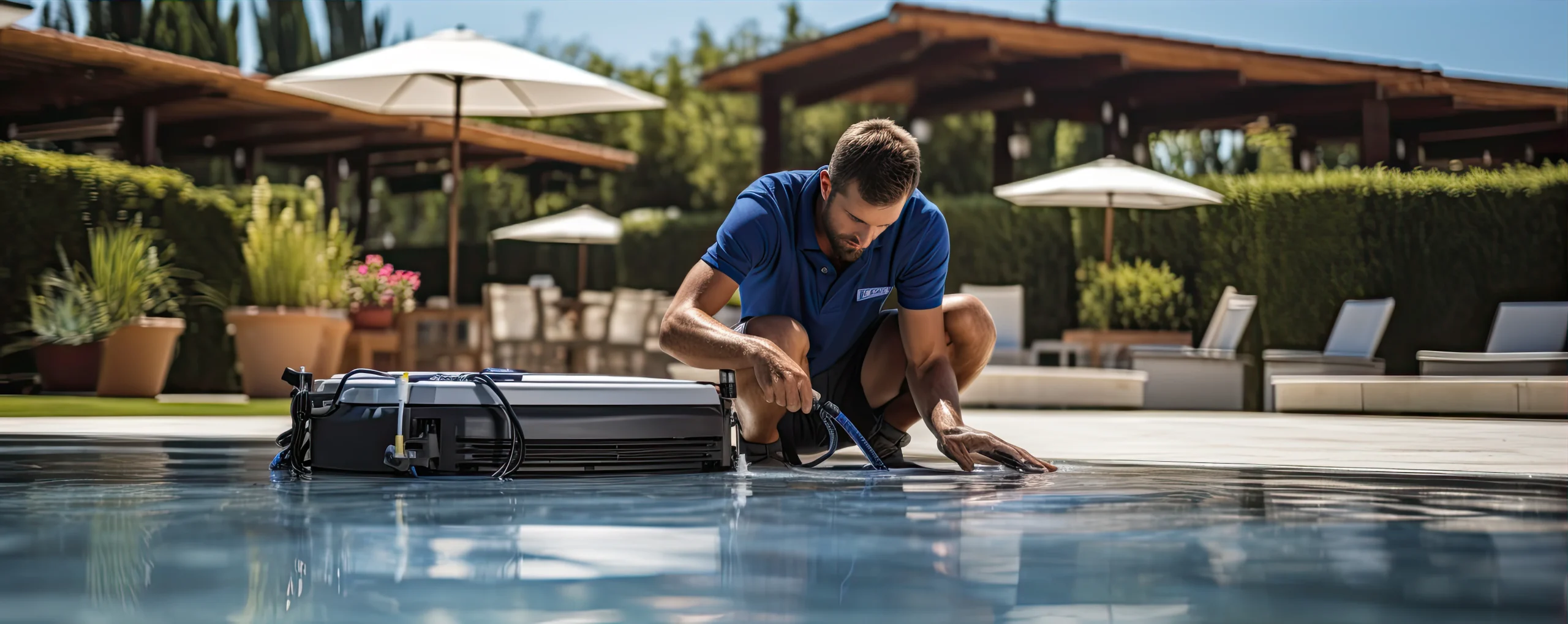
A good pool service does more than clean. Every visit should include water chemistry testing and balancing, equipment inspection, skimmer and pump basket cleaning, brushing, and a check for anything that looks like it’s developing into a problem. When a technician who knows your pool shows up consistently, they catch things early — a pump that’s starting to run rough, a filter that needs backwashing, a slow chemical drift that would have turned into a green pool by the weekend.
We’ve been serving Long Island and Queens County homeowners since 2009, with locations throughout Nassau County, Suffolk County, and Queens. We hold active home improvement contractor licenses in both Nassau County (License #158301) and Suffolk County (License #HI-64117), and our crews — no subcontractors — are the same people showing up week after week. That consistency matters more than most homeowners realize until they’ve experienced the alternative.
If you’re considering professional pool service as a Father’s Day gift, it’s genuinely one of the more useful ones you can give a pool-owning dad. Not a gadget that ends up in the garage — actual free time, every week, for the rest of the summer.
The Best Father's Day Gift for Long Island Pool Owners Is Pretty Simple
Dad built or bought a pool so the family could enjoy it — not so he could spend his weekends maintaining it. A few smarter habits, the right equipment, and consistent water chemistry go a long way toward getting that time back. But if the goal is to actually give him the summer off, professional pool service is the most direct path there.
Long Island’s pool season is short. From the first warm weekend in May to the closing in early fall, there are maybe 20 good Saturdays to enjoy that backyard. They shouldn’t all be spent cleaning it.
If you want to talk through what weekly pool service looks like, what your pool’s equipment might need, or just pick up the right supplies to make maintenance easier, we’re at 454 East Jericho Turnpike in Huntington Station — and we’re happy to help you figure out the right next step.
Questions about your pool?
Tell us what you need and a JAS Aquatics pool pro on Long Island will get back to you. Prefer to talk now? Call 631-239-8031.