Summary:
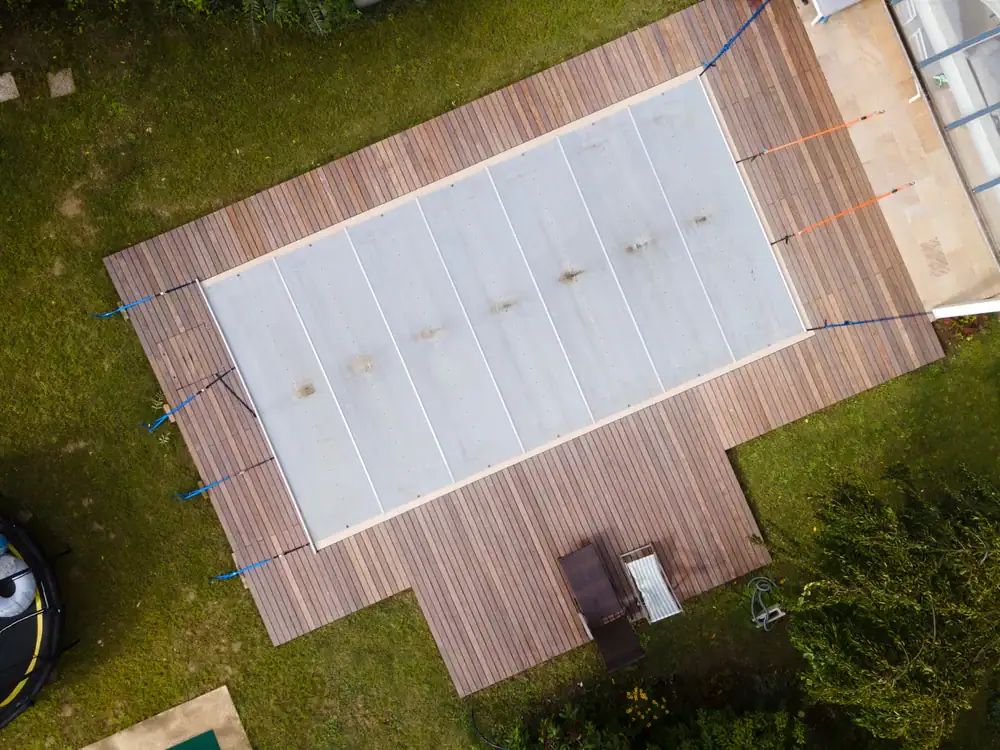
You’re staring at your covered pool in late April, mentally calculating whether you should tackle the opening yourself or call in help. The $300-400 for professional service feels steep when you could grab supplies for under $150 and spend a weekend doing it yourself. But here’s what that math doesn’t account for: the full day of physical labor, the guesswork around chemical ratios, and the expensive mistakes that happen when equipment gets reconnected wrong or water chemistry stays off for weeks. Let’s break down what you’re actually comparing when you weigh DIY against professional pool opening service.
What Professional Pool Opening Service Actually Includes
Professional pool opening isn’t just about pulling off the cover and adding some chlorine. The process involves a complete system check that most homeowners don’t have the tools or knowledge to perform properly.
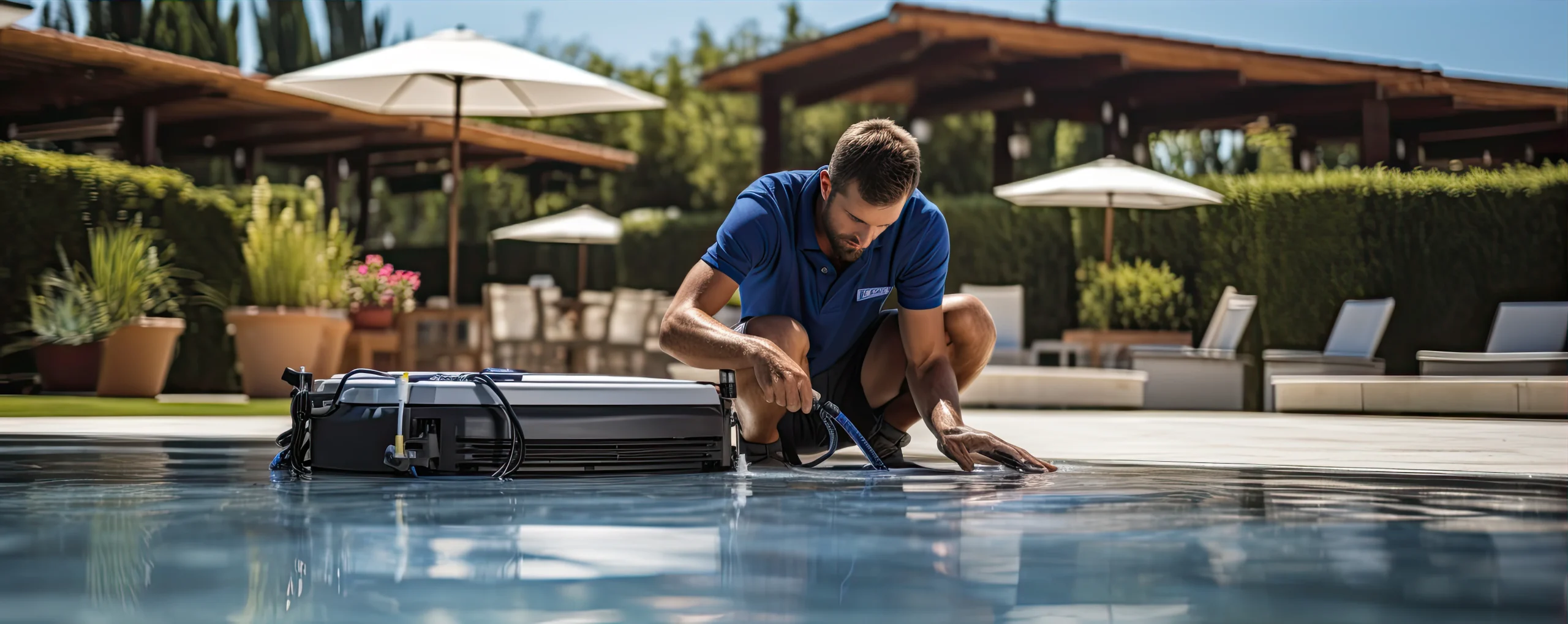
A thorough opening starts with cover removal and cleaning, but it goes much deeper. Our technicians inspect every piece of equipment before powering anything on. We’re looking for cracks in pipes, worn gaskets, filter damage, and pump issues that developed over winter. Finding these problems before startup prevents the kind of catastrophic failures that happen three weeks into the season when you’re hosting a pool party.
The chemical balancing piece alone justifies professional service for many pool owners. It’s not just about dumping in shock and hoping for the best. Water needs to hit specific ranges for pH, alkalinity, calcium hardness, and sanitizer levels. Get one wrong and it throws off the others. We use calibrated testing equipment and adjust multiple parameters simultaneously to get your water swimmable from day one, not three weeks from now after you’ve fought cloudy water and algae blooms.
Pool Chemical Balancing: Why It's Harder Than It Looks
Chemical balance sounds straightforward until you’re standing in the pool supply store staring at fifteen different products and trying to remember if you need to raise pH before or after adjusting alkalinity. This is where most DIY pool openings go sideways.
Your pool’s water chemistry operates as an interconnected system. pH affects how well chlorine works. Alkalinity buffers pH changes. Calcium hardness protects your pool surfaces from etching or scaling. Cyanuric acid shields chlorine from UV breakdown. Change one and you’ve shifted the equilibrium of everything else.
Our technicians understand these relationships and adjust accordingly. We know that Nassau County’s municipal water typically arrives with high pH but low calcium, creating water that tests fine on a basic strip but actively dissolves calcium from your plaster to satisfy its chemical demand. We compensate for this during the initial fill and balance.
The testing equipment matters too. Those color-match test kits from the big box store give you ballpark readings. Professional photometers and digital testers provide precise measurements. When you’re trying to dial in chemistry after months of the pool sitting closed, precision matters. Being off by even half a point on pH can mean the difference between clear water and a cloudy mess that takes weeks of adjustment to fix.
Most DIY attempts involve adding chemicals, waiting, testing, adding more, waiting again. It’s a cycle that eats up days or weeks. We calculate what’s needed, make the adjustments, and verify the results in a single visit. Your pool is swimmable that same day, not after a month of tinkering.
Pool Draining Service: When Starting Fresh Makes Sense
Most pool openings don’t require draining, but there are situations where starting with fresh water becomes necessary. Understanding when that applies can save you from trying to salvage water that’s beyond chemical correction.
Pool water accumulates dissolved solids over time. Minerals, salts, metals, and other materials build up until the water becomes oversaturated. When total dissolved solids climb too high, your chemicals stop working effectively. You’ll dump in shock and algaecide and see minimal results because the water simply can’t hold any more dissolved substances.
Cyanuric acid presents another draining trigger. This stabilizer protects chlorine from sunlight breakdown, but it only goes into water, never comes out through normal filtration. After several seasons, levels can climb so high that chlorine effectiveness drops dramatically. The only fix is dilution through partial draining or a complete drain and refill.
Professional draining service matters because doing it wrong can crack your pool shell, cause it to float out of the ground, or damage your deck. Pools exert outward pressure on the surrounding soil. When you remove that water, groundwater pressure can push the empty shell up and out of position. We monitor weather, check water tables, and use specific techniques to prevent these expensive disasters.
The draining process also creates an opportunity for deep cleaning and repairs that can’t happen with water in the pool. Acid washing removes stubborn stains. Surface repairs get addressed. Equipment gets a thorough inspection. When done as part of a planned maintenance schedule every three to five years, draining extends your pool’s lifespan and prevents bigger problems down the road.
If you’re facing a drain and refill situation, professional service becomes even more valuable than it is for a standard opening. The risks of DIY damage multiply, and the specialized equipment needed makes rental costs add up quickly.
Pool Filling Service and Water Quality Management
How you fill your pool affects your water chemistry for the entire season. Most homeowners just hook up the garden hose and let it run for two days, but that approach creates challenges that professional pool filling service helps you avoid.
Municipal water in Nassau County typically comes out of the tap with pH around 8.3 to 8.7, total alkalinity between 40-60 ppm, and calcium hardness of only 18-30 ppm. That high pH combined with low calcium creates water that appears balanced on a basic test but registers as highly corrosive on the Langelier Saturation Index. It will actively pull calcium from your plaster surfaces to satisfy its chemical demand, causing etching and surface damage.
Garden hose filling also takes forever. A typical 20,000-gallon inground pool needs roughly 30-40 hours of continuous flow from a standard residential spigot. That’s fine if you’re patient, but it means you’re not swimming for several days after your opening. Bulk water delivery services can fill the same pool in under an hour using tanker trucks, though you’ll pay $600-1,200 for that convenience depending on your pool size.
DIY Pool Opening Cost Breakdown
Let’s talk actual numbers for the DIY route. You’ll spend $50-150 on opening chemicals and supplies if you already own basic equipment. That includes shock, pH adjusters, alkalinity increasers, calcium chloride if needed, algaecide, and clarifier. Test strips or a basic test kit add another $15-30 if yours expired over winter.
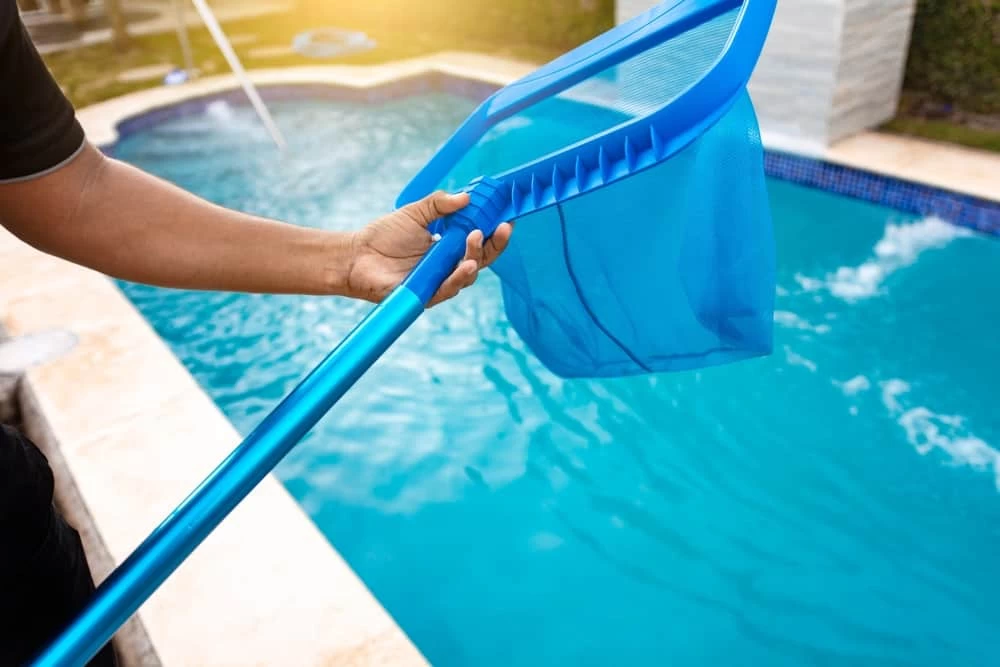
But chemicals are just the start. You need a way to remove that winter cover without dumping all the accumulated debris into your pool. A cover pump runs $60-150 if you don’t have one. You’ll want a good pool brush, skimmer net, and vacuum. If you’re missing any of these, add another $100-200 to your startup costs.
Time is the hidden expense that doesn’t show up on receipts. Plan on a full day minimum for the physical work of removing the cover, cleaning it, reconnecting all your equipment, and getting the system running. Then you’re testing and adjusting chemistry daily for at least a week, probably two. Each testing and adjustment session takes 30-60 minutes. Add it up and you’re looking at 10-15 hours of your time spread across several weeks.
The risk factor is where DIY costs can explode. Reconnect a valve wrong and you could flood your equipment pad or burn out a pump. Miss a crack in a pipe and you’re losing water all season while your equipment runs dry and burns up. Fail to get chemistry right and you’re fighting algae blooms that require expensive shock treatments and potentially a drain and acid wash to fully resolve.
These worst-case scenarios don’t happen to everyone, but they happen often enough that pool professionals stay busy fixing DIY mistakes. A $500 pump replacement or $800 acid wash service makes that $300 professional opening look like a bargain in retrospect.
Professional Pool Opening Service Cost and Value
Professional pool opening service in Nassau County runs $250-400 for a standard inground pool. That price typically covers complete cover removal and cleaning, equipment reconnection and startup, system testing, and initial chemical balancing. Some companies include the opening chemicals, others charge separately for those.
What you’re really paying for is expertise and insurance against expensive mistakes. Our technicians have opened hundreds of pools. We know what to look for, what commonly fails, and how to spot problems before they become emergencies. That inspection alone has value that’s hard to quantify until it saves you from a mid-season equipment failure.
The time savings is real and immediate. Your entire involvement consists of scheduling and being home for the 2-4 hour service window. You’re swimming that same day or the next, not two weeks from now after you’ve finally gotten the chemistry dialed in.
Professional service also transfers risk. If something goes wrong during the opening, if equipment gets damaged or the pool develops a problem, that’s on us to fix. We carry insurance for exactly these situations. When you DIY and accidentally crack a pipe or burn up a pump motor, you’re eating that repair cost yourself.
The cost difference between DIY and professional narrows considerably when you factor in your time value. If your weekend is worth $50/hour and you spend 15 hours on the opening process, you’ve “spent” $750 in time even though you only laid out $150 in cash. The professional service at $350 becomes the better deal in that calculation.
For pool owners with complex systems, saltwater setups, or high-end equipment, professional opening shifts from nice-to-have to essential. The cost of getting something wrong on a $3,000 salt cell or variable-speed pump system far exceeds the cost of having an expert handle it correctly from the start.
Making the Right Choice for Your Nassau County Pool
The decision between DIY and professional pool opening service comes down to your comfort level with the technical aspects, how much you value your time, and your tolerance for risk. If you’re confident in your ability to reconnect equipment, understand water chemistry, and have a full weekend to dedicate to the project, DIY can save you $200-250 in labor costs.
But for most Nassau County pool owners, professional service delivers better value. You get expert inspection that catches problems early, precise chemical balancing that makes your pool swimmable immediately, and the peace of mind that comes from transferring risk to an insured professional. Your swimming season starts right, without the weeks of chemistry struggles that plague many DIY openings.
If you’re ready to skip the guesswork and start your pool season the right way, we handle pool opening service throughout Nassau and Suffolk Counties. Our team brings the equipment, expertise, and attention to detail that turns pool opening from a dreaded chore into a simple appointment.
Questions about your pool?
Tell us what you need and a JAS Aquatics pool pro on Long Island will get back to you. Prefer to talk now? Call 631-239-8031.