Summary:
Father’s Day lands in mid-June, right when Long Island backyards are finally coming alive again. The grill is out, the pool is open, and everyone’s looking for a reason to stay home instead of fighting traffic to get somewhere else. If you’ve been thinking about adding a spa — or you’re trying to find a gift that actually means something — this is the right time to figure it out. Not because of the holiday, but because summer on Long Island moves fast, and the best backyard decisions are the ones you make before the season is already halfway gone. Here’s what you need to know.
What to Know Before You Choose a Spa for Your Backyard
Most people start the spa search by looking at models and prices. That’s actually the wrong place to start. Before any of that matters, you need to think about how you’re going to use it — how often, with how many people, and in what kind of space.
A spa that looks great in a showroom can feel wrong in your yard if the size is off, the placement doesn’t work with your existing layout, or the jets don’t match how you actually want to use it. Starting with the right questions saves you from an expensive decision you’ll second-guess every time you look at it.
Portable Spa vs. Inground Spa: Which One Is Right for Your Yard?
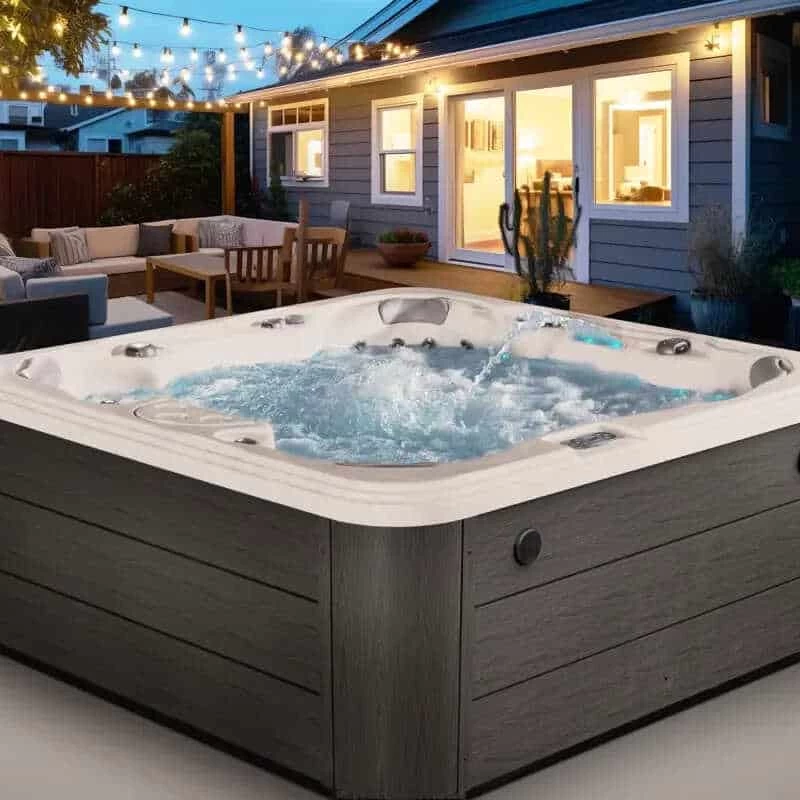
This is the first real fork in the road, and it matters more than most buyers realize going in. Portable spas — the kind that sit above ground and plug into your electrical system — are faster to install, easier to relocate, and generally less expensive upfront. They work well for smaller yards, renters who own their home and want flexibility, or homeowners who want to test the waters before committing to something permanent.
Inground spas are a different animal entirely. They’re built into the ground, often designed as part of a larger backyard layout alongside a pool, patio, or hardscape. They look cleaner, feel more intentional, and when done well, they become the centerpiece of an outdoor space that genuinely looks like it belongs there. They also tend to add more to your home’s resale value — some estimates put the return on investment for a custom inground spa at up to 50% of the original cost.
For Long Island homeowners with a full backyard to work with — especially in Suffolk County towns like Huntington, Smithtown, or Commack where lot sizes give you room to design — an inground spa integrated into a custom layout is usually the better long-term investment. For Queens County homeowners in neighborhoods like Bayside or Howard Beach where yards are tighter, a well-chosen portable spa or a compact inground option can still deliver the full experience without overwhelming the space.
The other thing worth knowing: inground spas require more planning, permitting, and lead time. In Nassau and Suffolk Counties, you’ll need permits before any in-ground work begins, and the installation involves electrical, plumbing, and site prep that needs to be coordinated properly. That’s not a reason to avoid it — it’s just a reason to work with someone who knows the local process and won’t leave you figuring it out on your own.
We handle all of that. We’ve been navigating Nassau and Suffolk County permit requirements since 2009, and we know what’s required, what inspectors look for, and how to keep your project moving without unnecessary delays.
How to Choose the Right Spa Size, Jets, and Features Without Overcomplicating It
Once you’ve settled on the type of spa, the next decisions are about fit — not just physical fit in your yard, but fit for how you actually live. Spa sizes typically range from two-person models up to eight or more seats. Bigger isn’t always better. A large spa that’s constantly half-empty is harder to heat efficiently and costs more to maintain. Think honestly about who’s going to be using it regularly, not just on holidays.
Jets are where buyers tend to get oversold. More jets does not automatically mean a better experience. What matters is jet placement, water pressure, and whether the configuration actually targets the areas where you carry tension — neck, lower back, shoulders. If you can sit in a running model before you buy, do it. That one step eliminates a lot of regret.
On features: modern spas have come a long way. Energy-efficient heating systems, LED lighting, Bluetooth audio, saltwater sanitation options, and app-based controls are all real and available. Some of these are worth the upgrade — particularly energy efficiency, since operating costs over the life of a spa add up. Others are nice-to-haves that won’t change how often you actually use it. Be honest with yourself about which category each feature falls into before you let it drive the price up.
One thing that’s genuinely worth prioritizing for Long Island’s climate is insulation quality. From October through April, your pool is closed. A well-insulated spa stays warm efficiently even when temperatures drop into the twenties, which means you’re actually using it during those months instead of looking at it through a window. That year-round usability is what separates a good spa investment from one that collects leaves for seven months a year.
We carry and recommend spas specifically built for colder climates — models with premium insulation that hold heat efficiently and keep operating costs down even through a Long Island winter. If you’re going to spend the money, it should work as hard in February as it does in July.
Why Father's Day Is Actually the Best Time to Start This Conversation
There’s a reason spas come up around Father’s Day. It’s not just marketing — it’s timing. June is when Long Island homeowners are fully back in their backyards, thinking about how the space looks and feels, and what would make it better. Dad is usually the one who ends up maintaining the pool, hosting the cookouts, and quietly wishing the backyard did more.
A spa is the kind of gift that gets used. Not once, not twice — every week, through every season. That changes the math on what it’s worth.
What Makes a Spa the Right Father's Day Gift for Long Island Dads
Think about the dad who’s up early, commuting into the city on the LIRR five days a week, coaching a travel team on weekends, and still the one who opens and closes the pool every season. He’s not going to ask for anything. He’s going to say he doesn’t need anything. And then he’s going to spend another summer sitting in a lawn chair next to a pool he can’t use after Labor Day.
A spa changes that. It gives him somewhere to decompress that doesn’t require a reservation, a drive, or a plan. It’s there at 9pm on a Tuesday when his back is done and he just needs thirty minutes to himself. It’s there in October when the pool is covered and the yard would otherwise be empty. It’s the kind of thing that, once it’s part of the routine, becomes hard to imagine not having.
For families in Nassau County communities like Rockville Centre, Roslyn, or Long Beach, or in Suffolk County towns like Huntington and North Merrick, a spa also fits naturally into the broader backyard investment most homeowners in this area are already making. When it’s designed as part of a complete outdoor space — with the right hardscaping, lighting, and layout around it — it stops looking like an addition and starts looking like it was always supposed to be there.
That’s the difference between buying a spa and building a backyard. We do the second one.
Common Questions Long Island Homeowners Ask Before Buying a Spa
A few questions come up almost every time, and they’re worth answering directly.
Do I need a permit to install a spa in Nassau, Suffolk, or Queens County? For inground spas, yes — permits are required, and there are specific setback rules (equipment must be at least five feet from the property line), fencing requirements (minimum four-foot fence with a self-closing, self-latching gate), and safety standards under New York State building code. For portable above-ground spas, requirements vary, but electrical work still needs to be done to code. We handle the permit process for our customers — it’s part of what we do, not an extra step you have to figure out yourself.
How much does it cost to run a spa in Long Island, NY & Queens County? This is one of the most common concerns, and it’s a fair one. Operating costs depend on the spa’s insulation quality, the efficiency of the heating system, and how often you use it. Modern energy-efficient models — particularly those with low-energy heating systems and quality insulation — run significantly cheaper than older units. The gap between an efficient model and an inefficient one adds up fast over a Long Island winter, especially when you’re running it through the cold months from October through April.
What if something goes wrong after installation? This is the trust question, and it’s the right one to ask. Our answer is simple: we stand behind our work after the project is done, not just until the check clears. We’ve sent crews back to address issues years after completion, no questions asked. That’s not a policy we advertise — it’s just how we operate. If you’re going to spend real money on your backyard, you should know exactly who you’re calling if something needs attention down the road.
Can a spa be added to an existing pool? Yes, and it’s one of the more popular projects we take on. A spillover spa — positioned at a higher elevation so water cascades into the pool — is both functional and genuinely beautiful. It adds visual interest to the yard, extends the usability of your outdoor space, and integrates cleanly with the pool’s existing equipment. If you already have a pool and you’re thinking about what to do next, this is worth a conversation.
Ready to Build the Backyard You've Been Putting Off? Start Here.
A spa isn’t complicated. The decision to get one doesn’t have to be either. What matters is choosing the right type for your space, working with someone who knows Long Island’s permit requirements and climate, and making sure the installation is done in a way that actually looks like it belongs in your backyard — not just dropped into it.
Father’s Day is a good reason to start the conversation. But the real reason to do it is that summer on Long Island is short, and a well-designed backyard with a spa you can use year-round is worth every bit of the investment.
If you’re ready to talk through what makes sense for your yard, reach out to us at JAS Aquatics. We’re based in Huntington Station and we’ve been doing this work across Long Island, Queens County, and Nassau County since 2009. Come see us, ask your questions, and let’s figure out what your backyard can actually be.
Questions about your pool?
Tell us what you need and a JAS Aquatics pool pro on Long Island will get back to you. Prefer to talk now? Call 631-239-8031.