
Summary:
You’ve got a pool. Now you need to keep it clean, balanced, and safe every single week—or pay someone else to do it. That decision matters more than you think. Get it wrong and you’re either burning weekends on chemistry lessons and skimming duty, or you’re overpaying for services you could’ve handled yourself. The truth is, weekly pool maintenance in Nassau County isn’t one-size-fits-all. What works for a small above ground pool won’t make sense for a 20,000-gallon gunite setup. And what feels manageable in June might feel impossible by August when you’d rather be swimming than scrubbing. Here’s what you actually need to know about keeping your pool maintained week after week.
What Does Weekly Pool Maintenance Actually Include
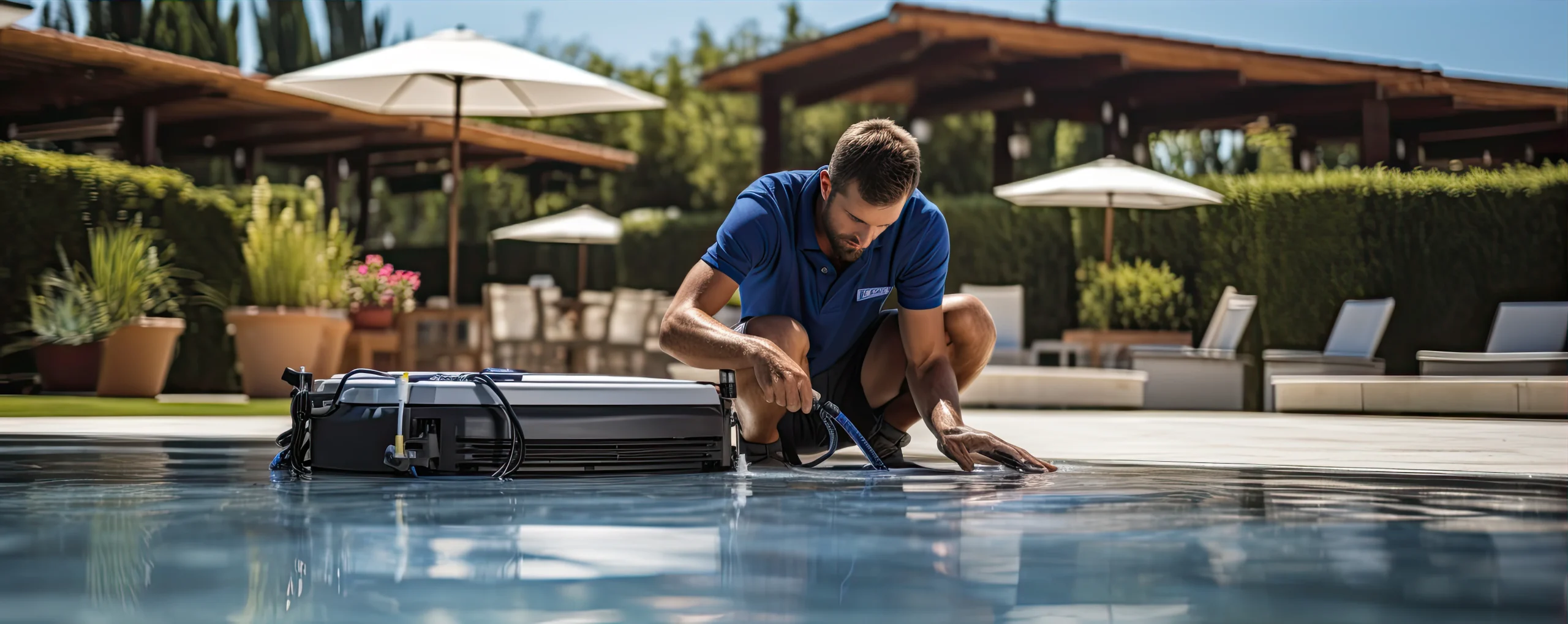
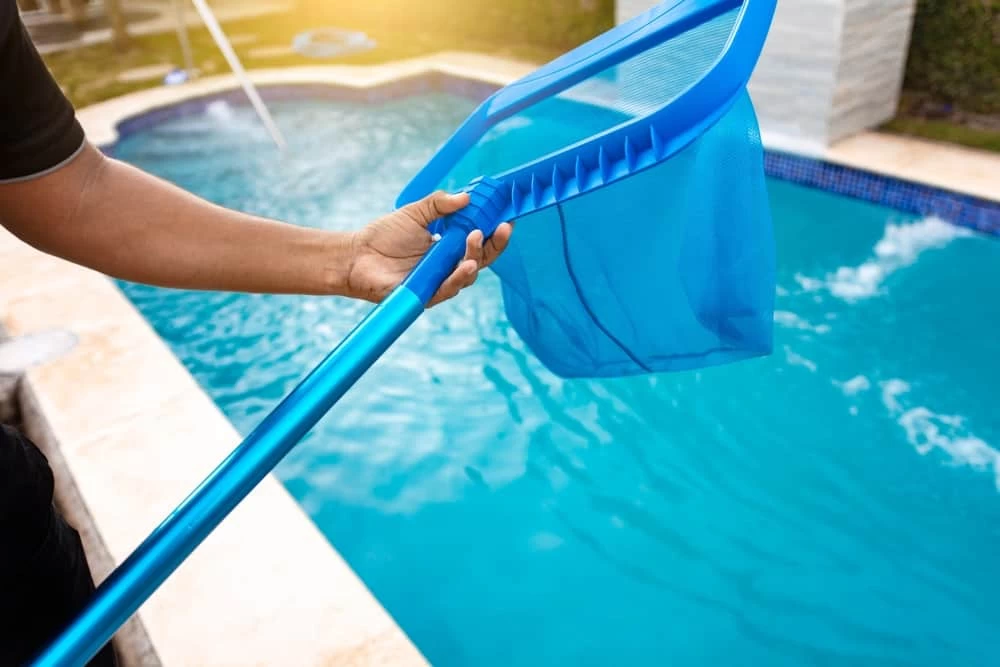
Weekly pool maintenance isn’t just tossing in some chlorine and calling it done. There’s a checklist of tasks that need to happen every seven days if you want water that’s actually safe to swim in. Skimming debris off the surface, vacuuming the floor, brushing walls and steps to prevent algae buildup. Emptying skimmer baskets and pump baskets so water flows properly.
Then there’s the chemistry side. Testing pH, chlorine, alkalinity, and calcium hardness. Adjusting levels based on what the test strips or digital reader shows. Checking equipment operation—listening for unusual pump noises, watching pressure gauges on filters, making sure everything’s running like it should.
Most people underestimate how long this takes. If you know what you’re doing and your pool’s in good shape, you’re looking at 60 to 90 minutes. If you’re still learning or dealing with issues, it can stretch to two or three hours. Every single week.
Inground Pool Maintenance Cost Breakdown
Inground pools—whether they’re gunite, fiberglass, or vinyl liner—need more attention than smaller setups. The water volume is higher, the equipment is more complex, and the stakes are bigger when something goes wrong.
For DIY maintenance on an inground pool in Nassau County, you’re spending $800 to $1,200 per year on chemicals alone. That’s chlorine tablets or salt for saltwater systems, pH adjusters, shock treatments, algaecides, and clarifiers. Then add testing kits, replacement filter cartridges or DE powder, brushes, vacuum heads, hoses, and skimmer nets. If you’re starting from scratch, that initial equipment outlay can hit $300 to $500 before you even open the pool for the season.
Professional weekly service for an inground pool typically runs $100 to $180 per month in Nassau County. That breaks down to about $35 to $50 per visit. Most companies include basic chemicals in that price—the stuff needed for routine balancing. Specialty treatments like algae shocks or stain removers usually cost extra, but you’ll know upfront.
The math looks simple until you factor in what happens when DIY goes sideways. One week of missed maintenance can lead to an algae bloom that costs $300 to $600 to treat. A pump that fails because you didn’t catch early warning signs? That’s $500 to $1,500 for replacement and installation. Gunite pools are especially prone to surface damage from improper chemical balance, and resurfacing runs $5,000 to $10,000. Fiberglass pools are more forgiving, but vinyl liner pools can develop tears or wrinkles if water chemistry stays off for too long—and liner replacement costs $3,000 to $4,000 for inground setups.
Professional service doesn’t eliminate all those risks, but it significantly reduces them. Technicians spot problems early. They know how much muriatic acid your specific pool needs without damaging the plaster. They understand how Nassau County’s water hardness affects calcium scaling. That knowledge has value, even if it’s harder to put a dollar amount on it than a bucket of chlorine tablets.
Salt Water Pool Maintenance Cost Compared to Chlorine
Saltwater pools have a reputation for being low-maintenance. That’s partially true—you’re not manually adding chlorine every week. The salt cell generates chlorine automatically from the dissolved salt in the water. But “low-maintenance” doesn’t mean “no-maintenance.”
Annual chemical costs for a saltwater pool run $70 to $150, significantly less than the $300 to $800 you’d spend on chlorine for a traditional pool. You’re mainly buying salt (which is cheap), plus occasional pH adjusters and algaecides. The catch is the salt cell itself. Those cells wear out every three to seven years and cost $200 to $700 to replace. If you’re in a warmer climate or run your system hard during summer, expect to be on the shorter end of that lifespan.
Professional maintenance for saltwater pools costs about the same as chlorine pools—$100 to $180 monthly in Nassau County. The tasks are similar: testing water, balancing chemistry, cleaning filters, checking equipment. The difference is that technicians also monitor the salt cell’s performance, clean it when calcium buildup occurs, and adjust the generator settings based on pool usage and water temperature.
DIY saltwater maintenance is manageable if you’re willing to learn the system. You need to test salinity levels monthly and after heavy rain, which dilutes the salt concentration. You need to inspect and clean the salt cell every few months to prevent scaling. And you still need to brush, skim, and vacuum just like any other pool.
Where saltwater pools get tricky is when something goes wrong with the generator. Troubleshooting electrical issues or replacing circuit boards isn’t something most homeowners want to tackle. That’s when even committed DIYers end up calling a pro. The other consideration: saltwater is harder on pool equipment, lighting, and metal fixtures. You need to use corrosion-resistant parts, which cost more upfront. Over time, that can offset some of the chemical savings.
Weekly Pool Maintenance Cost: DIY vs Professional Service
The cost comparison between DIY and professional pool maintenance isn’t as straightforward as it looks on paper. Yes, professional service costs more per month. But DIY has hidden expenses that don’t show up until you’re already committed.
DIY pool owners in Nassau County spend $800 to $1,200 annually on chemicals and supplies. Add seasonal opening and closing if you hire that out—$200 to $400 each time. Add water costs for topping off after backwashing or evaporation. Add the time value of 2 to 4 hours every week during swim season. Add the learning curve if you’re new to pool ownership.
Professional weekly service runs $1,200 to $2,160 per year for most Nassau County pools. That typically includes all routine chemicals, equipment checks, and early problem detection. Many companies offer seasonal packages that bundle opening, closing, and weekly service at a discount. The value proposition is time, expertise, and risk reduction—not just clean water.
Above Ground Pool Maintenance Cost Reality Check
Above ground pools are smaller and simpler, which should mean cheaper and easier maintenance. And they are—to a point. But “easier” doesn’t mean effortless.
DIY maintenance for an above ground pool costs $400 to $800 annually. You need fewer chemicals because the water volume is lower. A typical above ground pool holds 10,000 to 15,000 gallons compared to 20,000+ for inground setups. That means less chlorine, less shock treatment, less everything. Equipment is also simpler—smaller pumps, smaller filters, no complex plumbing buried underground.
Professional service for above ground pools runs $80 to $150 per month, slightly less than inground rates. Some companies charge the same hourly rate but finish faster because there’s less square footage to clean. Others price based on pool size and complexity.
The challenge with above ground pools is that they’re often viewed as “temporary” or “starter” pools, so owners try to cut corners on maintenance. That’s a mistake. An above ground pool still needs weekly skimming, vacuuming, and chemical balancing. The liner is actually more vulnerable to damage from improper chemistry than an inground pool surface. And because above ground pools sit in full sun with more surface area exposed, they lose water to evaporation faster and fight algae harder.
If you’re comfortable with basic pool care and have the time, above ground pool maintenance is one of the most DIY-friendly scenarios. The stakes are lower—if you mess up the chemistry, you’re not risking a $5,000 resurfacing job. Replacement liners for above ground pools cost $500 to $2,000, which is significant but not catastrophic. Equipment is cheaper to replace. And if you decide pool ownership isn’t for you, above ground pools are easier to remove or sell.
But if your weekends are already packed, or if you’d rather swim than skim, professional service makes sense even for smaller pools. The cost difference between DIY and professional narrows when you factor in convenience and the reality that most people don’t maintain their pools as consistently as they should.
Hidden Costs of DIY Pool Maintenance Nobody Mentions
The $800 to $1,200 annual chemical budget for DIY pool maintenance is just the starting point. There are costs that don’t show up in the initial math but hit you throughout the season.
Retail markup on pool chemicals is real. You’re paying 20% to 40% more at a pool supply store than professionals pay wholesale. Over a season, that adds up. Then there’s the equipment. Automatic pool vacuums cost $200 to $1,000 depending on type and quality. Robotic cleaners can hit $1,500. Test kits need replacement. Brushes wear out. Hoses crack. None of it is individually expensive, but it accumulates.
Water costs matter more than people think. Nassau County water isn’t cheap, and pools need regular topping off. Backwashing a sand or DE filter dumps hundreds of gallons every time. Evaporation during hot summer weeks can lower water levels by two inches, which is roughly 1,000 gallons for a typical pool. Refilling after draining for repairs or winterization adds even more to your water bill.
Then there’s the cost of mistakes. Algae blooms from skipping a week of maintenance require shock treatments, extra chemicals, and hours of brushing and vacuuming. That’s $100 to $200 in materials plus your time. Improper chemical balance can etch plaster, fade liners, or corrode metal components. Equipment failures from neglected maintenance—clogged filters, burned-out pump motors, damaged heaters—can run $500 to $5,000 depending on what breaks.
The biggest hidden cost is time. If weekly pool maintenance takes three hours and you value your time at even $25 per hour, that’s $75 per week or $1,200 for a 16-week season. Suddenly the gap between DIY and professional service shrinks or disappears entirely. This isn’t about being lazy. It’s about honest accounting. Your time has value, and spending Saturday afternoon balancing pool chemistry instead of using the pool is a trade-off worth considering.
Making the Right Choice for Your Pool and Schedule
Weekly pool maintenance isn’t optional. Your pool needs consistent care whether you do it yourself or hire it out. The decision comes down to your time, your comfort with pool chemistry, and your tolerance for the learning curve. DIY works if you’re hands-on, have the time, and want to save $1,000 to $1,500 per season. Professional service works if you’d rather spend weekends swimming instead of maintaining, value expert oversight, and want someone else to catch problems before they become expensive.
For Nassau County pool owners juggling work, family, and everything else, professional weekly maintenance often pays for itself in peace of mind and protected equipment. If you’re considering making the switch—or if you’re a new pool owner trying to figure out the best approach—we handle weekly maintenance for all pool types across Nassau and Suffolk County, with the expertise and retail supply access to keep your pool in top condition all season long.
Questions about your pool?
Tell us what you need and a JAS Aquatics pool pro on Long Island will get back to you. Prefer to talk now? Call 631-239-8031.