Summary:
Father’s Day lands right at the start of pool season on Long Island and Queens County. June is when the backyard finally comes alive — and for a lot of families, it’s also when the thought of “we really should have done this already” hits hardest.
If you’ve been thinking about installing a pool, upgrading your current one, or finally getting serious about maintenance and supplies, this is the right time to start. But before you call anyone, there are a few things worth knowing — because not every pool company in Nassau County, Suffolk County, or Queens County is the same, and the difference matters more than most people realize.
What Makes a Pool Company Worth Hiring on Long Island and Queens County
The Long Island and Queens County pool market is competitive. You’ll find companies that have been around for decades, newer operations that are still finding their footing, and — unfortunately — unlicensed contractors who show up when demand is high and disappear when problems arise.
The first thing to look for is straightforward: is the company properly licensed for the county where your home is? Nassau and Suffolk each have their own home improvement contractor licensing requirements, and they’re not interchangeable. Queens County, as part of New York City, operates under the NYC Department of Buildings — a separate system entirely. A company that’s licensed in one jurisdiction isn’t automatically qualified to work in another.
The second thing is tenure. A company that has been operating locally since 2009 has navigated Long Island’s soil conditions, permit offices, inspection cycles, and seasonal rhythms in ways that a newer or out-of-area operation simply hasn’t.
How to Verify a Pool Contractor's Credentials Before You Sign Anything
Licensing is the floor, not the ceiling. But it’s also the thing most homeowners skip — because it feels like extra homework when you’re excited about a project. Don’t skip it.
In Nassau County and Suffolk County, home improvement contractors are required to hold county-issued licenses. These are real numbers you can look up. For example, we hold Nassau County license #158301 and Suffolk County license #HI-64117. Both are publicly verifiable. If a company can’t give you a license number when you ask, that’s your answer right there.
Beyond licensing, you want to confirm we carry general liability insurance and workers’ compensation. This matters because if someone is injured on your property during construction and the contractor isn’t insured, you could be the one holding the bill. On Long Island, where home values in Nassau County routinely exceed $700,000, that kind of exposure isn’t worth the risk of saving a few thousand dollars upfront.
Insurance documentation should be easy for any legitimate company to provide. If there’s hesitation or vague reassurances instead of actual paperwork, keep looking.
Then there’s the question of what happens after the project is done. The pool industry has a real problem with contractors who are responsive during the sales process and unreachable afterward. Ask specifically: Do we offer maintenance services? Do we have a physical location? What does our warranty process actually look like in practice? The answers — and how confidently they’re given — tell you a lot.
A company with a retail store you can walk into, a phone number that gets answered, and named team members who show up in customer reviews is a very different animal from one that exists only as a website and a phone number. Physical presence on Long Island is a meaningful trust signal. It means we’re here, we’re accountable, and we’re not going anywhere.
What Pool Types Are Available for Long Island and Queens County Homeowners
Once you’ve confirmed a company is legitimate, the next conversation is about the pool itself. There are three main types of inground pools, and the right choice depends on your yard, your budget, and how you plan to use the space.
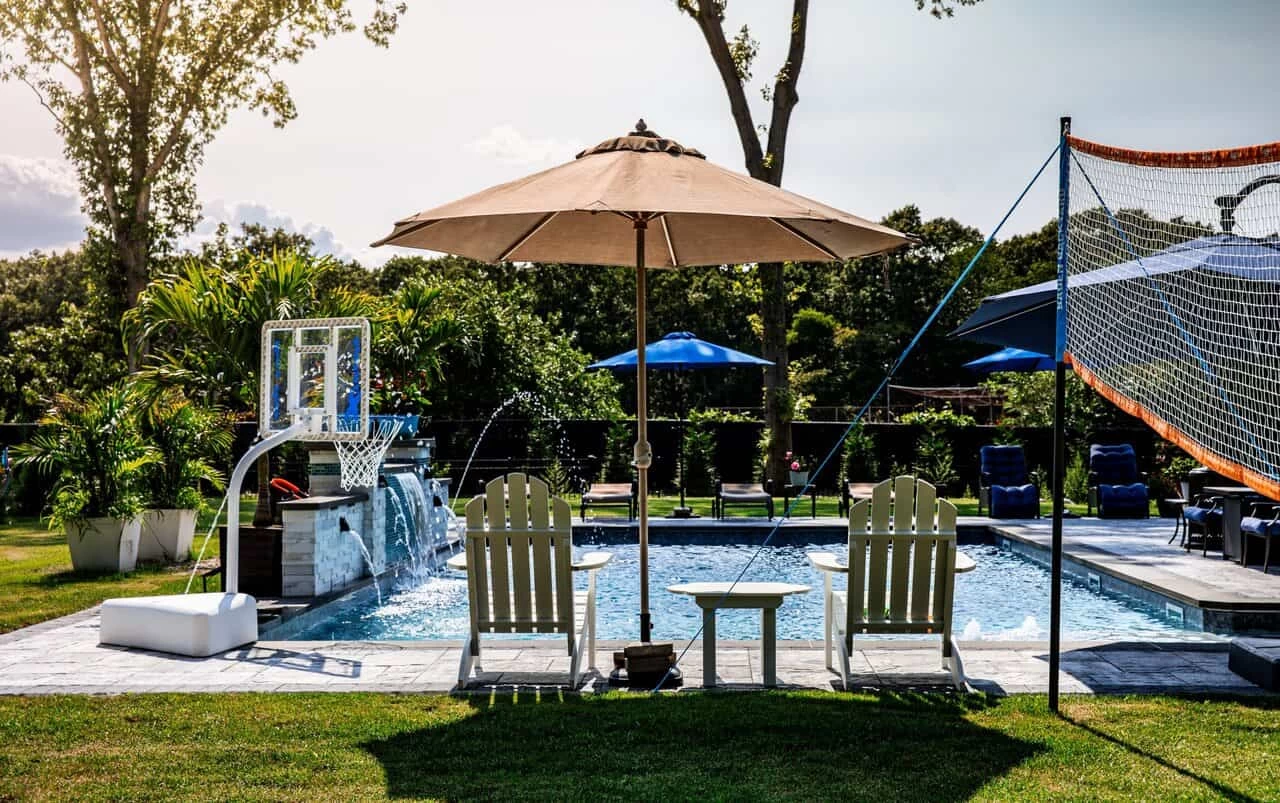
Gunite pools — also called concrete pools — are the most customizable option. They’re built on-site, which means virtually any shape, depth, or feature can be incorporated. They’re a strong choice for homeowners who want something truly custom and are willing to invest in long-term durability. On Long Island, where outdoor living is a serious part of summer life, gunite pools are popular for resort-style backyard builds.
Fiberglass pools arrive as pre-manufactured shells and are installed into an excavated space. The installation timeline is faster than gunite, and the surface is smooth and algae-resistant, which translates to lower ongoing chemical costs. They come in fixed shapes and sizes, which makes them particularly well-suited for Queens County homeowners working with smaller or more defined yard footprints.
Vinyl liner pools offer a middle ground — a steel or polymer frame with a custom-fitted liner. They’re generally the most accessible price point for inground installations and allow for some shape customization. The liner itself will need to be replaced over time, typically every 8–12 years, which is worth factoring into the long-term cost picture.
What matters most is that the company you hire builds all three types and will give you an honest recommendation based on your specific situation — not just push you toward whatever’s most profitable for them. A good pool company asks questions before making suggestions. We look at your yard, understand how your family uses outdoor space, and help you make a decision that holds up 10 years from now, not just on opening day.
We use 3D rendering technology to show you exactly what your pool will look like in your actual yard — with landscaping, lighting, and hardscaping included — before construction begins. For homeowners in Huntington, Bayside, Whitestone, or anywhere else in our service area across Long Island and Queens County, that visualization step removes a lot of the anxiety that comes with committing to a major project.
Pool Service, Cleaning, and Supplies — What to Expect After Installation
A pool is only as good as the care it gets. That’s not a warning — it’s just the reality of owning one. Water chemistry, equipment maintenance, seasonal opening and closing, and regular cleaning all require consistent attention. The question is whether you want to handle that yourself or have a team you trust take it off your plate.
Most homeowners who start out thinking they’ll manage everything themselves eventually realize how much time it takes to do it right. Proper chemical balancing isn’t complicated, but it is precise — and getting it wrong means cloudy water at best, equipment damage or health risks at worst.
A pool company worth hiring doesn’t disappear after construction. We offer ongoing service plans, have staff who can answer questions, and give you somewhere to go when you need supplies or advice in the middle of July.
What Does Professional Pool Cleaning and Maintenance Actually Include
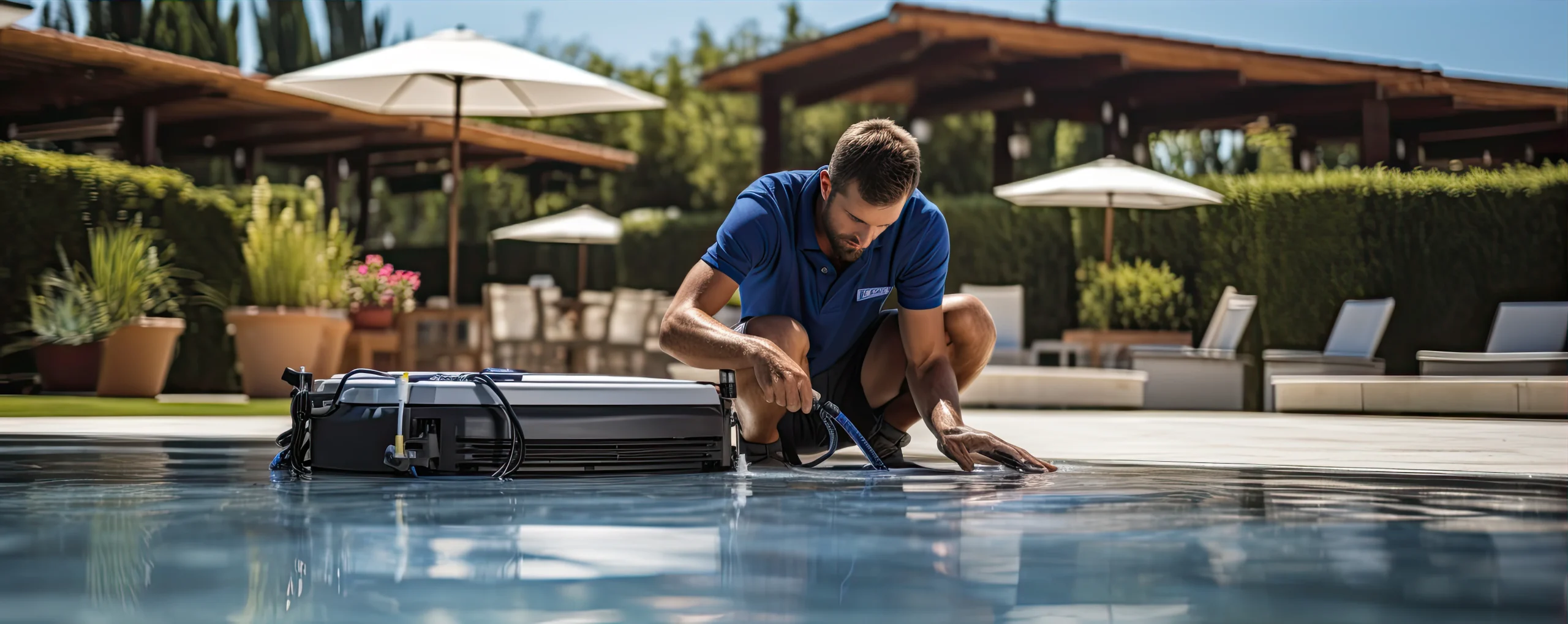
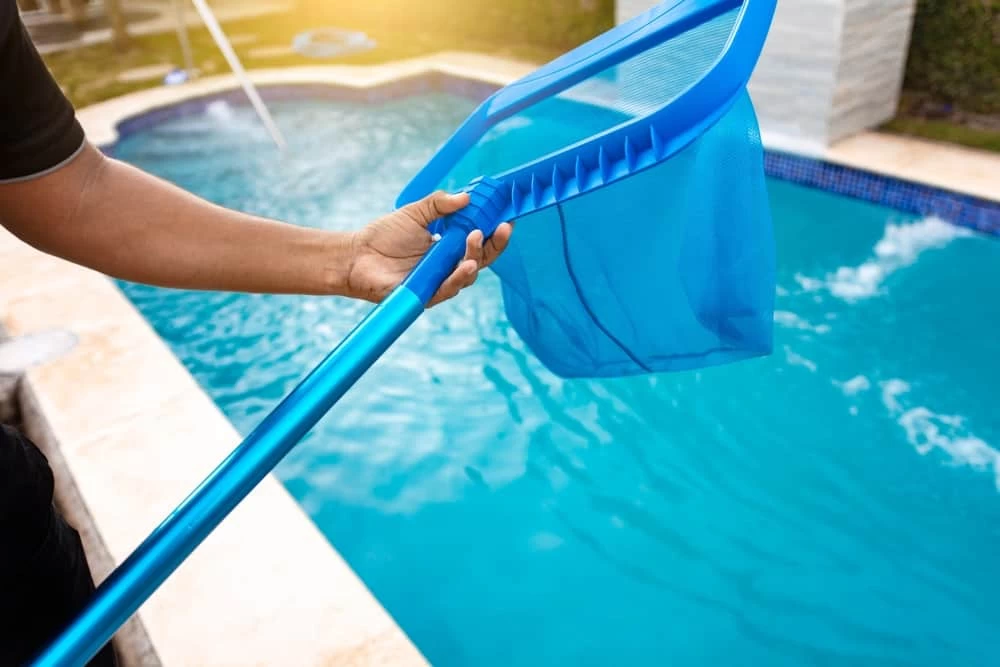
Professional pool maintenance is more than someone showing up to skim leaves off the surface. A real service plan covers surface cleaning, wall and floor brushing, vacuuming, chemical testing and balancing, filter cleaning, and equipment inspection — done consistently, on a schedule that keeps your pool safe and clear all season long.
On Long Island and Queens County, the pool season runs roughly from late May through early October. That’s about four to five months of active use, which means four to five months of chemistry management, filtration upkeep, and wear on your equipment. Skipping or rushing maintenance during that window is how small problems become expensive ones.
We offer customized maintenance plans built around your specific pool — the type, size, and how heavily it gets used. A pool that hosts weekend gatherings for 20 people needs a different care schedule than one used by a family of four on quiet evenings. One size doesn’t actually fit all here, and any company that treats it like it does probably isn’t paying close enough attention.
Seasonal services matter just as much as in-season care. Opening a pool correctly in the spring — balancing water chemistry, inspecting equipment, confirming everything survived the winter — sets the tone for the entire season. Closing it properly in the fall protects your investment from freeze damage and makes spring opening dramatically easier. These aren’t optional extras. They’re part of responsible pool ownership.
For homeowners who want to stay involved in the day-to-day care of their pool, we operate a full retail store at 454 East Jericho Turnpike in Huntington Station. You can walk in, get your water tested, pick up chemicals and cleaning equipment, and talk to someone who actually knows what they’re looking at. We hold workshops and one-on-one consultations for pool owners who want to understand their water chemistry rather than just guess at it. That kind of resource doesn’t exist at a big-box store.
FAQs Long Island and Queens County Homeowners Ask Before Hiring a Pool Company
**Does an inground pool add value to a home on Long Island or Queens County?**
According to the National Association of Realtors, an inground pool can increase a home’s value by 8% to 15%. On Long Island, where average home values in Nassau County regularly exceed $700,000, that percentage translates to real money — potentially $56,000 to $105,000 or more in added equity. In Queens County neighborhoods like Bayside, Whitestone, Howard Beach, and Jamaica Estates, homes with pools stand out in a competitive market. In a region where outdoor living is part of the culture and backyard space is genuinely valued, a well-built pool is rarely a hard sell to future buyers.
**Can I get an inground pool installed in Queens County?**
Yes — and it’s more common than people think. Neighborhoods like Bayside, Whitestone, Howard Beach, and Jamaica Estates have real yards, and homeowners there have been installing inground pools for decades. The permitting process in Queens County runs through the NYC Department of Buildings rather than a county office, which is a different set of requirements than Nassau or Suffolk. We serve Queens County directly and understand what that process involves. We’ve navigated both the Long Island county system and NYC’s DOB process for years, so you’re working with a team that knows the local landscape.
**How long does it take to build an inground pool?**
For most standard inground pool installations in the Long Island and Queens County area, the construction timeline runs 8 to 10 weeks from the start of work. That doesn’t include the design phase, permitting, or any custom outdoor living elements being added alongside the pool. If you’re starting the conversation in June hoping to swim by the Fourth of July, the timeline is tight — but starting the design process now means you could have a finished pool well before the summer is over, or be fully ready to open next Memorial Day weekend without the scramble.
**What should I ask a pool company before hiring them?**
Ask for their specific county license numbers and confirm they carry both general liability and workers’ compensation insurance. Ask how they handle permits and inspections — a reputable company manages all of that for you. Ask what happens if something goes wrong after the project is complete. And ask to see photos of actual pools they’ve built in your area. References from neighbors who have gone through the process are worth more than any brochure.
**Is Father’s Day a good time to think about a pool?**
It’s actually one of the best times to start — not because you’ll have a pool installed by the weekend, but because June is when the urgency is real. Families who’ve been putting off the decision are watching summer tick by. Starting the design conversation now means you’re not having this same thought next June. And for dads who already have a pool, a professional service plan, a spa upgrade, or even a well-stocked gift card to a local pool supply store makes a genuinely useful Father’s Day gift — one that gets used every week until September.
Ready to Find the Right Pool Company for Your Long Island or Queens County Home?
The decision comes down to this: a pool is a long-term investment in your home and your family’s quality of life. The company you hire to design, build, and maintain it should be licensed, local, and still around when you need them two years from now.
On Long Island and in Queens County, that combination isn’t as common as it should be. Look for verifiable credentials, a track record you can actually check, a design process that shows you what you’re getting before construction starts, and ongoing support that doesn’t end at the handshake.
If you’re ready to start the conversation — whether you’re thinking about a new inground pool, a spa addition, a maintenance plan, or just want to stop by and get your water tested — we’re at 454 East Jericho Turnpike in Huntington Station, open seven days a week. Reach out and let’s figure out what your backyard can actually become.
Questions about your pool?
Tell us what you need and a JAS Aquatics pool pro on Long Island will get back to you. Prefer to talk now? Call 631-239-8031.